
U.S. Army signs $4.15B in anti-drone deals with 10 firms
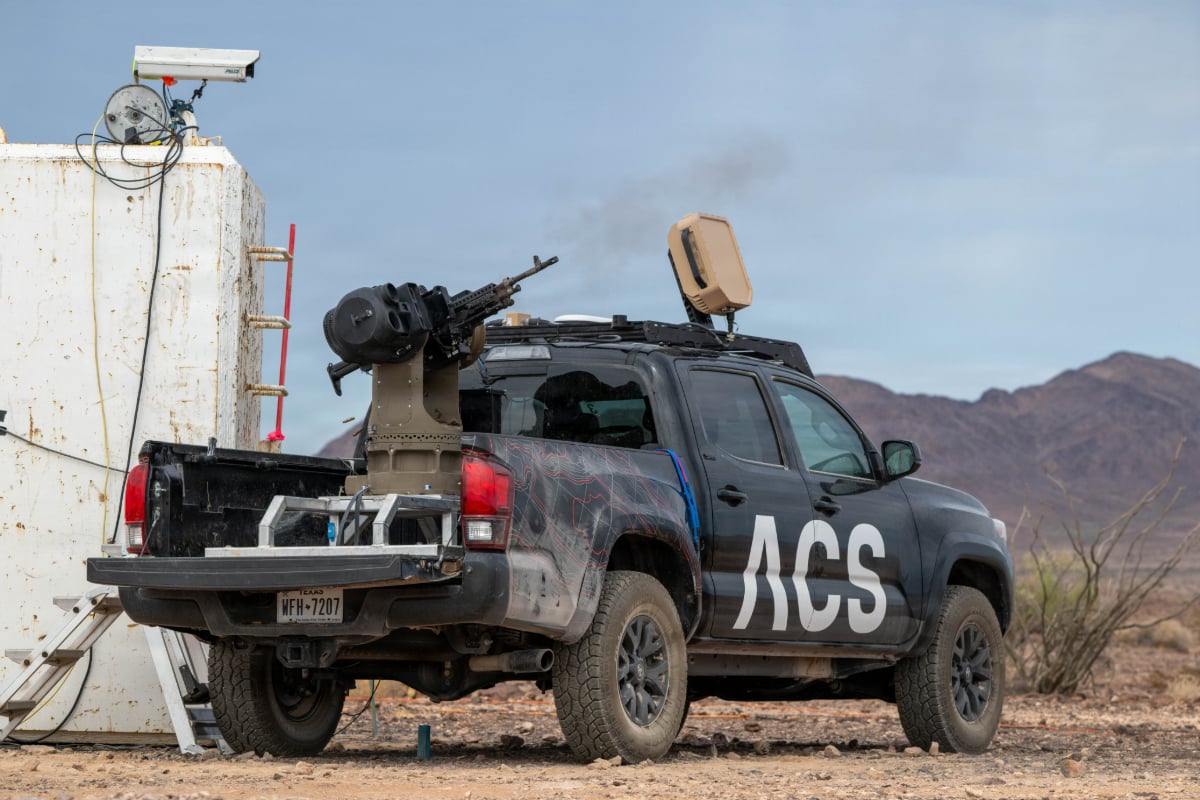
The U.S. Army has awarded 10 companies counter-drone contracts with a combined ceiling of $4.15 billion, lining up commercial radars, cameras, jammers and weapons to detect and defeat hostile drones, the U.S. Department of War announced.
Seven companies received ceilings of $500 million each: Allen Control Systems of Austin, Texas; Digital Force Technologies of San Diego; DroneShield’s U.S. arm in Warrenton, Virginia; Napatree Technology of McLean, Virginia; RADA Technologies of Germantown, Maryland; SRC of Syracuse, New York; and Wescam USA of Nashville, Tennessee. Echodyne of Kirkland, Washington, and PVP Advanced EO Systems of Lake Forest, California, received $250 million each, and Smart Shooter of Herndon, Virginia, received $150 million.
All 10 firm-fixed-price, indefinite-delivery/indefinite-quantity contracts were awarded on Sept. 28 by Army Contracting Command at Detroit Arsenal, Michigan, and run through late September 2029. The figures are ceilings on what the U.S. Army can order from each company over three years, and work locations and funding will be set order by order. The Pentagon’s notices describe the work only as commercial counter-unmanned aerial systems and counter small-unmanned aerial systems capabilities, without naming the products the service intends to buy. The solicitation, posted online, drew 50 bids.
The overall contract vehicle could eventually be worth as much as $7 billion, Breaking Defense reported. U.S. Army acquisition chief Brent Ingraham told reporters the awards span sensors, weapons to defeat drones, and command and control systems, and will also support counter-drone needs elsewhere in the federal government.
Only a small share of the money has been committed. Joint Interagency Task Force 401, the Army-led office coordinating counter-drone work across the Pentagon, said $50 million had been obligated across the 10 contracts as of Sept. 29, DefenseScoop reported. The task force has now awarded more than $5 billion in counter-drone contracts overall, including earlier deals of roughly $500 million each with AeroVironment and CACI.
The contracts feed the Pentagon’s drone and counter-drone marketplaces, which officials describe as commercial-style hubs where local, state, federal and some allied customers can buy equipment. They also support Domestic Shield, the task force’s program to protect U.S. military bases and critical infrastructure from small drones. Matt Ross, who leads the task force, has said the U.S. Army wants layered defenses able to detect, track, identify and defeat hostile drones.
The winners cover different parts of that chain. On the detection side, RADA Technologies, a unit of Leonardo DRS, builds compact radars designed specifically to find small drones, and its sensors already equip the U.S. Army’s Mobile Short-Range Air Defense system on the Stryker and the U.S. Marine Corps’ Marine Air Defense Integrated System. Echodyne makes compact electronically scanned radars used for drone detection and perimeter security, while SRC works on radar and electronic warfare systems. Wescam USA belongs to L3Harris and makes the WESCAM MX family of stabilized electro-optical and infrared camera turrets used to spot and track targets.
On the defeat side, DroneShield, an Australian company, sells radio-frequency detection systems and jammers that break the link between a drone and its operator. Allen Control Systems builds Bullfrog, an autonomous gun turret that uses computer vision to aim a machine gun at drones. Smart Shooter, an Israeli company with a U.S. subsidiary, makes the SMASH fire-control sight, which helps soldiers hit small drones with ordinary rifles. Napatree Technology is listed in the Pentagon’s notice as a small business.
Content preview only. Full article available at source. View Full Article
The U.S. Army awarded contracts worth $4.15 billion to 10 companies for counter-drone systems on September 28, 2023, at Detroit Arsenal, Michigan. The contracts include various equipment such as radars, cameras, and jammers, aimed at detecting and defeating hostile drones. The contracts will run through late September 2029, with only $50 million obligated so far.
- U.S. Army awarded $4.15 billion in anti-drone contracts to 10 companies.
- Contracts include radars, cameras, jammers, and weapons for counter-drone capabilities.
- Contracts were awarded on September 28, 2023, and will run through late September 2029.
- Only $50 million has been obligated across the contracts as of September 29, 2023.
- The overall contract vehicle could be worth up to $7 billion.