
Russian missiles and drones struck Kyiv — four dead and the start of the winter campaign of 2026
 Dmitri Volkov
Russian missiles and drones struck Kyiv — four dead and the start of the winter campaign of 2026
Strike on the energy system as a political signal
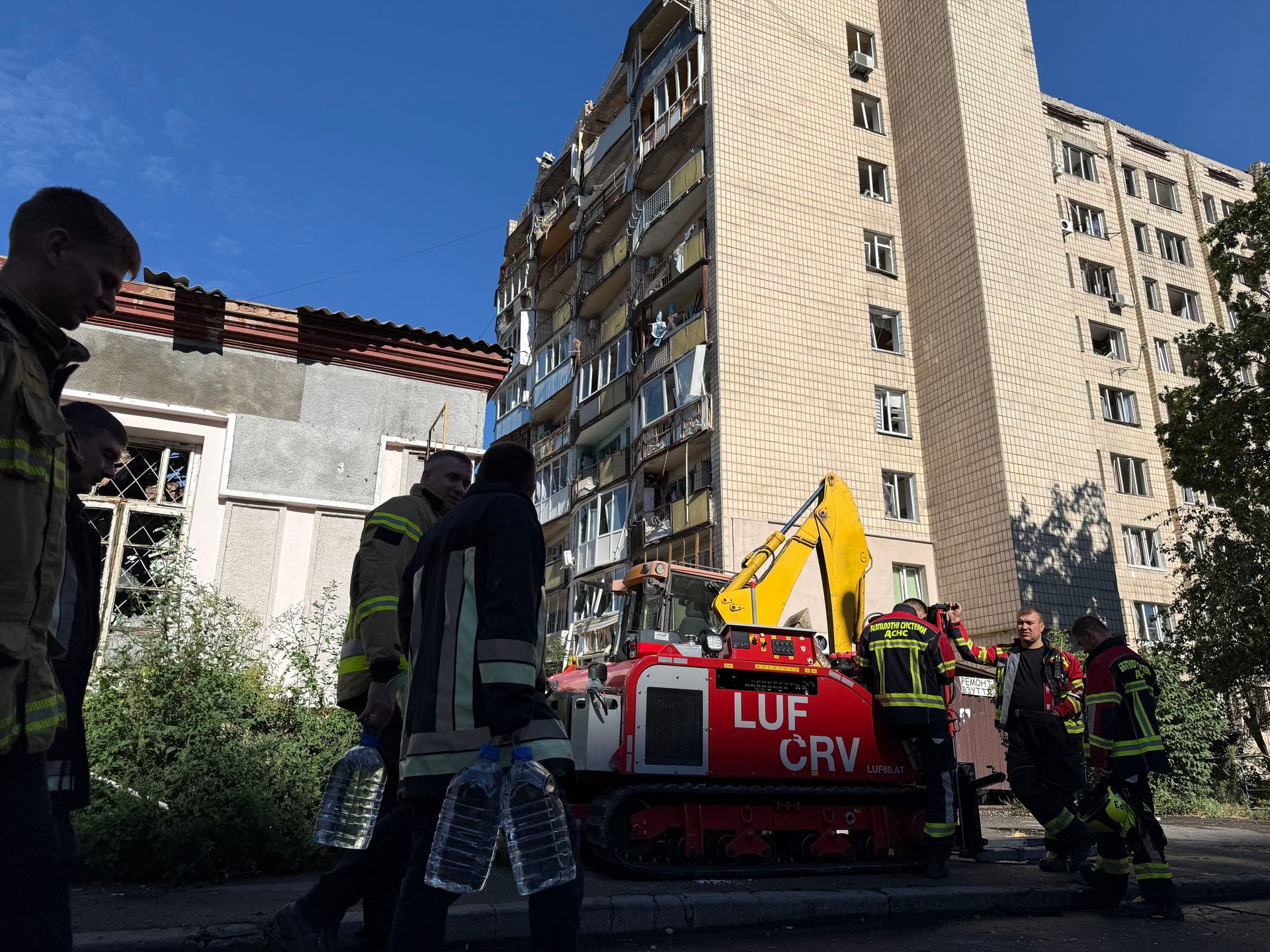
Four dead in one night is not just a tragic statistic of another attack. It marks the beginning of a new phase of the Russian campaign against the Ukrainian energy system. On the night of September 30, Russian missiles and strike drones hit Kyiv and surrounding areas, with energy facilities reportedly being the main target, according to Ukrainian authorities. Reuters described the strikes as a prelude to a winter offensive on energy, while "The Kyiv Independent" reported three dead and six injured in the capital. The discrepancy in operational figures is explained by different counting moments, but it does not change the main conclusion — Moscow is once again shifting the war to a mode of systematic pressure on the rear.
The Prime Minister of Ukraine called the events the beginning of the Russian winter energy campaign. The wording seems familiar, but the calendar is important. The strike was delivered before stable cold weather, when damage to substations, distribution nodes, and thermal infrastructure creates not an immediate collapse, but a cumulative risk. The Russian command likely does not expect to destroy a major power plant in one blow, but rather to overload the entire system of recovery, repair, and air defense.
Military logic of limited escalation
From a military perspective, such an operation combines several levels. Kamikaze drones force Ukrainian air defense to expend missiles and reveal interception routes. More expensive cruise and ballistic missiles are then directed at targets that are difficult to replace quickly. Even if a large portion of the munitions is shot down, the defending side is forced to constantly choose between protecting the capital, industrial hubs, and frontline areas.
This reveals a structural problem in Ukrainian defense. Air defense protects not an abstract territory, but specific nodes upon which the operation of dozens of cities depends. Russia, on the other hand, can distribute the load between relatively cheap drones and a limited stock of precision missiles. This does not mean that the Russian strategy is automatically successful: the Ukrainian energy system has learned to operate in a decentralized manner after several winters, quickly redirecting flows and using repair teams in emergency mode. But each new wave raises the cost of such adaptation.
That is why official Russian statements about "military objectives" should be assessed through their consequences. A strike on energy supply in the capital region inevitably affects water supply, communication, transport, and hospitals. The military objective can be formulated as the defeat of infrastructure, but the operational effect is pressure on civil administration and public resilience. This is classic logic of a war of attrition, where destruction becomes not a side effect, but a way to force the opponent to expend more resources on survival than on offensive actions.
Why NATO planes were scrambled
ABC News reported that after the attack, NATO planes were scrambled in Poland and Romania. This does not mean the alliance is entering the war, but it shows how close the geography of the strikes has come to the borders of allies. For Warsaw and Bucharest, air patrolling is simultaneously a security measure, a demonstration of readiness, and a way to prevent the recurrence of airspace violations.
This factor is also present in the Russian calculation. Strikes on Kyiv allow testing Ukrainian air defense while simultaneously creating political tension around NATO's eastern flank. Moscow is checking where the practical limit of the alliance's reaction lies: how many planes are scrambled, how long they remain airborne, and whether a warning turns into an enhancement of missile defense. At the same time, the Kremlin retains the option to claim that it is not seeking direct confrontation with NATO. Such managed uncertainty has long been a part of post-Soviet military culture.
What will change in winter
In the short term, Russia may achieve localized outages, increase Ukraine's repair costs, and force partners to urgently supply transformers, generators, and additional air defense assets. However, the experience of 2022–2025 shows the limitations of a strategy based solely on strikes against infrastructure. Ukraine has learned to distribute generation, build backup schemes, and turn each attack into an argument for further external support. Therefore, the outcome will depend not on one night or even the number of missiles, but on Russia's ability to maintain the pace of strikes for months.
There is also a downside. For the Russian army, the energy campaign requires significant expenditure of missiles, reconnaissance resources, and drones that could be used against military targets on the front. If production does not compensate for the expenditure, Moscow will face a choice between strategic pressure on the rear and support for ground operations. Official rhetoric usually obscures this cost, but the economics of munitions do not adhere to a television schedule.
My conclusion is simple: the September strike opens not a "decisive" phase, but another season of testing the resilience of both systems. The Russian army is capable of inflicting heavy damage on Ukraine, but it can only turn the destruction of the energy system into political capitulation if Kyiv loses external support and internal repair capability. To date, neither of these conditions has been proven.
Sources: Reuters, September 30, 2026; The Associated Press, September 30, 2026; Al Jazeera, September 30, 2026; The Kyiv Independent, September 30, 2026; ABC News, September 30, 2026; Kyiv Post, September 30, 2026.
Russian Armed Forces launched missile and drone strikes on Kyiv on September 30, 2026, resulting in four fatalities and targeting energy infrastructure. This attack marks the beginning of a new phase in Russia's winter campaign against Ukraine's energy system, aiming to exert pressure on civilian resilience and infrastructure recovery efforts.
- Four fatalities reported in Kyiv due to Russian strikes.
- The strikes targeted energy infrastructure as part of a winter campaign.
- Ukrainian air defense was engaged during the attacks.
- NATO aircraft were scrambled in response to the attacks.