
U.S. Army tests autonomous 257-foot vessel in Hawaii
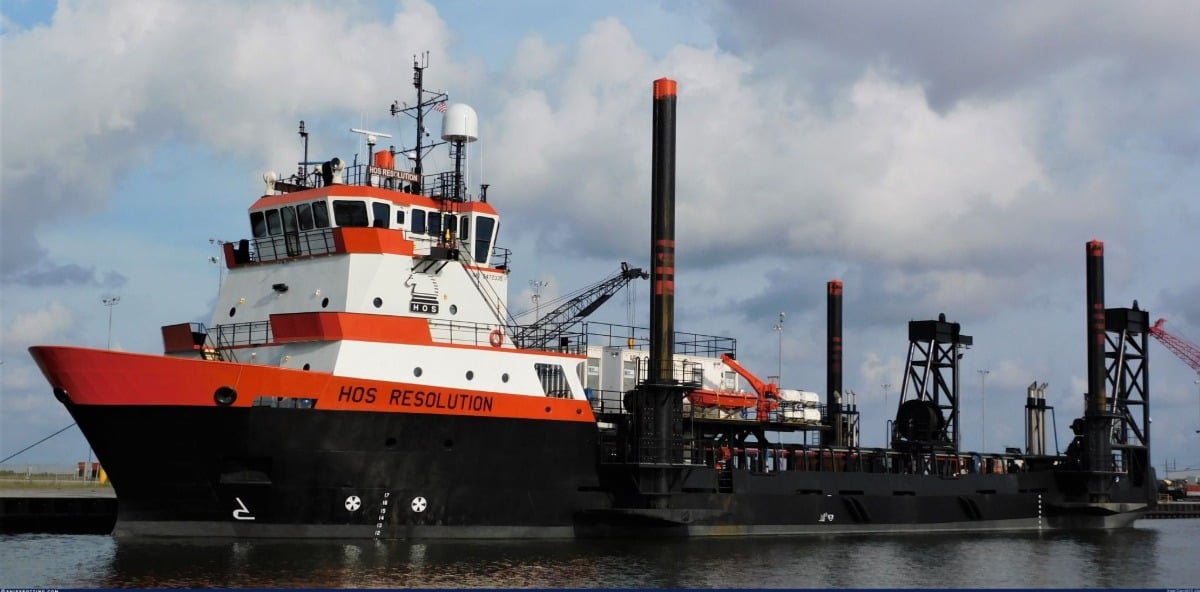
A commercial supply ship the length of a football field just spent nine days getting a robot brain installed, and then drove itself across open water in Hawaii with the U.S. Army watching.
The ship is called the HOS Resolution, a 257-foot (78-meter) offshore supply vessel normally used to haul equipment and supplies to oil rigs and other offshore operations. It’s owned and operated by a company called Hornbeck Offshore. This wasn’t some purpose-built robotic ship designed from the keel up. It’s a regular commercial vessel that a company called Sea Machines Robotics retrofitted with autonomous controls.
Here’s the part that stands out: Sea Machines says the whole conversion took nine days. That’s the time it took to bolt on the sensors, cameras, and computer systems needed to let the ship navigate and make decisions on its own, without a captain steering every move.
“HOS Resolution wasn’t built to be autonomous,” Sea Machines said in a statement. “Sea Machines added autonomous command and control to the existing commercial vessel in just nine days.”
Once the system was installed, the team put it to the test. The ship ran an 18-hour autonomous transit from Pearl Harbor to Hawaii’s Big Island, with the U.S. Army involved in the testing. Sea Machines didn’t say which specific Army unit or office was on hand, or what kind of military scenario the trip was meant to simulate.
The technology behind the conversion is called the SM300, which Sea Machines describes as a deployable package: essentially a kit of hardware and software that can be installed on an existing ship to give it autonomous capability, rather than requiring the military to design and build an entirely new type of vessel.
Building a brand-new class of autonomous ship from scratch can take years and cost enormous sums of money. If a company can instead take a ship that already exists, one that’s already been tested, already floats, already has a hull that works, and retrofit it with autonomy in a matter of days, that’s a much faster and cheaper way for the military to add more autonomous vessels to its fleet.
Sea Machines has worked on smaller autonomous vessel projects before, including some tied to U.S. Navy unmanned surface vessel programs. But the HOS Resolution, at 257 feet, is a considerably larger ship than what the company has previously converted, at least based on what’s been publicly disclosed.
What we don’t know yet: how much the conversion cost, whether the Army plans to keep testing with this specific ship, or how many more vessels Sea Machines might convert under this same approach going forward.
Content preview only. Full article available at source. View Full Article
The U.S. Army tested the HOS Resolution, a 257-foot offshore supply vessel retrofitted with autonomous navigation capabilities, in Hawaii. The vessel completed an 18-hour autonomous transit from Pearl Harbor to Hawaii's Big Island after a nine-day conversion process using the SM300 technology. This testing marks a significant step in integrating autonomous vessels into military operations.
- The HOS Resolution is a 257-foot offshore supply vessel retrofitted for autonomous operation.
- The conversion to autonomous control took nine days.
- The vessel completed an 18-hour autonomous transit from Pearl Harbor to Hawaii's Big Island.
- The technology used for the conversion is called the SM300.
- The U.S. Army was involved in the testing process.