
U.S. Army to buy 606 ISV-H vehicles for mobile brigades
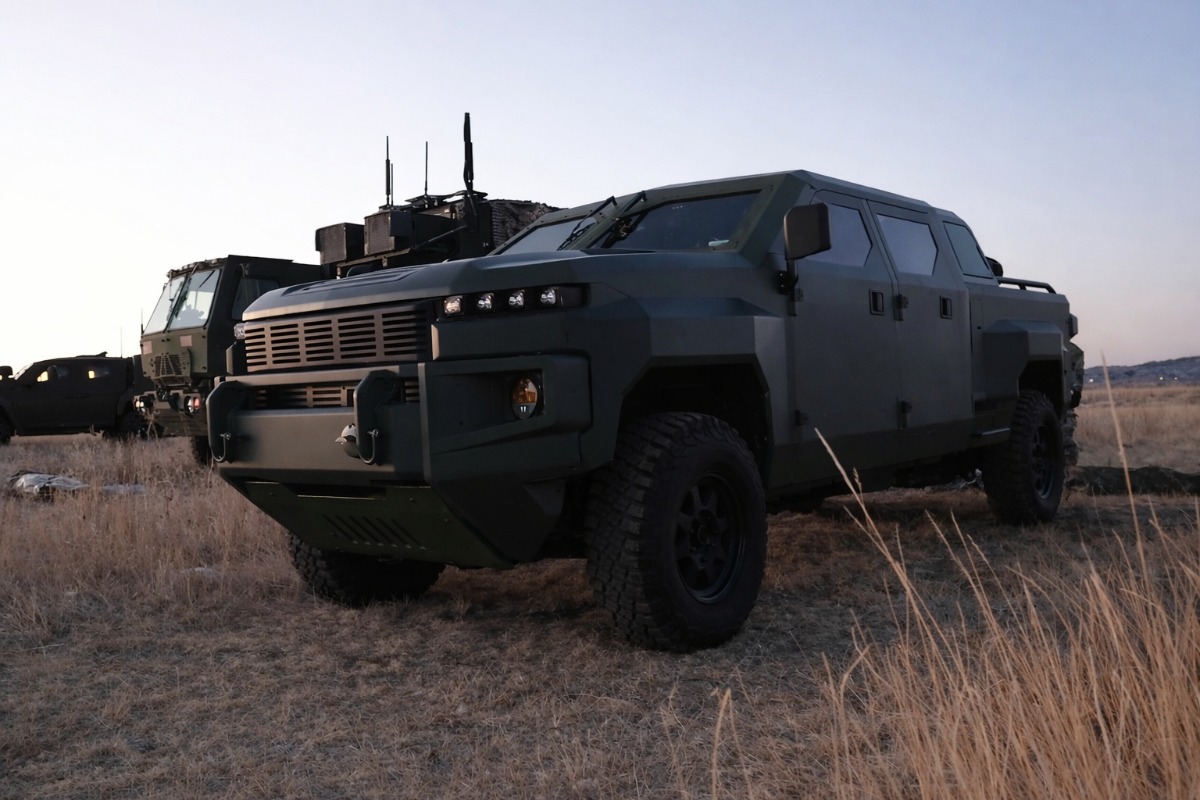
The United States Army has opened a competition for a new heavy version of its Infantry Squad Vehicle, launching a fast-track acquisition effort.
The solicitation, issued by Contracting Command–Detroit Arsenal under notice W912CH-26-S-C005, seeks a commercially available tactical vehicle that can be fielded quickly with only limited changes to an existing platform. At the center of the requirement is the Infantry Squad Vehicle–Heavy, or ISV-H, a vehicle the Army wants to use not only for troop movement but also as a mobile power and command platform.
The Army is looking for a system that can move rapidly across long distances, deploy by air, sea, and land, and continue to support communications and battlefield systems while on the move. The vehicle is intended for use at division and brigade level, where mobile units increasingly need to operate in smaller, dispersed formations. Procurement documents show an approved objective of 606 vehicles, suggesting the effort is more than an early concept study and is already tied to a defined force requirement.
Rather than launching a lengthy clean-sheet development program, the service is clearly leaning toward speed. The notice calls for a platform based on commercial or non-developmental technology, with reliability given priority over extensive customization. In practical terms, that means the Army wants manufacturers to bring forward vehicles that already exist in some form and can be adapted quickly for military use.
The competition itself is structured in stages. The first phase calls for white papers from industry, followed by presentations and then full commercial solution proposals for selected vendors. From that process, the Army may make up to three awards. A second phase could then fund as many as three prototype efforts, with each company potentially required to provide up to three vehicles for testing and soldier evaluation. If those trials are successful, the Army may move directly into production.
The capability requirements show that this is far more than a standard troop carrier. The ISV-H must transport a six-Soldier squad along with their gear as part of a total 4,000-pound payload, while also being able to tow trailers weighing up to 6,500 pounds. It must handle steep slopes, rough terrain, and water crossings up to 30 inches deep, and still remain transportable aboard C-5, C-17, and C-130 aircraft, as well as under a CH-47 helicopter sling load.
One of the most notable requirements is its role as a mobile power source. The Army wants the vehicle to generate up to 60 kilowatts of continuous export power, in addition to standard 28-volt DC and 120-volt AC outputs. That power is meant to support battlefield communications equipment, drone systems, counter-drone tools, radars, electronic warfare gear, and even directed-energy systems. The requirement applies both when the vehicle is stationary and when it is moving.
That detail offers a clear picture of how the Army sees future brigade operations. Tactical vehicles are increasingly expected to do more than move troops from one point to another. They are becoming mobile nodes that can carry sensors, recharge systems, support command posts, and keep networks running closer to the front line.
The documents also place heavy emphasis on sustainment. Future production contracts are expected to include Right to Repair provisions that would give the Army access to manuals, schematics, software, spare parts data, and diagnostic tools. The goal is to ensure soldiers and Army maintenance teams can repair and sustain the vehicles without long-term dependence on the original manufacturer.
That part of the solicitation may prove especially important for industry, as it signals the Army’s push for broader technical data rights and lower lifecycle sustainment costs.
Taken together, the competition shows where Army vehicle modernization is headed: lighter than traditional armored platforms, highly mobile, and built to support drones, sensors, and battlefield communications in fast-moving operations. The ISV-H program will now serve as an early test of how quickly the Army can turn commercial vehicle technology into a field-ready combat capability.
Content preview only. Full article available at source. View Full Article
The U.S. Army is acquiring 606 Infantry Squad Vehicle-Heavy (ISV-H) vehicles to enhance troop movement and serve as mobile command platforms. This acquisition emphasizes rapid deployment capabilities and the ability to support communications and battlefield systems. The vehicles are designed for use at division and brigade levels, with a focus on mobility and operational flexibility.
- The U.S. Army is acquiring 606 ISV-H vehicles.
- The ISV-H will serve as a mobile power and command platform.
- The vehicle must support communications and battlefield systems while on the move.
- The Army emphasizes rapid deployment and limited customization.
- Future contracts will include Right to Repair provisions.