
U.S. Army’s top general warns force over drones, training shortcuts
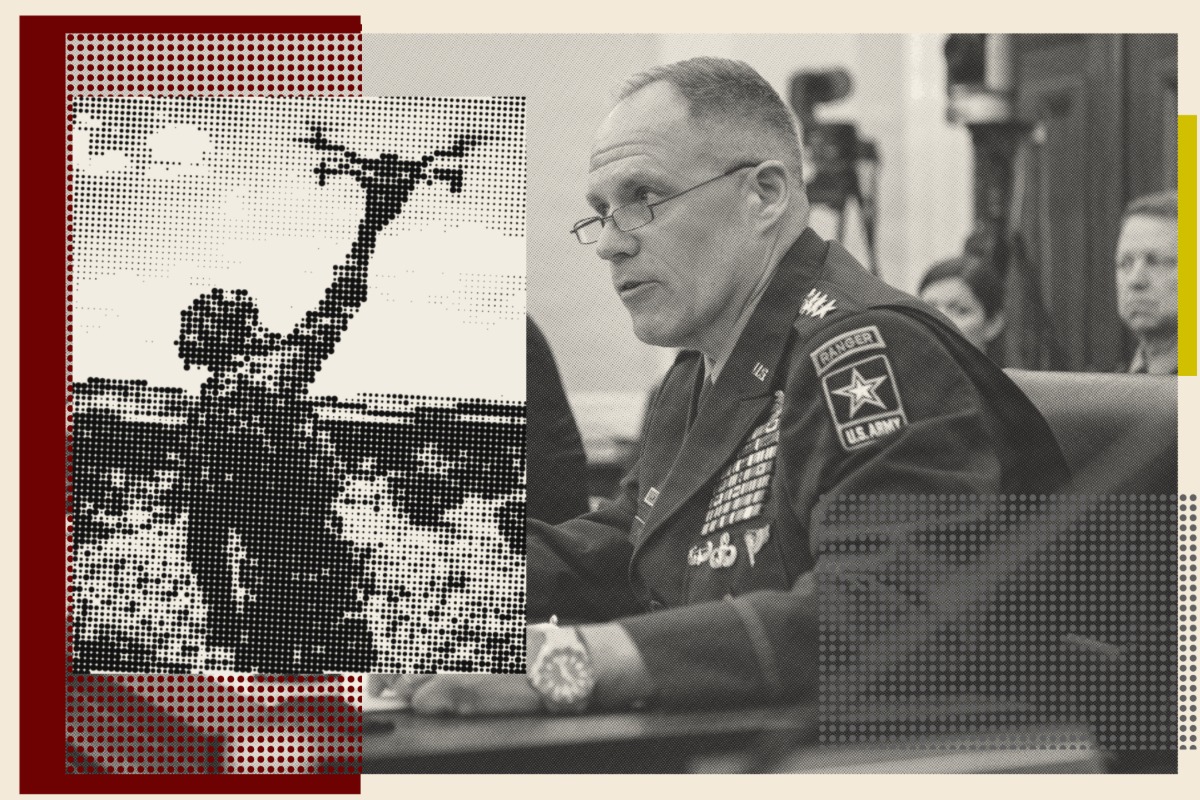
The U.S. Army’s top general has a message for the force: cut corners in training, and it will cost blood.
Gen. Christopher LaNeve, who has run the Army in an acting capacity since April, published a strategic vision statement on August 19, 2026, called “The Army Azimuth.” The blunt warning sits near the end of the document, but it captures the tone of the whole thing: less bureaucratic memo, more a demand that soldiers get back to basics while the Army rebuilds itself for a very different kind of war.
That different war, in LaNeve’s telling, is one shaped by drones and long-range weapons that let an enemy strike without ever coming close enough to be seen. He writes that the Army must counter enemies who use “stand-off weapons,” a term for systems fired from a safe distance, so the attacker never has to enter direct contact with U.S. forces. Defeating that kind of threat, he argues, means moving faster and hitting harder than the enemy from the first moment of a fight, not catching up after the shooting starts.
Homeland defense comes first on his list, which LaNeve calls “our most sacred duty”: securing U.S. borders, protecting Americans from attack, and responding to domestic crises. He argues a secure Western Hemisphere is what makes it possible for the Army to project power anywhere else in the world.
The Army has already reorganized around that idea. Units built for rapid, all-at-once coordination across land, air, space, cyber, and the electromagnetic spectrum, what the service calls multidomain operations, have replaced the old system of fixed brigades. New long-range weapons can now strike ships at sea. Air defenses have been rebuilt for skies crowded with drones. New units fold space, cyber, electronic warfare, and artificial intelligence directly into how commanders run a battle.
LaNeve wants that technology paired with something more old-fashioned: a “warrior mindset,” grit and discipline drilled into soldiers through training centers built to simulate real combat. He is explicit that neither piece works without the other. Advanced systems do not save an Army that has let its basic soldiering skills slide, and disciplined soldiers without modern tools cannot keep pace with adversaries building drone-heavy, AI-assisted forces of their own.
He also wants the Army positioned to move fast when a crisis hits, not scrambling to get there. That means keeping equipment forward-based, running exercises abroad, and stockpiling supplies in the regions where a fight is most likely to start.
LaNeve took charge of the Army after Defense Secretary Pete Hegseth removed Gen. Randy George in April, and his own nomination for the permanent chief of staff job has stalled in the Senate over concerns about his limited four-star command experience. None of that appears in the Azimuth. The document is signed with his Senate-confirmed title, 40th Vice Chief of Staff of the Army, the position he holds by law while performing the chief of staff’s duties in an acting capacity.
The statement sets no budget, no numbers, and no deadline. What it does set is a standard LaNeve says he will hold the force to: “The battlefield does not forgive weakness.”
Content preview only. Full article available at source. View Full Article
General Christopher LaNeve issued a strategic vision statement for the U.S. Army on August 19, 2026, emphasizing the importance of rigorous training and a warrior mindset to counter advanced threats like drones and long-range weapons. He highlighted the need for homeland defense and the reorganization of Army units for multidomain operations. LaNeve warned that cutting corners in training would lead to severe consequences, asserting that the Army must be prepared to respond quickly to crises.
- General LaNeve warns against cutting corners in training, stating it will cost blood.
- The Army is reorganizing for multidomain operations to counter stand-off weapons.
- Homeland defense is prioritized as the Army's most sacred duty.
- New units integrate space, cyber, and electronic warfare into operations.
- The Army aims to maintain readiness and rapid response capabilities.