
US Chips Keep Russia's Iskander Missiles Flying in 2026
 Alexandra Reeves
US Chips Keep Russia's Iskander Missiles Flying in 2026
Sanctions were supposed to make Russia's missile war harder to sustain. Instead, the latest evidence suggests Moscow is still building some of its most dangerous strike systems with help from the very economies trying to contain it. That is the uncomfortable takeaway from Ukraine's latest public breakdown of foreign-made parts recovered from Russian missiles. It is also a reminder that the sanctions debate has drifted too far into headlines and not far enough into hardware.
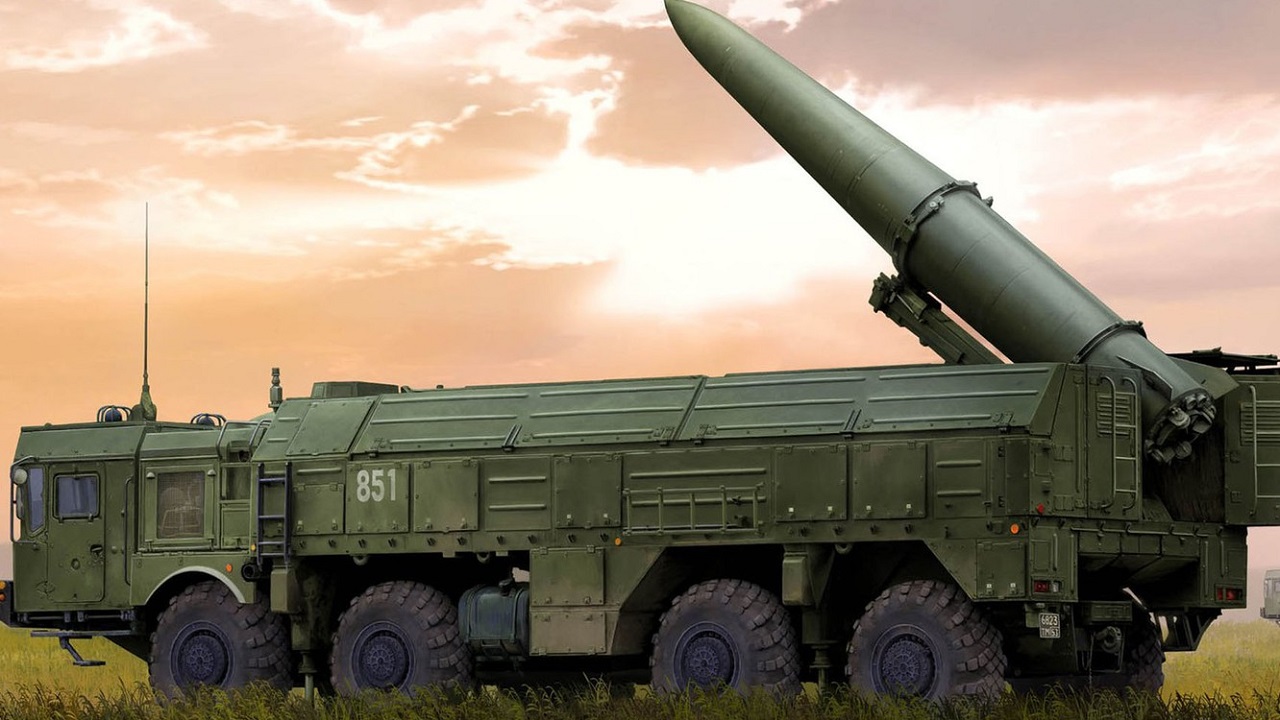
According to Defense News, Ukraine's presidential commissioner for sanctions policy, Vladyslav Vlasiuk, showed journalists on 25 August components recovered from Russian ballistic missiles, including parts from 9M723 Iskander-M missiles and 48N6-family rounds fired from S-400 launchers. He said U.S.-made components were especially prominent. The broader pattern is not new, but the timing matters. Russia is still launching regular mixed salvos of drones, cruise missiles and ballistic weapons at a moment when Ukraine's supply of Patriot interceptors remains under pressure and Europe is still arguing about how to build a larger air-defence base of its own.
The Sanctions Story Is Still a Hardware Story
The most useful detail from the latest Ukrainian disclosure is not simply that Western parts were found again. It is that the evidence is becoming more specific and more current. Ukraine's GUR-linked War & Sanctions portal published a new component breakdown for the 9M723 Iskander-M on 27 August and a separate 3D model and parts listing for the 3M22 Zircon on 31 August. That suggests Kyiv is trying to move the discussion from general outrage to a traceable supply-chain map: which parts are being found, which firms originally made them, and which intermediaries are still moving them into Russia's missile ecosystem.
RBC-Ukraine reported last year that about 70% of the foreign components found in Russian missiles came from U.S. companies, citing work by the Yermak-McFaul sanctions group and the Kyiv School of Economics. Even if that percentage shifts by weapon type, the strategic point holds. Russia does not need broad access to the Western economy. It needs repeated access to a narrow band of high-quality microelectronics, navigation components and industrial inputs that are hard to replace domestically at scale.
Why Moscow Still Gets the Parts
This is where the standard sanctions conversation becomes too self-congratulatory. Western governments often talk as if adding another list of entities is the same thing as closing a supply route. It is not. The weakness sits in the re-export chain. Components leave a manufacturer in a sanctions-country jurisdiction, pass through commercial traders or shell firms in third countries, and move again through distributors closer to Russia before entering the production line. As Vlasiuk told RBC-Ukraine in 2024, the part can travel through several legal or semi-legal hands before it reaches a Russian plant. That makes enforcement look strong on paper while leakage continues in practice.
It also reflects the nature of missile production. An Iskander-M is not a single sanctioned item that can be blocked like a finished tank on a dock. It is an assembly problem. Russia can redesign around some shortages, substitute where tolerances permit, stockpile certain parts, and prioritize its highest-value weapons for the best available electronics. That is why the GUR portal's recent publication of Iskander-M and Zircon component data matters. It shows Ukraine understands that the bottleneck is not only launchers and propellant. It is the supply web underneath them.
What This Means for the War Over Ukraine
The military consequence is straightforward. If Russia can keep sourcing the right components, it can sustain a level of ballistic-missile pressure that Ukraine still struggles to absorb. Defense News reported Ukrainian officials saying Russia is ramping output of ballistic and high-speed missiles to more than 100 a month. That figure matters because ballistic threats create a harsher defensive arithmetic than drones. A 500-kilometre-class Iskander-M, with its manoeuvring quasi-ballistic flight profile, is exactly the sort of weapon that forces Ukraine to spend scarce high-end interceptors or accept risk to cities, logistics nodes and power infrastructure.
That is also why this issue is bigger than Ukraine. Europe keeps discussing defence autonomy as if it were mainly a spending question. It is partly that, but it is also a control-of-components question. If European and American electronics still appear inside Russian strike systems more than four years into the full-scale war, then the West has not yet solved the industrial-security side of deterrence. Europe may be increasing budgets, buying frigates, debating missile shields and financing Ukrainian co-production. Fine. But none of that looks strategically coherent if the same broader allied economic space still leaks the parts that help keep Russian missiles in the air.
What Would Actually Tighten the Net
The answer is not another dramatic sanctions headline detached from enforcement. It is a duller and more serious programme: synchronized designations across allied jurisdictions, tighter export licensing on identified missile-relevant electronics, pressure on distributors in common transit states, and sectoral restrictions on the materials feeding Russia's ballistic-weapons chain. Defense News reported that Kyiv wants exactly that, including a smaller interim EU package focused specifically on the ballistic supply chain rather than waiting for a larger sanctions bundle later in the autumn.
The key finding is that Russia's missile problem is still partly a Western enforcement problem. The prediction is worse. Unless the United States and Europe start treating sensitive components with the urgency they usually reserve for finished weapons, Moscow will keep finding ways to turn commercial-grade access into military effect. The real scandal is not that Russia wants Western technology in its missiles. Of course it does. The scandal is that, in 2026, it still appears able to get enough of it to matter.
Russia continues to utilize U.S.-made components in its Iskander missile systems, as evidenced by recent Ukrainian disclosures. In 2026, the Russian Armed Forces are reportedly producing over 100 ballistic missiles monthly, maintaining pressure on Ukraine's defenses. The presence of foreign parts highlights ongoing challenges in enforcing sanctions and controlling the supply chain for military technology.
- U.S. components are found in Russian Iskander missiles and S-400 systems.
- Ukraine's GUR published detailed component breakdowns for Iskander-M and Zircon missiles.
- Russia is reportedly ramping up missile production to over 100 per month.
- 70% of foreign components in Russian missiles are sourced from U.S. companies.
- The supply chain for missile components remains vulnerable despite sanctions.