
U.S. Media: U.S. Troops in Europe Face Major Strategic Adjustments
【Global Times Special Correspondent Xie Zhao】Editor's Note: The Wall Street Journal reported on the 8th, citing U.S. government officials, that the U.S. government is considering a plan aimed at "punishing" certain NATO member countries that do not support the U.S. in its actions against Iran. The report states that the plan would withdraw U.S. troops from those NATO member countries deemed unhelpful to military operations against Iran and redeploy them to countries that are more supportive of U.S. military actions, or close at least one U.S. military base located in European countries. From which countries might the U.S. withdraw troops in the future? U.S. media analysis suggests that if the plan is implemented, it would signify a major strategic adjustment for U.S. forces stationed in Europe.
Spain's Two Major Military Bases Have Strategic Importance
The Wall Street Journal states that since the U.S. launched military strikes against Iran, the rift between the U.S. government and its European allies has deepened. U.S. President Trump has recently suggested multiple times that the U.S. should completely withdraw from NATO. However, according to U.S. domestic law, withdrawal from NATO can only occur with Congressional approval. Therefore, U.S. government officials are more inclined to withdraw troops from certain countries that do not support U.S. military actions against Iran as a form of "punishment."
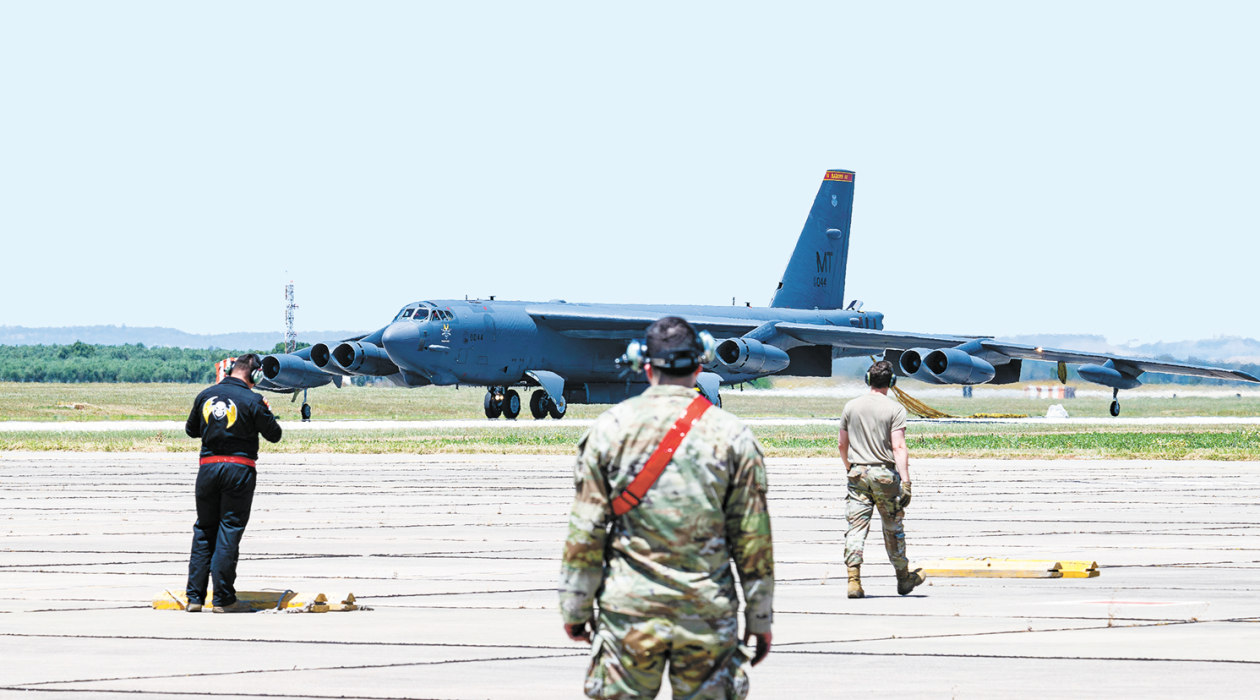
The report indicates that the U.S. move may first affect Spain. Currently, Spain is the only NATO member country that has not committed to spending 5% of its GDP on defense. Spanish Prime Minister Sanchez has publicly criticized the U.S. and Israel's military strikes against Iran as "illegal," and has prohibited U.S. aircraft involved in military operations against Iran from using its airspace and two bases within its territory.
Currently, the U.S. has two major military bases in Spain: Rota Naval Base and Morón Air Base. Both are located in the southern region of Andalusia, Spain, and serve as important strategic points for the U.S. in Europe and the Mediterranean. The U.S. Stars and Stripes recently reported that Rota Naval Base is located on the southern coast of Spain, near the Strait of Gibraltar, and is home to five Arleigh Burke-class Aegis destroyers, with plans to add a sixth this fall. They operate in coordination with shore facilities, forming a core component of Europe's ballistic missile defense. Retired Navy Captain and senior researcher at the Center for Strategic and Budgetary Assessments, Jan van Tol, stated that the strategic location of Rota allows the U.S. to respond quickly to hotspots in the Eastern Mediterranean, Red Sea, and Persian Gulf. In particular, the destroyers stationed in Spain are crucial for Israel's missile defense.
Van Tol noted that compared to the Souda Bay naval support base on the Greek island of Crete, Rota has larger naval and air force facilities and logistical support, such as the support needed for weapons and fuel. Additionally, Rota's geographical location makes it less vulnerable to potential enemy missile attacks.
Morón Air Base is located approximately 68 miles northeast of Rota and is home to the U.S. Air Force's 469th Air Expeditionary Squadron, which is part of the 86th Airlift Wing stationed in Ramstein, Germany. Morón Base also hosts a Marine Corps air-ground task force, which is used for crisis response and theater security operations in Africa.
The Stars and Stripes states that Morón Air Base's geographical location near the Mediterranean and Middle East, along with its large flight runway and support systems, "provides a critical link for air operations extending eastward from the U.S." It also serves as a midpoint between the U.S. mainland and Southwest Asia. Compared to bases in Central Europe, U.S. forces can deploy from Spain to the Middle East, shortening the distance by thousands of kilometers. During the June conflict between Israel and Iran last year, U.S. strategic bombers were deployed to this base as a deterrent to the situation in the Middle East.
Van Tol stated that for the U.S. global strategic deployment plan, the positions of Rota and Morón bases in Spain are difficult to replace, as these bases "contribute significantly not only to U.S. national objectives but also to NATO alliance missions." Yago Rodríguez, director of the Spanish media outlet Politico, stated that it is unlikely that the U.S. would consider leaving its military outpost in Spain. However, he acknowledged that the potential risk of a rupture in U.S.-Spain relations "could be the most serious in the history of U.S.-Spanish relations."
German Bases Are the "Nerve Center" for U.S. Forces in Europe
Germany is considered another country that may be "punished" by the U.S. Since the U.S. launched military strikes against Iran, the German government has repeatedly rejected U.S. requests for support. German President Steinmeier has publicly stated that the U.S. military strikes against Iran "undoubtedly violate international law," and believes that the war "was entirely avoidable and unnecessary." German Chancellor Merz has also questioned the U.S. for not consulting with allies before taking action, calling the approach "unacceptable." German Defense Minister Pistorius has clearly stated, "This is not our war, nor did we provoke it," and has refused to participate in any form of military action, including escorting in the Strait of Hormuz.
Currently, there are about 38,000 U.S. troops stationed in Germany, making it the second-largest host of U.S. forces overseas, after Japan. As NATO's "first line of defense" and core of the rapid response system, U.S. forces in Germany play a key role in strategic deterrence and forward defense against Russia. After the 2022 Russia-Ukraine conflict, U.S. forces in Europe were deployed from Germany to Poland, Romania, and other countries for forward deployment.
Among them, Stuttgart is the "strategic brain" of U.S. forces in Europe, housing the U.S. European Command, Africa Command, and the European component of U.S. Special Operations Command. The European Command coordinates all U.S. military operations across Europe, parts of Eurasia, the Arctic, and the Atlantic, with its commander typically also serving as NATO's Supreme Allied Commander; the Africa Command is responsible for U.S. operations across the African continent, excluding Egypt, including coordinating counter-terrorism and humanitarian assistance.
From the perspective of executing specific combat missions, Ramstein Air Base in Germany is considered the absolute hub of U.S. forces in Europe and is key to integrating the air forces of NATO's European allies. This base is the largest air base in Europe for NATO and is known as the "Gateway to Europe," regarded as one of the largest and busiest military airports outside the U.S. Its core strength is the 86th Airlift Wing, equipped with about 14 C-130J Super Hercules transport aircraft, responsible for tactical airlift and medical evacuation missions across Europe, Africa, and the Middle East.
Additionally, Ramstein Air Base is also home to the U.S. Air Forces in Europe and Africa, NATO Allied Air Command, and the European Aerospace Operations Center. The base has the capability to command and control global drone operations and is considered one of the two major centers for U.S. global drone warfare, alongside Creech Air Force Base in Nevada.
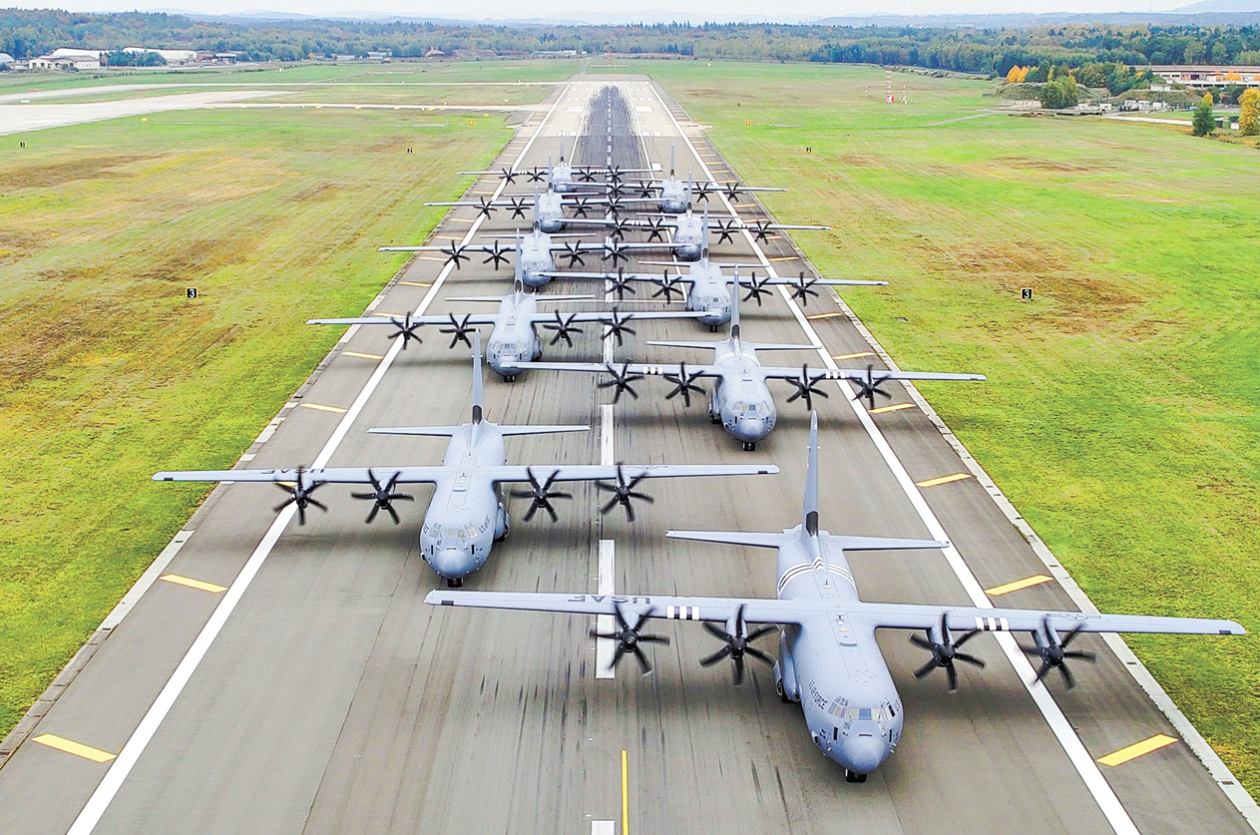
The Wall Street Journal states that during military operations against Iran, this base has been used as a command and control center, with its satellite relay station controlling drones executing strike missions over the Middle East. Additionally, as a major airlift hub, it also bears the heavy responsibility of providing equipment and personnel supplies for operations.
Furthermore, near Ramstein Air Base is the Landstuhl Regional Medical Center, which is the largest military hospital outside the U.S. Recently, a U.S. F-15E fighter pilot shot down in Iran was urgently transported here for treatment.
During his first term as U.S. President in 2020, Trump announced plans to significantly reduce the number of U.S. troops stationed in Germany, citing insufficient German investment in defense. At that time, former U.S. European Command Commander Ben Hodges stated in an interview with Germany's Der Spiegel that this was a "huge mistake," and said, "The U.S. does not understand how important the U.S. troops in Germany are to American security."
However, some analysts believe that with multiple military bases in Germany, the U.S. may close or withdraw from one of the bases to exert pressure on Germany and express dissatisfaction.
Are Italy and France Also on the List?
Italy and France have also been named by U.S. media. Italy briefly blocked the U.S. from using its air base located on Sicily, while the French government only agreed to allow the U.S. to use a base in the south of France, on the condition that U.S. aircraft not involved in strikes against Iran could land there.
The Naples Naval Base in southern Italy is home to the U.S. Navy's Europe-Africa Command and NATO Joint Force Command, responsible for commanding operations across the Mediterranean, North Africa, and the Balkans. The Sigonella Naval Air Station on Sicily provides critical maritime reconnaissance, anti-submarine warfare, and logistical support for the U.S. Navy's Sixth Fleet and NATO allies. In terms of the Air Force, Aviano Air Base in northeastern Italy is home to the U.S. Air Force's 31st Fighter Wing, which houses two-thirds of the F-16 fighters stationed in Europe and is the only fighter wing south of the Alps. It is widely believed that this base is also one of the storage sites for U.S. nuclear weapons in Europe.
What has drawn the dissatisfaction of the U.S. government is that Italian Defense Minister Crosetto explicitly rejected a request for several U.S. military aircraft to stop at the Sigonella base in Sicily at the end of March, as these aircraft were planning to fly to the Middle East for missions. The Italian side stated that this refusal was based on legal and constitutional grounds, as the U.S. military did not provide prior notice, and the related actions exceeded the scope of the regular agreement, requiring parliamentary authorization.
Currently, the U.S. has no permanent troops or military bases in France, stemming from the decision made by the French government under De Gaulle in the 1960s to withdraw from NATO's military integration structure. At that time, about 30,000 U.S. troops and over 20 military bases in France were completely withdrawn. Although France rejoined NATO in 2009, U.S. forces have not resumed a permanent presence in France. French President Macron has repeatedly expressed opposition to U.S. military strikes against Iran. On March 5, France announced it had approved U.S. military aircraft to enter the Istres Air Base in southern France, but emphasized that the approved aircraft were support aircraft, not combat aircraft, and that these aircraft could not participate in U.S. military operations within Iran. Furthermore, this authorization does not involve French military bases in the Middle East. Since France does not allow aircraft carrying military supplies to fly over its territory to Israel, Trump warned that "France has been extremely uncooperative regarding military actions against Iran, and the U.S. will remember this!"
The Wall Street Journal states that according to U.S. government plans, if troops are withdrawn from certain NATO member countries that are unhelpful to military operations against Iran and redeployed to countries that are more supportive of U.S. military actions, then countries like Lithuania and Greece may benefit, as these countries are viewed by the U.S. as "supporters." The report states that these countries have some of the highest defense spending ratios among NATO members and were among the first to support the establishment of an international coalition to monitor the Strait of Hormuz. After the U.S. launched military strikes against Iran, Romania also allowed the U.S. Air Force to use its base. However, most of these countries are close to Russia, and if the Pentagon implements the new plan, it will lead to more U.S. troops being deployed closer to the Russian border, which is likely to anger Moscow.
The U.S. is contemplating a strategic realignment of its military presence in Europe, potentially withdrawing troops from NATO countries like Spain and Germany that do not support its military actions against Iran. This could involve closing bases or relocating forces to more supportive nations. The situation reflects growing tensions between the U.S. and its European allies regarding military commitments.
- The U.S. is considering withdrawing troops from NATO countries that do not support actions against Iran.
- Spain is the only NATO member not committing 5% of GDP to defense spending.
- Germany has denied U.S. requests for military support against Iran.
- The U.S. has significant military bases in Spain and Germany that are strategically important.
- Italy and France have also expressed reluctance to support U.S. military actions against Iran.