
"U.S. Military Actions Trigger Iran's 'Most Intense' Retaliation: A 40-Hour Overview of the Middle East Crisis"

Since the morning of February 28 local time, Israel and the United States have been launching military strikes against Iran for about 40 hours. As of late night on March 1, explosions could still be heard intermittently in Tehran, the capital of Iran.
In response, Iran has launched a large-scale counterattack. The Islamic Revolutionary Guard Corps (IRGC) of Iran announced on the 1st that it would carry out "the most intense offensive operation in history" against U.S. and Israeli military bases. As of now, Iran's strike operations have reached the ninth round, with at least 27 U.S. military bases in the Middle East and surrounding areas being attacked, and the flames of war gradually spreading to multiple countries in the Middle East.
U.S. and Israeli attacks continue, triggering multiple rounds of counterattacks from Iran; Iran claims to have attacked U.S. aircraft carriers
On the night of the 1st, Tehran was attacked again
On the afternoon of March 1 local time, the Israel Defense Forces announced a new round of airstrikes against Iran. Subsequently, continuous explosions were heard in Tehran on the night of the 1st. The Israeli military later issued a statement saying that the Israeli Air Force had completed a round of airstrikes targeting Tehran, Iran.
The Israeli military stated that over 100 Israeli Air Force fighter jets participated in the airstrikes, targeting dozens of headquarters (command centers) of the IRGC, including its intelligence department, air force, and internal security department.
The Islamic Republic of Iran Broadcasting (IRIB) issued a statement that night, claiming that its headquarters office building was damaged in the U.S. and Israeli airstrikes. Several channels of Iranian national television also temporarily lost broadcast signals due to the attacks that night. Gandhi Hospital in Tehran and a hospital in Ahvaz, Khuzestan Province were also attacked by the Israeli military that night.
Previously, a primary school in Minab, Hormozgan Province, Iran, which had been attacked due to U.S. and Israeli military actions, concluded its search and rescue operations that night, with the final death toll confirmed at 165.
Iran launches multiple rounds of strikes, resulting in 560 U.S. military casualties
In response to the previous U.S. and Israeli attacks, around 8 a.m. on the 1st, the IRGC issued announcement No. 6, stating that Iran had launched the sixth wave of "Operation Real Commitment 4," with large-scale missile and drone strikes against Israeli and U.S. military bases in the region. The announcement stated that 27 U.S. military bases and facilities in the region, the Israeli military's command center in Hakiriyah, and a large defense industrial park in Tel Aviv were all attacked. According to the 8th announcement of "Operation Real Commitment 4" released by the IRGC on the night of the 1st, Iran's counterattack has resulted in "560 U.S. military casualties."
In the late night of the 1st, the IRGC announced that the ninth round of "Operation Real Commitment 4" targeting all of Israel and U.S. objectives in the region had begun. Subsequently, explosions were heard in Jerusalem and Tel Aviv, Israel.
Iran claims to have attacked U.S. aircraft carriers; multiple locations in Israel attacked, resulting in hundreds of casualties
Additionally, the IRGC announced that the U.S. aircraft carrier USS Abraham Lincoln was attacked by four Iranian ballistic missiles. The IRGC also claimed to have destroyed more than twenty U.S. and Israeli drones, including 20 Israeli "Heron" drones (referred to by Iran as "Hermes" drones) and 2 U.S. MQ-9 drones.
The U.S. military subsequently denied the claim that the USS Lincoln had been attacked by Iranian missiles, stating that the missiles fired by Iran "did not even come close" to the ship. The U.S. Central Command also released information on the casualties of U.S. personnel during the attacks on Iran, reporting that three active-duty U.S. service members were killed and five were seriously injured.
Central Israeli cities Tel Aviv and Beit Shemesh also reported on the 1st that they had been attacked by Iranian missiles. A rough estimate indicates that Iran's attacks on multiple locations in Israel have resulted in at least 11 deaths. Data updated by the Israeli health department on the night of the 1st showed that since the start of the military operations against Iran, a total of 677 injured individuals had been sent to hospitals for treatment, with most having been discharged, while 166 remained hospitalized.
According to statistics from the Tel Aviv city government, at least 40 buildings in the area were damaged to varying degrees, and over 200 residents were evacuated to other locations.
Iran's national television also released footage on March 1 showing IRGC missiles hitting the Israeli military's general staff building, with flames and black smoke visible at the scene.
U.S. and Israel announce more results of attacks on Iran
U.S. President Trump, along with U.S. and Israeli military officials, made multiple statements on the 1st regarding the specific results of the military actions against Iran.
Based on the information released by both sides, the military results of the U.S. and Israeli strikes against Iran include:
Sinking 9 Iranian naval vessels;
"Essentially destroying" the Iranian Navy headquarters;
Destroying the IRGC headquarters, "the Revolutionary Guard no longer has a headquarters";
Killing 48 Iranian commanders;
Completing "clearing operations" against all senior leadership across all fronts in Iran.
Conflict spreads to multiple countries in the Middle East
In terms of regional situation, multiple countries in the Middle East and surrounding areas, including the UAE, Qatar, Bahrain, Iraq, and Kuwait, have reported being attacked. According to information obtained by reporters from Iran, currently, U.S. military bases in at least 9 countries in the Middle East and surrounding areas have been listed as targets for Iranian strikes.
The Ministry of Defense of the United Arab Emirates stated on March 1 on social media that the Iranian missile and drone attacks on the UAE have resulted in 3 deaths and 58 injuries.
Statements from the UAE Ministry of Defense and various parties indicate that the missiles and drones launched by Iran towards the UAE also affected Dubai International Airport and the international airport in the UAE capital, Abu Dhabi.
Additionally, thick black smoke was seen rising from Jebel Ali Port in Dubai on March 1. Reports indicate that this port is home to several U.S. Navy ships.
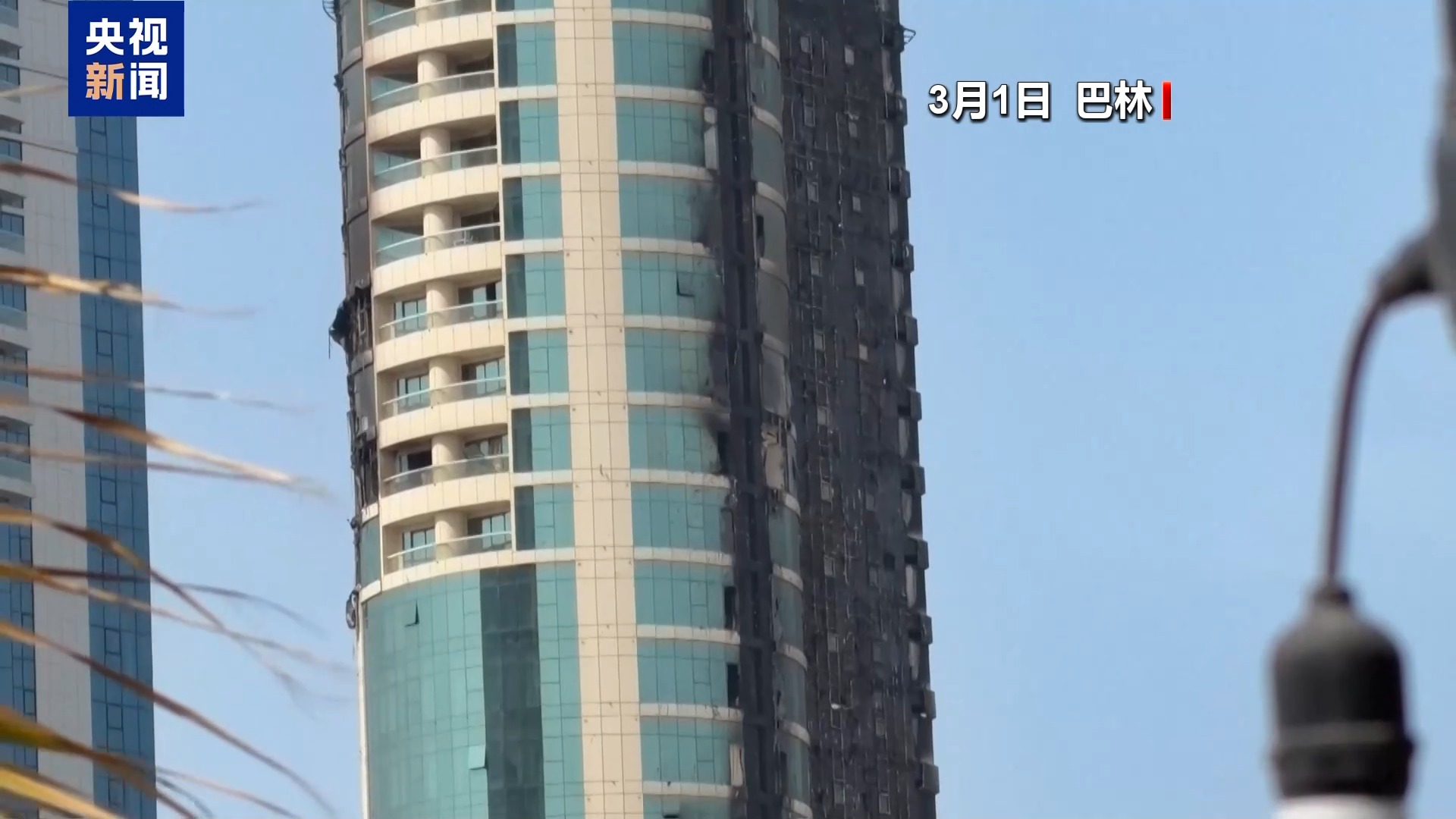
△ Bahrain International Airport and surrounding buildings attacked
Following the huge explosion heard in the area where the U.S. military base is located in Bahrain on February 28, Bahrain International Airport was attacked by drones in the early hours of March 1, prompting the airport to initiate an emergency response and evacuate relevant personnel.
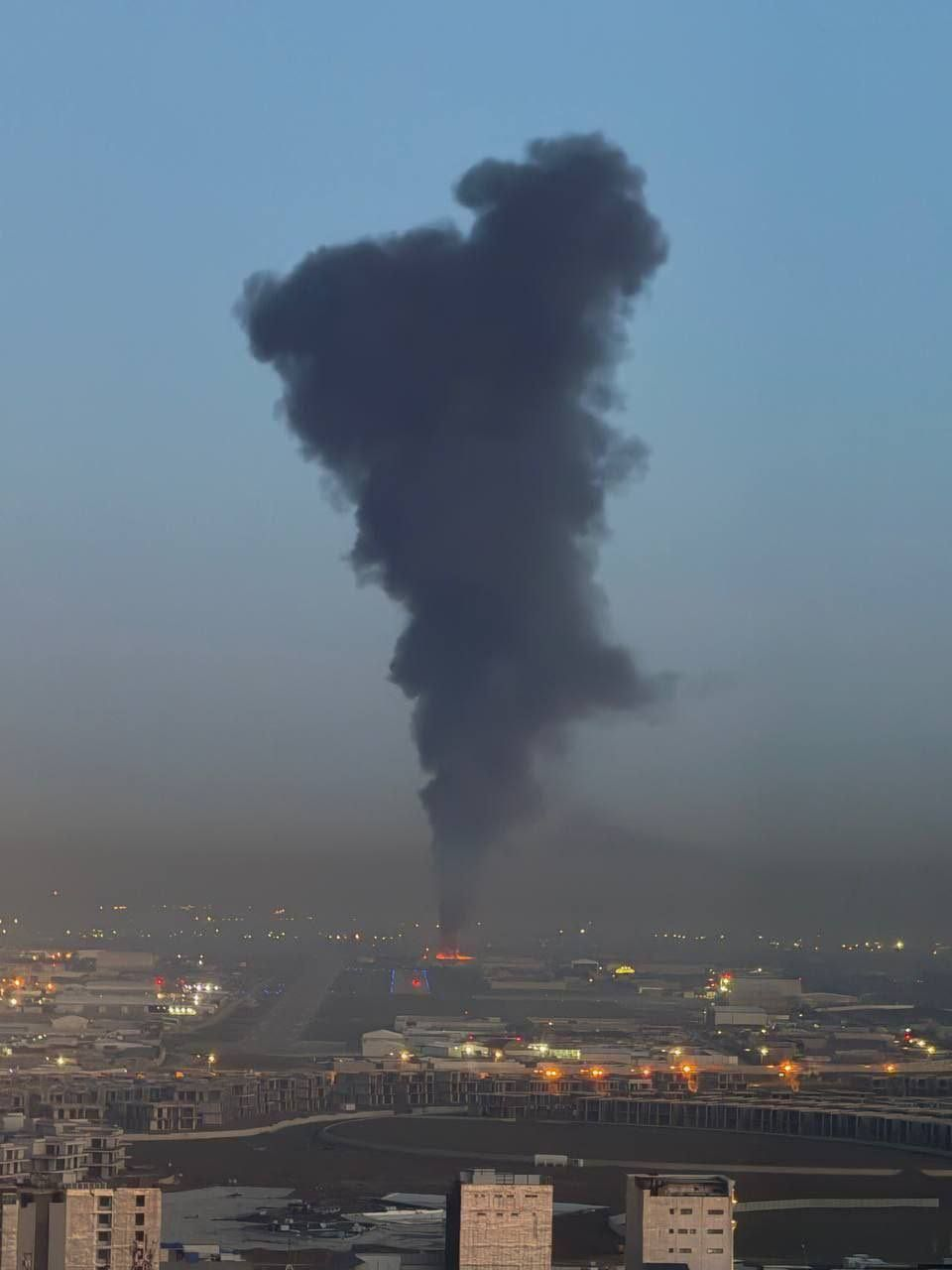
△ On March 1, thick black smoke appeared over Erbil Air Base in Iraq
In Iraq, local militia group "Islamic Resistance Organization" has continuously launched multiple drone and rocket attacks against U.S. units in the region on February 28 and March 1. On the 1st, thick smoke was seen rising from the Erbil Air Base, where U.S. troops are stationed.
The Secretary of Iran's Supreme National Security Council, Larijani, later explained the attacks on military bases in multiple Middle Eastern countries on the 1st. Larijani addressed regional countries in Arabic: "We have no intention of attacking you. But when your domestic bases are used to target us, and when the U.S. uses those bases to carry out operations in the region, we will strike them." He stated that Iran believes these bases do not belong to regional countries, "but are U.S. territory."
Multiple oil tankers attacked in the Persian Gulf and the Strait of Hormuz
In the Strait of Hormuz, on the evening of February 28, after the IRGC announced a ban on any vessels passing through the Strait, an oil tanker attempting to pass through the strait on March 1 was hit and began to sink.
In the 8th announcement released by the IRGC on the night of the 1st, Iran stated that three violating U.S. and British oil tankers in the Persian Gulf and the Strait of Hormuz were attacked by missiles. Additionally, the IRGC issued a warning that if Iran's oil and gas facilities were attacked, the oil and gas facilities of all countries in the region would be destroyed.
As one-fifth of the world's seaborne oil needs to pass through the Strait of Hormuz for transport, some analysts believe that a blockade of the Strait of Hormuz would have a significant impact on the international energy market, with expectations of a strong rise in international oil prices in the short term.
The Organization of the Petroleum Exporting Countries (OPEC) announced on the 1st that eight major oil-producing countries decided to increase production by an average of 206,000 barrels per day in April.
Iran establishes a temporary leadership committee; U.S. and Israel continue to maintain high pressure on Iran
In terms of domestic politics in Iran, on the 1st local time, Iranian officials officially announced that Iran's Supreme Leader Khamenei was killed in the U.S. and Israeli attacks on February 28, "dying in the line of duty." High-ranking officials, including the Chief of Staff of the Iranian Armed Forces and the Minister of Defense, also died in the attacks.
Iran's temporary leadership committee begins operations
Regarding the leadership adjustments and work deployment following the deaths of Khamenei and other senior officials, the Secretary of Iran's Supreme National Security Council and advisor to the Supreme Leader, Larijani, announced on the 1st that a Iranian Leadership Committee would be established that day to elect a new Supreme Leader. The President of Iran, Pezeshkian, the Minister of Justice, and a legal scholar from the Guardian Council will lead the country.
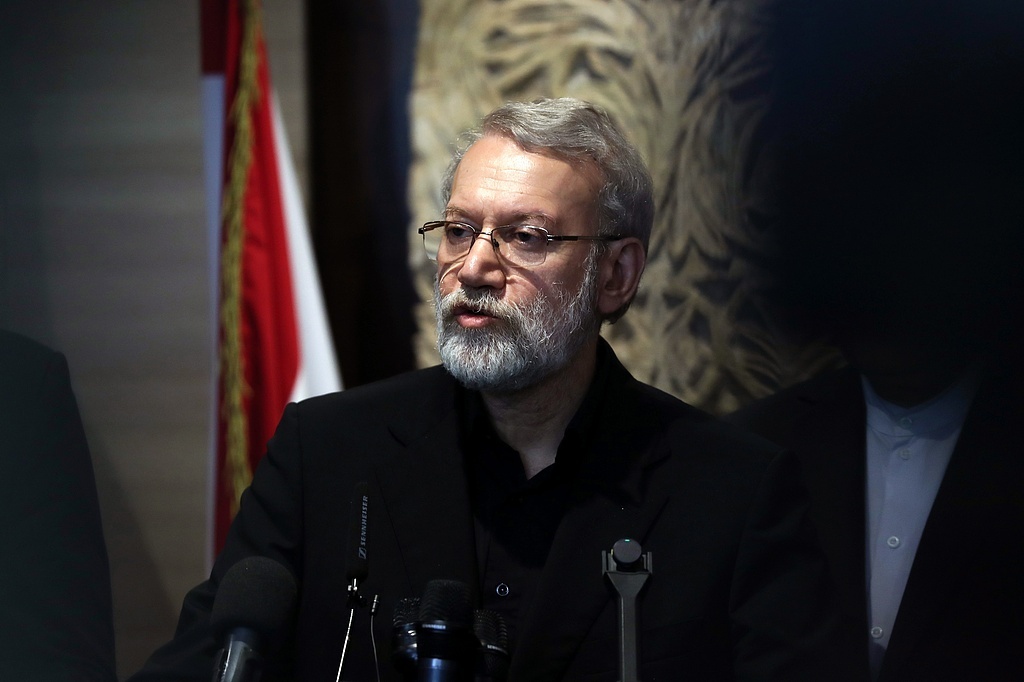
△ Secretary of Iran's Supreme National Security Council and advisor to the Supreme Leader, Larijani (file photo)
Later on the 1st, Iranian President Pezeshkian stated in a video speech that the Iranian temporary leadership committee has begun operations that day until a new Supreme Leader is elected. Pezeshkian also stated that the Iranian armed forces would make the enemy "despair."
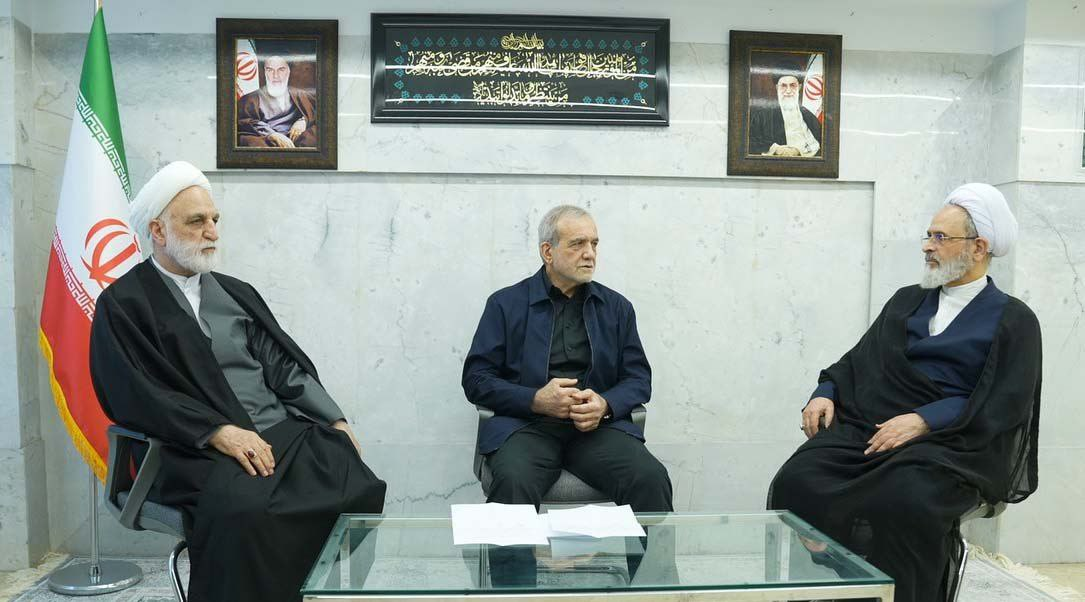
△ Iranian President Pezeshkian, Iranian Chief Justice Ejei, members of the Guardian Council, Vice Chairman of the Assembly of Experts, and the head of the Iranian seminary, Alafi, attended the second official meeting of the Iranian temporary leadership committee.
Iran's Chief Justice Ejei also officially announced on the night of the 1st that the temporary leadership committee has been legally established and is fulfilling its duties in the most efficient manner. As of late night on the 1st, the Iranian temporary leadership committee has held its second official meeting, with Iranian President Pezeshkian, Iranian Chief Justice Ejei, members of the Guardian Council, Vice Chairman of the Assembly of Experts, and the head of the Iranian seminary, Alafi, attending the meeting as core members.
"Iran will firmly continue the path advocated by Khamenei"
Regarding Iran's future direction, Iranian Foreign Minister Zarif stated in his tribute to Khamenei that Khamenei's path is one of "faith, resistance, and hope," which will continue to be followed and upheld by its followers, and Iran will continue to move forward along its established direction.
U.S. President warns Iran not to retaliate
Regarding the IRGC's statement about launching "the most intense offensive operation in history," U.S. President Trump responded on the 1st, saying: "They better not do that, because if Iran does, we will respond with unprecedented force."
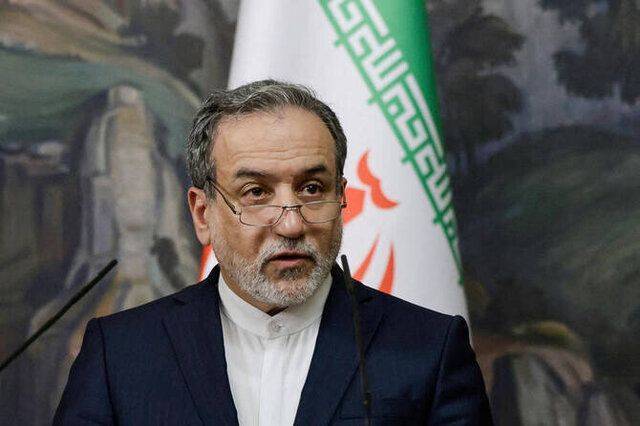
△ Iranian Foreign Minister Zarif (file photo)
Later on the 1st, Iranian Foreign Minister Zarif responded to Trump's remarks urging Iran "not to retaliate," stating that no one can tell Iran that it does not have the right to self-defense. Iran will defend itself at all costs. To protect the Iranian people, Iran has no restrictions.
Israeli Prime Minister states that strikes against Iran will be further strengthened
U.S. President states that military actions against Iran will last about 4 weeks
Israeli Prime Minister Netanyahu stated on the 1st at the Israeli Defense Forces headquarters in Tel Aviv that in the coming days, Israel's strikes against Iran will be further intensified.
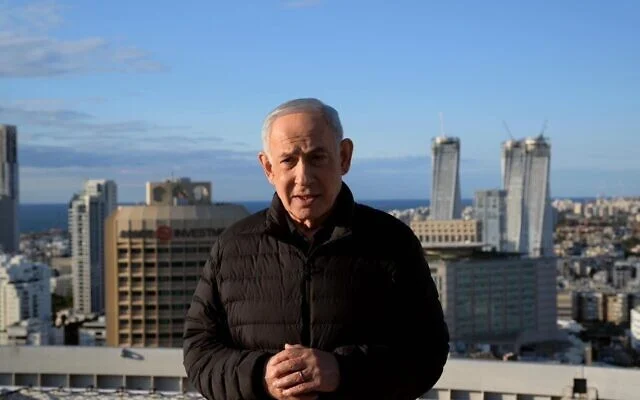
△ Israeli Prime Minister Netanyahu
The Israeli military also stated that in the ongoing conflict with Iran, 100,000 reservists have already been mobilized. The Israeli military stated that ground forces are also being increased in border areas adjacent to Syria, Lebanon, the Gaza Strip, and the West Bank.
Reporters from the Central Station also learned from U.S. sources on the 1st that President Trump has planned the duration of this military action against Iran to be "about 4 weeks."
As the conflict continues to escalate, the U.S. President reveals intentions to dialogue with Iran
Just as the confrontation and conflict between the U.S., Israel, and Iran continue to escalate, later on the 1st, news emerged that U.S. President Trump intends to engage in dialogue with Iran's new leadership.
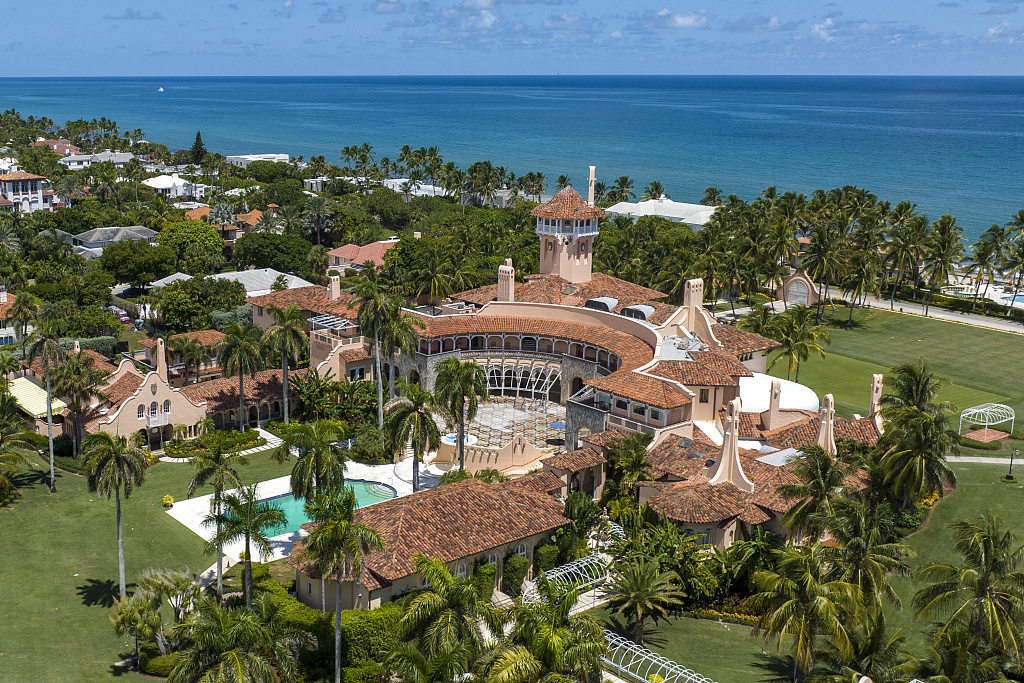
△ Mar-a-Lago in Florida (file photo)
Details show that Trump, during a phone interview at Mar-a-Lago in Florida, stated: "They want to talk, and I agree to talk, so I will talk to them." He expressed that Iran "should have reached an agreement earlier," adding, "that was a very practical and easy thing to do, but they waited too long."
When asked about the timing of the dialogue, Trump said it was "inconvenient to disclose." He also mentioned that some Iranian officials who participated in negotiations over the past few weeks "are no longer around."
However, there has been no official response from Iran regarding the above situation.
Reporters丨Li Jiannan, Wang Zheng, Cao Jian, Zhou Xuan, Jiang Haoyu, Zhang Yuchen
Iran launched a large-scale counterattack against U.S. and Israeli military bases from February 28 to March 1, 2023, following airstrikes by Israel and the U.S. The Iranian Islamic Revolutionary Guard Corps reported significant casualties, with 560 U.S. military personnel affected. Over 100 Israeli fighter jets participated in airstrikes targeting Iranian command centers, while Iran claimed to have attacked 27 U.S. military bases in the region.
- Iran launched a large-scale counterattack against U.S. and Israeli military bases.
- 560 U.S. military casualties reported due to Iranian strikes.
- Over 100 Israeli fighter jets participated in airstrikes against Iran.
- Iranian Revolutionary Guard Corps claimed to have attacked 27 U.S. military bases.
- Casualties in Iran from U.S. and Israeli strikes totaled 165.