
U.S. Military Blocks the Strait of Hormuz
[Global Times Correspondent in Saudi Arabia Ren Haoyu, Global Times Special Correspondent in the United States Feng Yaren, Yu Wen] The U.S. Central Command began implementing a new directive to "block the Strait of Hormuz" starting on the 13th, enforcing a blockade on all maritime traffic entering and exiting Iranian ports. This news has caused international oil prices to surge again, returning to above $100. A spokesperson for the Iranian Armed Forces' Khatam al-Anbiya Central Headquarters stated that Iran will firmly implement the "permanent mechanism for controlling the Strait of Hormuz," asserting that enemy vessels have no right to pass through the Strait of Hormuz now or in the future. International opinion analysis suggests that the U.S. action aims to block Iranian oil exports and cut off its oil revenue, thereby weakening Iran's long-term combat capabilities. However, the immediate consequence may be an escalation of the Strait of Hormuz crisis, widening the oil supply gap and further driving up international oil prices. Many have questioned the logic and effectiveness behind the U.S. move. An American lawmaker stated, "I don't understand how blocking the Strait of Hormuz will force the Iranians to open the Strait of Hormuz?" On the 13th, Chinese Foreign Ministry spokesperson Zhao Lijian stated that the Strait of Hormuz is an important international trade route for goods and energy, and maintaining security, stability, and smooth passage in the region aligns with the common interests of the international community. The root cause of the obstruction of navigation in the Strait lies in the conflict in Iran, and the way to resolve this issue is to cease fire and stop the war as soon as possible. All parties should remain calm and restrained, and China is willing to continue to play a positive and constructive role.
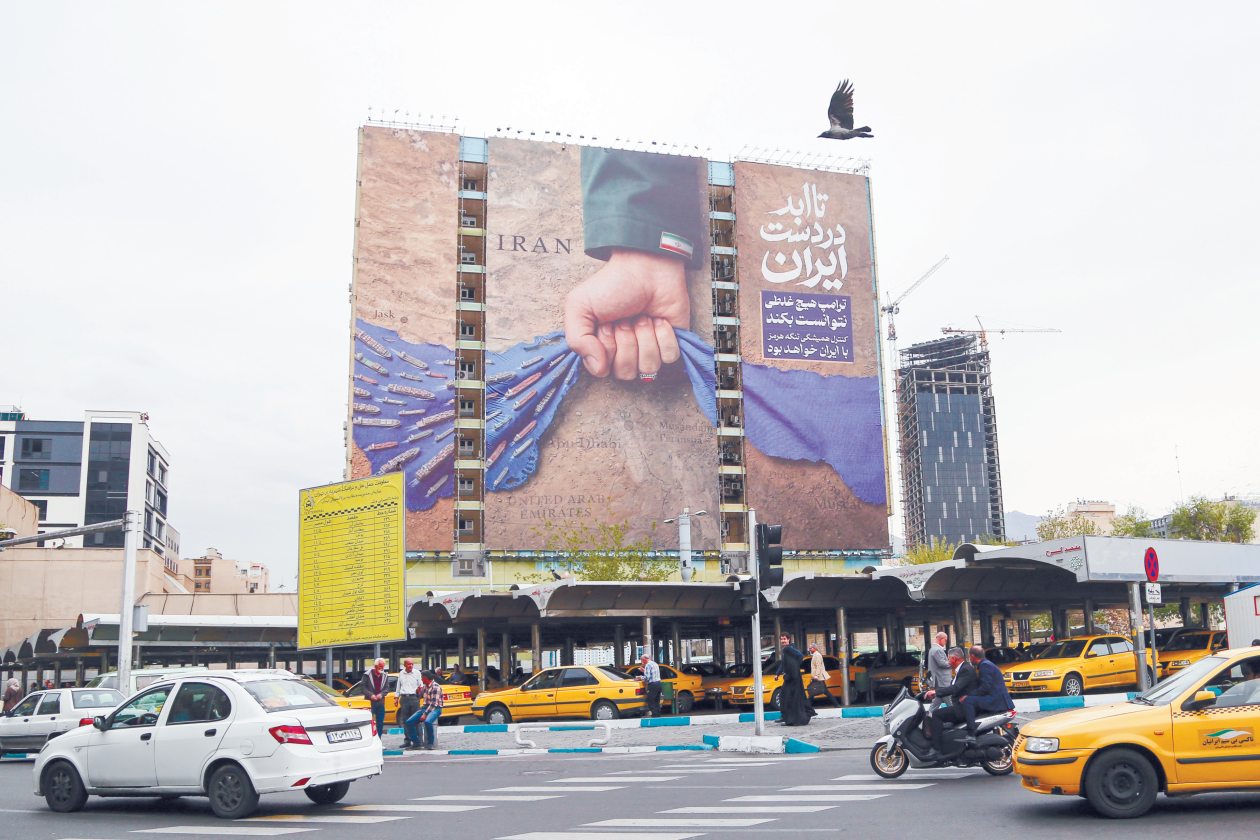
Iran's Strong Response
U.S. President Trump stated on social media on the 13th that the U.S. will block ships entering and exiting Iranian ports starting at 10 a.m. Eastern Time on the 13th (10 p.m. Beijing Time on the 13th), and any Iranian vessels approaching the U.S. blockade line will be sunk. CNN reported that since the outbreak of the U.S.-Iran war, the Strait of Hormuz has not been completely closed, and Iran has continued to allow some oil tankers to pass through to sell oil. "The blockade is both an economic warfare tactic and a military tactic. By blocking the Strait, Trump can cut off a key source of funding for the Iranian government and military operations."
The British newspaper The Guardian reported that the U.S. military has not disclosed many details about how to execute this blockade mission, including how many warships will be involved, whether aircraft will be used, and whether Gulf allies will assist. Experts indicate that considering environmental risks, the U.S. military is unlikely to launch missiles or other weapons at Iranian tankers. The most likely scenario is an attempt to force Iranian tankers to change course through threats; if this fails, armed personnel may be dispatched to board and take control of the vessels. Reuters warned that if the U.S. military successfully intercepts Iranian tankers, Tehran is likely to launch more attacks on U.S. vessels and their allies' oil facilities. These attempts to force Iran to "submit" could provoke retaliation and a new round of military escalation.
The Iranian side quickly responded strongly. Iran's chief negotiator and Speaker of the Islamic Consultative Assembly, Mohammad Baqer Qalibaf, who had just returned from Pakistan, posted a picture of gas prices at U.S. gas stations on social media, stating, "Enjoy the current gas prices. Under the so-called 'blockade,' you will soon miss the $4-5 per gallon gasoline."
A spokesperson for the Iranian Armed Forces' Khatam al-Anbiya Central Headquarters stated on the 13th that the U.S. restrictions on the navigation of vessels in international waters are criminal acts and acts of piracy. The security of ports in the Persian Gulf and the Gulf of Oman belongs either to everyone or to no one. If Iran's port security in the Persian Gulf and the Gulf of Oman is threatened, then any port in the Persian Gulf and the Gulf of Oman will be unsafe. Enemy vessels have no right to pass through the Strait of Hormuz now or in the future, while other vessels will continue to be allowed to pass through the Strait, but must comply with the regulations of the Iranian Armed Forces.
The "double blockade" of the Strait of Hormuz has put vessels from multiple countries in an awkward position. The Korea Herald reported on the 13th that the U.S. blockade is referred to as a "selective blockade," targeting shipping related to Iran. South Korean experts stated that this will inevitably lead to a double blockade, "Iran has already restricted shipping, essentially only allowing vessels related to Iran or those considered non-hostile to pass. Therefore, even if the U.S. allows other vessels to pass—such as the 26 South Korean tankers stranded in the Strait of Hormuz—they still cannot move. They are effectively trapped, caught in a dilemma."
Singapore's Asia News Network reported that the U.S. blockade will prevent approximately 2 million barrels of Iranian oil from entering the world market each day, further exacerbating global supply tensions. Quincy Institute for Responsible Statecraft Executive Vice President Parsi stated on CNBC, "Removing more oil supply from the market, especially the only oil that can flow out of the Persian Gulf at present, will further push oil prices up to around $150 per barrel."
UK Prime Minister: No Support
Trump stated in an interview on the 12th that high oil prices may persist until the U.S. midterm elections in November this year. CNN believes that while launching the war against Iran, this administration has sought to control oil prices, coordinating the largest global emergency oil reserve release, and last month lifted sanctions on hundreds of millions of barrels of Russian oil. However, now, the U.S. government is risking pushing up oil and gas prices to maximize its leverage over Iran to end the war.
However, the effectiveness of this measure is questioned by many. "The U.S. president wants to solve the problem quickly. But the reality is that the blockade mission is difficult to accomplish alone, and it may not be sustainable in the medium to long term," stated a senior Pentagon official and current researcher at the Washington Institute for Near East Policy, Strauss. The Wall Street Journal reported that retired Navy officer Clark believes that while it is not difficult to initiate a blockade against Iranian ports, maintaining the blockade is challenging. Once Iran launches missile, drone, or speedboat attacks, the U.S. military will need to deploy more forces to maintain the blockade.
"I don't understand the logic behind this." On the 12th, U.S. Senate Intelligence Committee Chief Democrat Mark Warner stated, "I don't understand how blocking the Strait of Hormuz will force the Iranians to open the Strait of Hormuz?" "How can this lower gas prices?"
The New York Times reported that Trump stated on the 12th that other countries would assist the U.S. in blocking Iran, but so far, no country has responded. British Prime Minister Starmer stated on the 13th that no matter the pressure, the UK will not be drawn into a war against Iran and will not support the blockade of the Strait of Hormuz, as it does not align with British national interests. The UK will continue to push for all parties to open the Strait of Hormuz.
Australian Prime Minister Albanese stated on the 13th that ceasefire negotiations should be resumed as soon as possible, the Strait of Hormuz should be fully reopened, and the freedom of navigation for all countries should be guaranteed. Spanish Defense Minister Robles stated that the proposed blockade by the U.S. is "nonsensical," "since the beginning of this war, everything has been nonsensical, and this is another example of the world falling into a vicious cycle." Japanese Chief Cabinet Secretary Hirokazu Matsuno stated on the 13th that Japan is monitoring the situation's development and has not yet decided whether to deploy the Self-Defense Forces to conduct mine-clearing operations in the Strait of Hormuz.
The New York Times quoted experts commenting that Trump may have overestimated the effectiveness of the economic pain caused by a maritime blockade in changing Iran's position. Al Jazeera reported on the 13th that Iran has been under sanctions since 1979, and despite serious economic problems, its economic resilience is very strong, while the global economy may suffer faster and deeper damage than Iran. The International Monetary Fund has indicated that it will lower global economic growth expectations.
"What has not worked after five weeks of aerial pressure is unlikely to succeed with just maritime pressure," stated Danny Citrinowicz, former head of the Iranian desk at Israeli military intelligence. He believes that a complete blockade of the Strait of Hormuz will not force Iran to submit. "No matter how many threats are imposed, the Iranian leadership is unlikely to accept U.S. manipulation and will never accept what it considers imposed terms."
Pakistan Urges Second Round of Negotiations
According to a report by The Wall Street Journal on the 12th, after negotiations between the U.S. and Iran failed to reach an agreement, Trump is considering resuming limited military strikes against Iran. Qalibaf, upon returning from negotiations in Islamabad, called out to Trump, "If you want to fight, we will accompany you; if you want to talk rationally, we will respond rationally," asserting that Iran "will not yield under any threat."
Saudi Arabia's Al-Medina reported that the U.S. blockade could disrupt the stability of the global energy market in unprecedented ways and may lead to a new round of oil price increases, potentially exceeding the initial surge at the onset of the conflict. Saudi political analyst Adwan Al-Ahmari stated that while the U.S. Navy can relatively easily control the Strait of Hormuz to weaken Iran, the question remains whether the maritime blockade itself is effective enough. Iran has a vast land border and many neighboring countries, allowing it to use alternative land networks and indirect methods to export oil. Iran will not sit idly by. Historically, maritime blockades have not always been decisive tools.
U.S. CBS reported that Pakistan is urging Tehran and Washington to return to the negotiating table and resume dialogue. Pakistan's primary goal is to reach a practical understanding before the ceasefire agreement (which expires on April 22) ends, to prevent a full-scale war from reigniting. Currently, all parties are working to facilitate a second round of talks within this brief window. The report also mentioned that Pakistani officials are increasingly referring to the "Islamabad talks" as the "Islamabad process," indicating their attempt to shape this engagement into a sustained diplomatic avenue rather than a one-time meeting.
The U.S. military has begun enforcing a blockade of the Strait of Hormuz from October 13, 2023, restricting maritime traffic to and from Iranian ports. This action aims to cut off Iranian oil exports, leading to a surge in international oil prices. Iran has responded by asserting its control over the Strait and condemning the U.S. blockade as an act of piracy. The situation has raised concerns about escalating tensions in the region.
- U.S. military has initiated a blockade of the Strait of Hormuz.
- Iran has vowed to enforce its own control over the Strait.
- The blockade aims to cut off Iranian oil exports and revenue.
- International oil prices have surged above $100 per barrel due to the blockade.
- Iranian officials have condemned the U.S. actions as piracy.