
US military needs ‘urgent revolutionary institutional change’ to prepare for modern war, Petraeus says
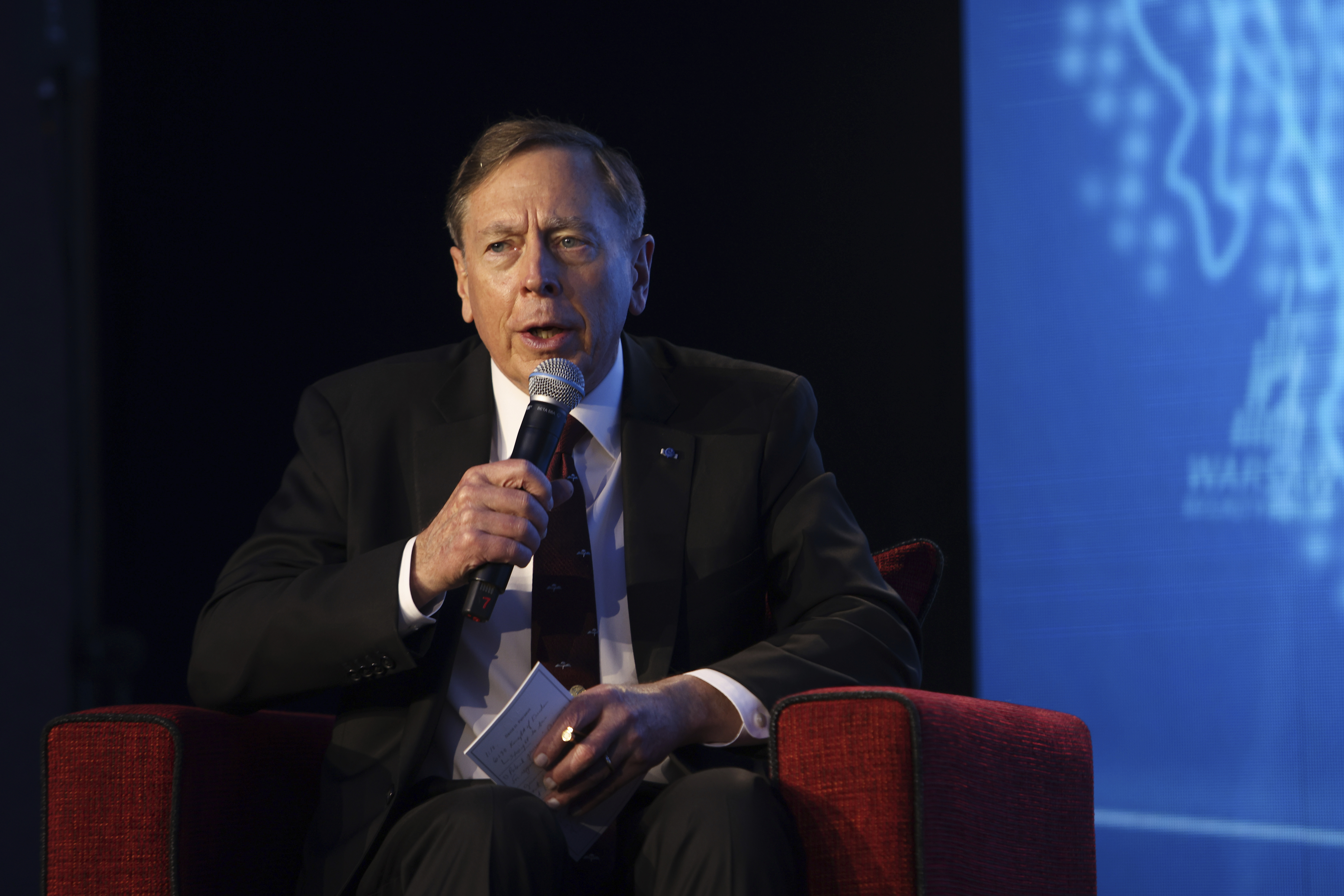
Unmanned systems now inflict more than 90% of Russia’s casualties on the front lines in Ukraine, yet no NATO military, including America’s, has begun the overhaul that kind of war demands, Ret. Army Gen. David Petraeus said Oct. 16, weeks after the Pentagon announced a new command for autonomous warfare.
The extent of the drone war is underestimated, with Ukraine and Russia each using roughly 10,000 drones a day, the former CIA director and onetime commander of U.S. Central Command said, speaking at an American Primary Aluminum Association event in Washington.
“This is an unmanned systems war,” Petraeus said. “Tanks aren’t survivable there anymore.”
For Ukraine, drones and unmanned weapons have become central to how the country has leveraged a smaller, outgunned force against a much larger, better-financed adversary for almost five years.
Ukrainian President Volodymyr Zelenskyy ordered the creation of a new Unmanned Systems Forces military branch in 2024, and the Defense Ministry has said time and again that developing more autonomous weapons is a top priority.
But for the rest of the world, Petraeus said, the fighting in Ukraine is a window into the future and a warning about the dangers of being underprepared for the battles to come.
“Really, no NATO country and not even the United States is undertaking yet the urgent revolutionary institutional change that should be taken based on what we see in Ukraine, which is the future of war,” he said.
The U.S. needs a new concept of warfare that runs through force structure, training, procurement, personnel policy and bases, the general said, replacing much of the legacy, heavily manned equipment with unmanned systems that are cheaper and far more numerous.
“What’s going to happen is we’ll see the introduction of autonomous systems really for the first time in warfare,” Petraeus said.
Washington is making “some commendable steps” toward developing these weapons, according to Petraeus, including establishing a new Autonomous Warfare Command that requires each military branch to stand up its own component command.
“But my hope is that they will not just create an unmanned systems force in terms of force structure, but that they will also spur the initiation of true institutional change,” Petraeus said.
That includes how the U.S. buys weapons, Petraeus said, calling for “very, very substantial manufacturing capacity but not necessarily producing all the time.”
“You want it to be able to make software changes every week, hardware changes every few weeks, which is what’s going on in Ukraine because the enemy continues to evolve and Russia’s been innovating very substantially as well,” he said.
Ukraine will produce as many as 20 million unmanned systems this year, Zelenskyy said in a July speech, with a shortage of trained operators and the acquisition of some weapons components — including optics, gimbals, brushless motors and fiber-optic cable — becoming the domestic industry’s production bottleneck.
The general also rejected the idea that the U.S. war with Iran has hurt Washington’s ability to help Kyiv, though he acknowledged the U.S. has used “a fair number of missile interceptors,” which “makes it more difficult to share those with others around the world.”
The war has consumed between one-half and two-thirds of the U.S. inventory of certain missile-defense interceptors, according to a Congressional Budget Office estimate released in September.
“We can help the Ukrainians in any way in which we decide to assist them,” Petraeus said. “These are policy decisions.”
Ret. Army Gen. David Petraeus stated that unmanned systems are responsible for over 90% of Russian casualties in Ukraine, highlighting the urgent need for NATO, including the U.S., to adapt military strategies and procurement processes to modern warfare. He emphasized the establishment of a new Autonomous Warfare Command and the importance of developing more unmanned systems, as Ukraine continues to leverage these technologies against a larger adversary. Petraeus warned that failure to adapt could leave NATO underprepared for future conflicts.
- Unmanned systems cause over 90% of Russian casualties in Ukraine.
- Ukraine and Russia each deploy approximately 10,000 drones daily.
- Petraeus emphasizes the need for NATO to adapt to modern warfare.
- The U.S. is establishing a new Autonomous Warfare Command.
- Ukraine plans to produce 20 million unmanned systems this year.