
U.S. Navy launches multinational Arctic submarine operation
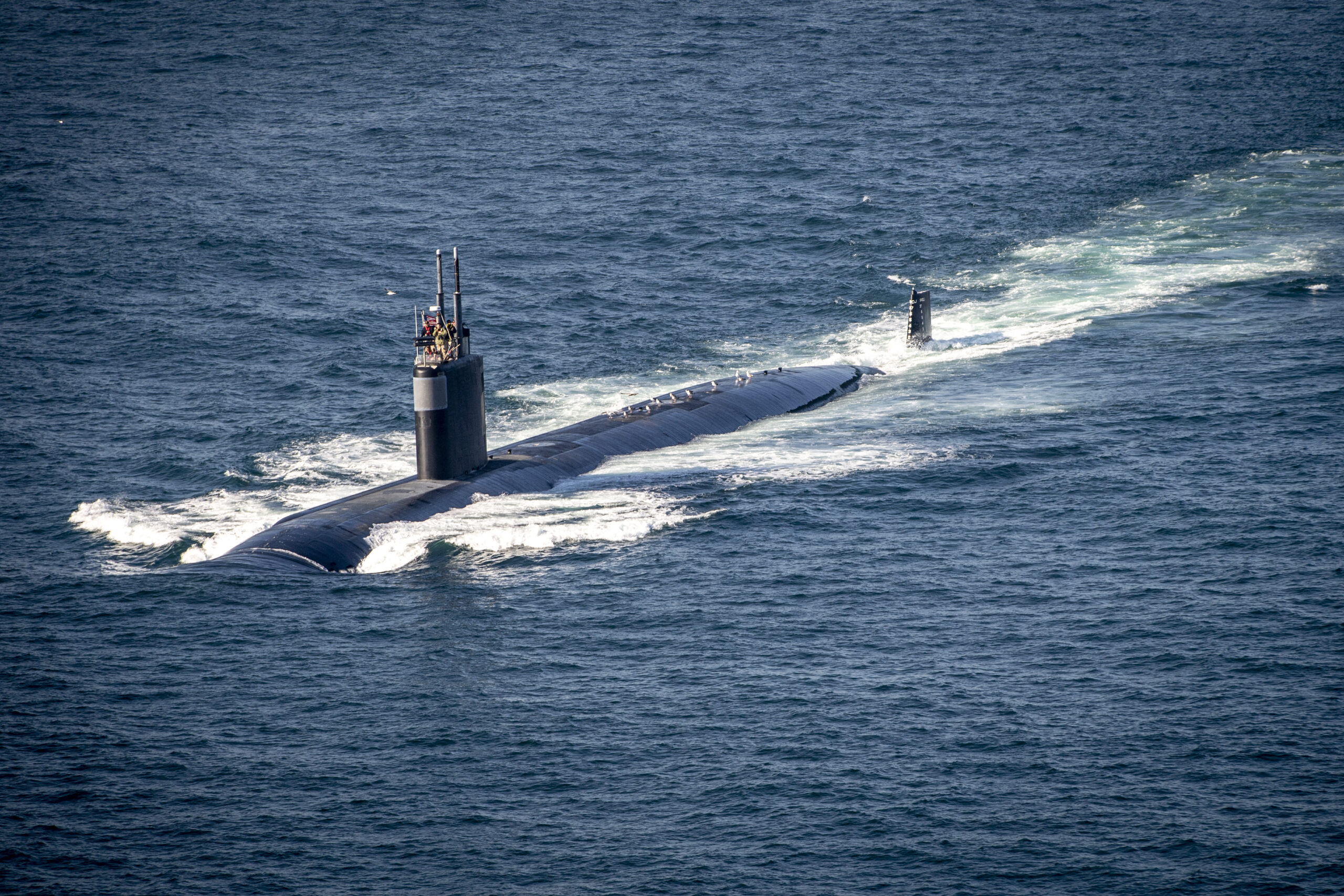
The United States Navy officially began Operation ICE CAMP Boarfish in the Arctic Ocean on March 7, 2026 after the construction of a temporary base on drifting sea ice and the arrival of two fast-attack submarines, USS Delaware (SSN‑791) and USS Santa Fe (SSN‑763).
The three-week operation is designed to test submarine operations and evaluate capabilities in the Arctic environment.
The operation takes place at Ice Camp Boarfish, a temporary base built directly on a drifting Arctic ice floe that functions as a command center for submarine operations, research, and multinational cooperation. The deployment reflects the Navy’s focus on maintaining operational readiness in the Arctic as maritime activity in the region increases.
According to the Navy, ICE CAMP Boarfish involves personnel from the U.S. Navy, U.S. Marine Corps, and Air National Guard, along with international partners including the Royal Australian Navy, Royal Canadian Navy, Royal Canadian Air Force, French Navy, Royal Navy of the United Kingdom, the Norwegian Defence Research Institute, and the Japan Agency for Marine-Earth Science and Technology.
Vice Adm. Richard Seif, Commander of Submarine Forces, said the operation allows the Navy to test its ability to operate in the region while strengthening cooperation with allied partners.
“The Arctic is a critical region for national security and global stability. Our commitment to a sustained presence and operational readiness here is unwavering,” Seif said.
“ICE CAMP Boarfish allows us to test and refine our capabilities, deepen our interoperability with key allies, and ensure our Submarine Force can project power and defend our nation’s interests in any environment, at any time. Our strength in the Arctic is a testament to the skill and resilience of our sailors and partners.”
The Arctic Submarine Laboratory, a detachment of the Navy’s Undersea Warfighting Development Center, serves as the lead organization responsible for planning and executing the operation. The laboratory acts as the Submarine Force’s main center for Arctic expertise and research.
The camp itself is constructed on a moving sheet of sea ice and includes shelters, a command center, and infrastructure required to support a multinational team operating in extreme Arctic conditions. Building and maintaining such a facility is a complex task due to shifting ice and severe weather.
Capt. David Nichols, the officer in tactical control of this year’s operation, said establishing the camp required extensive coordination and planning.
“Leading this multinational team in such a demanding environment is a privilege,” Nichols said.
“The complexity of establishing a fully functional base on a moving sheet of ice cannot be overstated. The professionalism and dedication of every service member and civilian here is what makes this vital mission possible. We are focused on executing our objectives safely and effectively, further enhancing our collective readiness for Arctic operations.”
The Arctic environment presents unique operational challenges for submarines. Under-ice navigation requires specialized sonar techniques, ice-avoidance procedures, and the ability to surface through thick layers of sea ice.
Exercises such as ICE CAMP allow submariners to train in these conditions while also conducting research on how equipment and crews perform in extreme cold.
The operation also supports scientific observation of the Arctic region. The Navy notes that the Arctic is experiencing a long-term trend of decreasing sea ice, a change that may lead to increased maritime activity, including shipping and resource exploration.
This growing activity has increased the strategic importance of the region for several nations, including the United States and its allies.
ICE CAMP Boarfish is held every two years and was recently elevated from an exercise to an official operation, a change intended to better reflect the Navy’s strategic focus on Arctic readiness.
Content preview only. Full article available at source. View Full Article
The U.S. Navy launched Operation ICE CAMP Boarfish in the Arctic Ocean on March 7, 2026, deploying USS Delaware and USS Santa Fe to test submarine operations. This three-week operation involves personnel from various U.S. military branches and international partners, focusing on maintaining operational readiness in the increasingly active Arctic region. The operation is conducted at a temporary base on drifting sea ice, reflecting the strategic importance of the Arctic for national security.
- Operation ICE CAMP Boarfish began on March 7, 2026.
- Two submarines, USS Delaware and USS Santa Fe, were deployed.
- The operation involves personnel from multiple military branches and international partners.
- The operation aims to test submarine capabilities in the Arctic environment.
- The Arctic is experiencing a trend of decreasing sea ice, increasing maritime activity.