
U.S. Navy opens the door to second radar-hunting missile maker
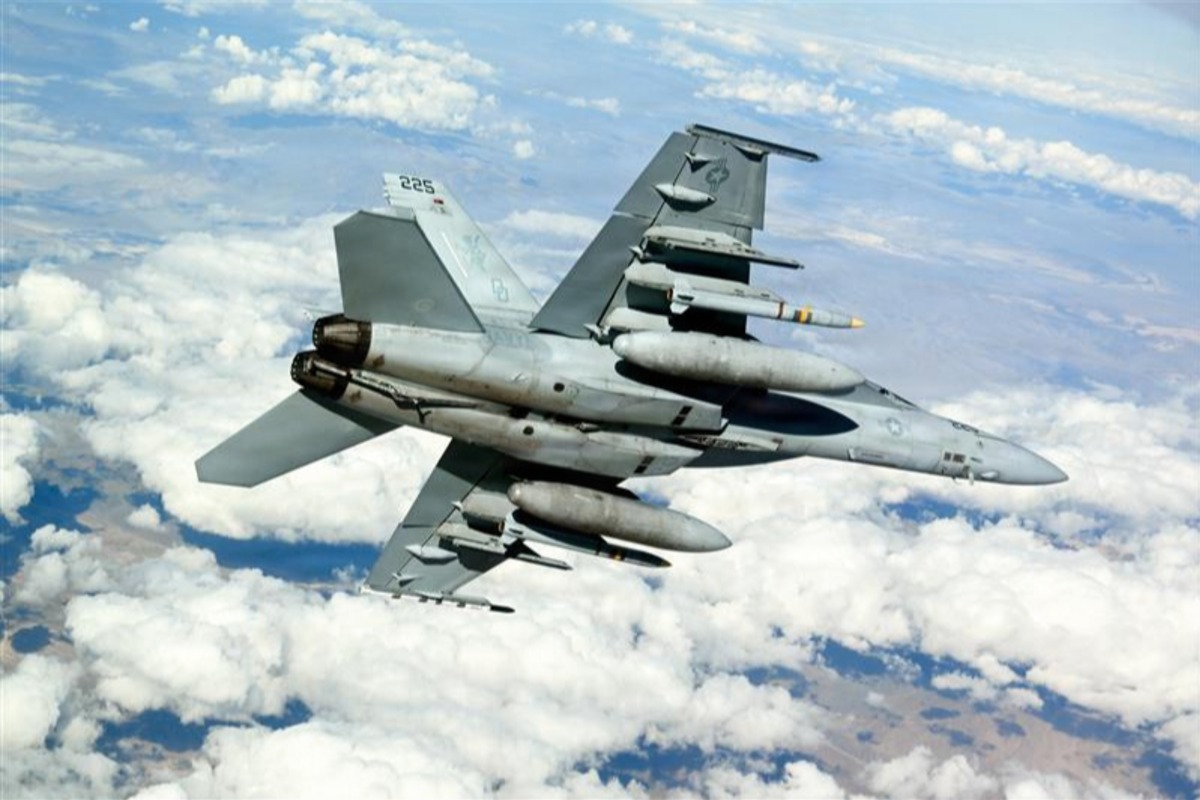
The U.S. Navy has told the defense industry it wants an alternative to its own primary radar-killing missile, and it wants companies capable of building as many as 600 of them every year.
The Naval Air Systems Command, the branch of the Navy responsible for developing and buying naval aircraft and weapons, published a Request for Information on July 1, 2026, seeking companies capable of producing a missile equivalent to the AGM-88G AARGM-ER, the Navy’s current top anti-radiation missile built by Northrop Grumman to hunt down and destroy enemy air defense radar systems.
An anti-radiation missile works by homing in on the radio-frequency energy a radar system emits while it is scanning for aircraft, essentially using the enemy’s own signal against it, a tactic that traces back to the Wild Weasel missions flown over North Vietnam in the 1960s and remains one of the most dangerous jobs in aerial combat because it requires flying toward the exact system trying to shoot the aircraft down.
The Program Executive Office for Unmanned Aviation and Strike Weapons, working through its Direct and Time Sensitive Strike Weapons office known as PMA-242, is running the effort under the name Advanced Emission Suppression Missile, or AESM. This is not the Navy’s first public move toward the program, since NAVAIR published an earlier AESM request for information in February 2026 that described a longer-range, dual-role missile capable of striking both ground radar systems and airborne targets, with an initial production goal of up to 300 rounds a year, according to reporting at the time from Aviation Week and Defense News. The July 1 notice explicitly frames the requirement as seeking an AARGM-ER equivalent missile system, and it roughly doubles the annual production ambition to as many as 600 all-up rounds per year, a jump that signals the Navy has either expanded its planning assumptions since February or is now treating this specific solicitation as a more concrete step toward an actual competitive alternative to Northrop Grumman’s missile.
That distinction matters because AARGM-ER has not had a smooth path to the fleet. The missile achieved a major production milestone in 2024 when it received Milestone C approval, clearing it to enter low-rate initial production, and it completed a live-fire test in a GPS-denied environment in January 2026, but Aviation Week reported the missile’s initial operational capability, originally targeted for around 2024, was not expected until later in 2026, roughly two years behind its original schedule. A Navy program seeking a mature, equivalent alternative to a missile still working through delays and reaching full-rate production is not unusual in defense acquisition, where officials often want a backup option in case a primary supplier cannot deliver on time or in the quantities required, particularly for a weapon type the Navy considers essential to any future conflict against an adversary with a modern, layered air defense network.
The RFI lays out a demanding set of technical requirements for any company hoping to compete. The missile must integrate with the Navy’s F-35 fighter, both carried internally in the stealth jet’s weapons bay and externally on its wings, along with the F/A-18E/F Super Hornet and the EA-18G Growler, the Navy’s dedicated electronic warfare aircraft, and it must comply with military standard interfaces including MIL-STD-1760 and the Universal Armament Interface, technical specifications that let different weapons plug into different aircraft without custom engineering for each combination. NAVAIR is also asking for a Modular Open Systems Approach, an acquisition philosophy that favors weapons built with well-documented, non-proprietary interfaces so the government can swap in new sensors, software, or components from any qualified vendor over the missile’s lifespan rather than being locked into a single manufacturer for decades, a design philosophy the Pentagon has pushed hard across weapons programs specifically to avoid the kind of single-source dependency that can leave a missile program vulnerable to delays or price increases from one company.
Durability requirements in the notice are steep even by missile standards, calling for a 15-year service life, the ability to survive more than 500 hours of captive carriage flight time mounted under an aircraft’s wing without being fired, and the ruggedness to operate in the harsh, corrosive environment of an aircraft carrier. NAVAIR also wants the missile designed with export sales in mind from the start, a detail that reflects how the Navy increasingly views new weapons programs as potential foreign military sales opportunities for allies rather than purely domestic procurement, and companies responding must already hold the security clearances and facility certifications needed to handle information classified up to the Secret level, a baseline requirement given how much of a modern anti-radiation missile’s targeting and guidance technology remains sensitive.
This is a market research request rather than a contract solicitation, and the Navy’s own notice states plainly that responding companies will not be paid for their submissions and that the government has made no commitment to eventually award a contract based on what it learns. Companies have until July 31, 2026, to submit capability statements, and NAVAIR is asking for detailed pricing information broken into cost bands ranging from 50 to 600 units, giving the service a clearer picture of how unit costs might change at different production volumes before it decides whether to move forward with a formal competition.
Content preview only. Full article available at source. View Full Article
The U.S. Navy announced a Request for Information on July 1, 2026, seeking companies to develop a new radar-hunting missile, aiming for an annual production of up to 600 units. This initiative is intended as an alternative to the AGM-88G AARGM-ER missile, which has faced production delays. The new missile must be compatible with multiple Navy aircraft and designed with export potential in mind.
- U.S. Navy published a Request for Information for a new radar-hunting missile on July 1, 2026.
- The Navy aims to produce up to 600 missiles annually.
- The new missile is intended to be an alternative to the AGM-88G AARGM-ER.
- The missile must integrate with various Navy aircraft including the F-35 and F/A-18E/F.
- The design includes considerations for export sales and modular systems.