
U.S. Navy paid $37 million to build more Lionfish underwater drones
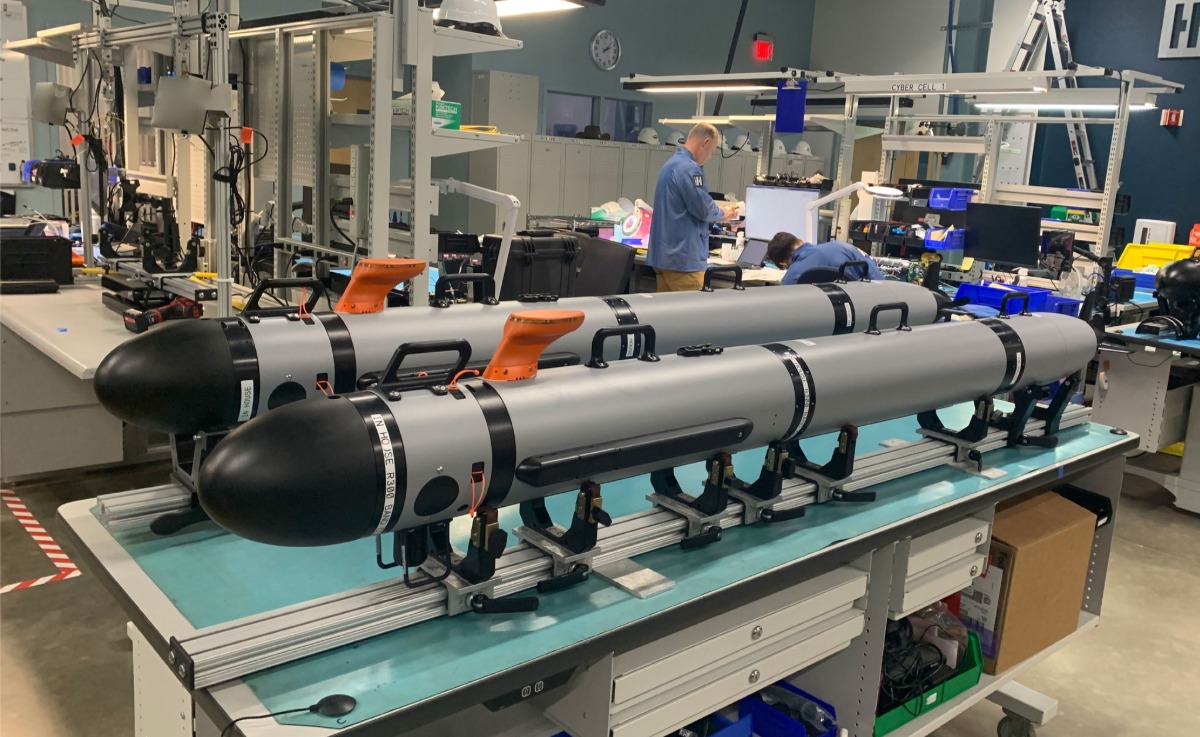
Huntington Ingalls Industries has secured nearly $37 million to keep its Lionfish underwater drone rolling off the production line, with the U.S. Navy exercising a contract option that locks in delivery through May 2027.
The Naval Sea Systems Command in Washington awarded the $36,9 million modification to HII’s Unmanned Systems division on the existing contract N00024-23-C-6308. The money comes from fiscal 2025 other procurement Navy funds and will not expire at the end of the current fiscal year, giving the program financial continuity that smaller defense contracts often lack. The work covers Lionfish Small Unmanned Undersea Vehicle production along with support equipment and ancillary equipment — the logistics and maintenance infrastructure that turns a vehicle into a fielded capability rather than a warehouse asset.
Nearly all of the work, 99 percent, stays in Pocasset, Massachusetts, where HII already operates a dedicated uncrewed systems facility that has been producing Lionfish vehicles since the original contract was awarded in 2023. The remaining one percent goes to Hampton, Virginia. That geographic concentration is deliberate: building and supporting a complex undersea vehicle in a single specialized facility reduces integration risk and keeps the institutional knowledge that makes these programs work concentrated in one place.
The Lionfish is a small unmanned undersea vehicle designed to operate across some of the Navy’s most demanding and dangerous mission sets. Mine countermeasures is the most operationally immediate of them — the ability to find, map, and help neutralize naval mines without putting a sailor or a crewed submarine in the minefield. It is slow, painstaking, and lethal work when done by humans; the Lionfish exists in part to change that calculus. Beyond mines, the system supports intelligence, surveillance, and reconnaissance, anti-submarine warfare, and electronic warfare — a mission portfolio that covers both the detection side and the disruption side of undersea competition.
The undersea domain has become one of the most actively contested spaces in great power competition, with China and Russia both investing heavily in submarine fleets, undersea sensors, and the infrastructure to exploit the deep. The U.S. Navy has responded with a push toward uncrewed and autonomous undersea systems that can operate in contested environments at lower cost and lower risk than crewed platforms. The Lionfish fits squarely into that push — a producible, supportable small UUV that can be deployed from surface ships or submarines and sent into environments where sending a human is either too dangerous or operationally impractical.
The HII company, best known for building nuclear-powered aircraft carriers and submarines at its Newport News and Pascagoula shipyards, has invested significantly in unmanned systems as a growth business. The Pocasset facility is a concrete expression of that investment — a purpose-built production site for uncrewed vehicles that operates separately from the company’s legacy shipbuilding infrastructure. Winning the original Lionfish contract in 2023 and now seeing a nearly $37 million option exercised on that work validates the facility’s role as a going concern rather than a speculative bet.
Content preview only. Full article available at source. View Full Article
The U.S. Navy exercised a contract option worth nearly $37 million with Huntington Ingalls Industries for the production of Lionfish underwater drones, ensuring delivery through May 2027. Most of the work will take place in Pocasset, Massachusetts, where the company has a dedicated facility for uncrewed systems. The Lionfish is intended for mine countermeasures and supports various naval operations, reflecting the Navy's push towards uncrewed systems in contested environments.
- Huntington Ingalls Industries received $37 million for Lionfish drone production.
- The contract ensures delivery through May 2027.
- 99% of the work will be conducted in Pocasset, Massachusetts.
- The Lionfish is designed for mine countermeasures and other naval operations.
- The U.S. Navy is investing in uncrewed systems for undersea operations.