
U.S. Navy pays $23 million to shield warship power grids from hackers
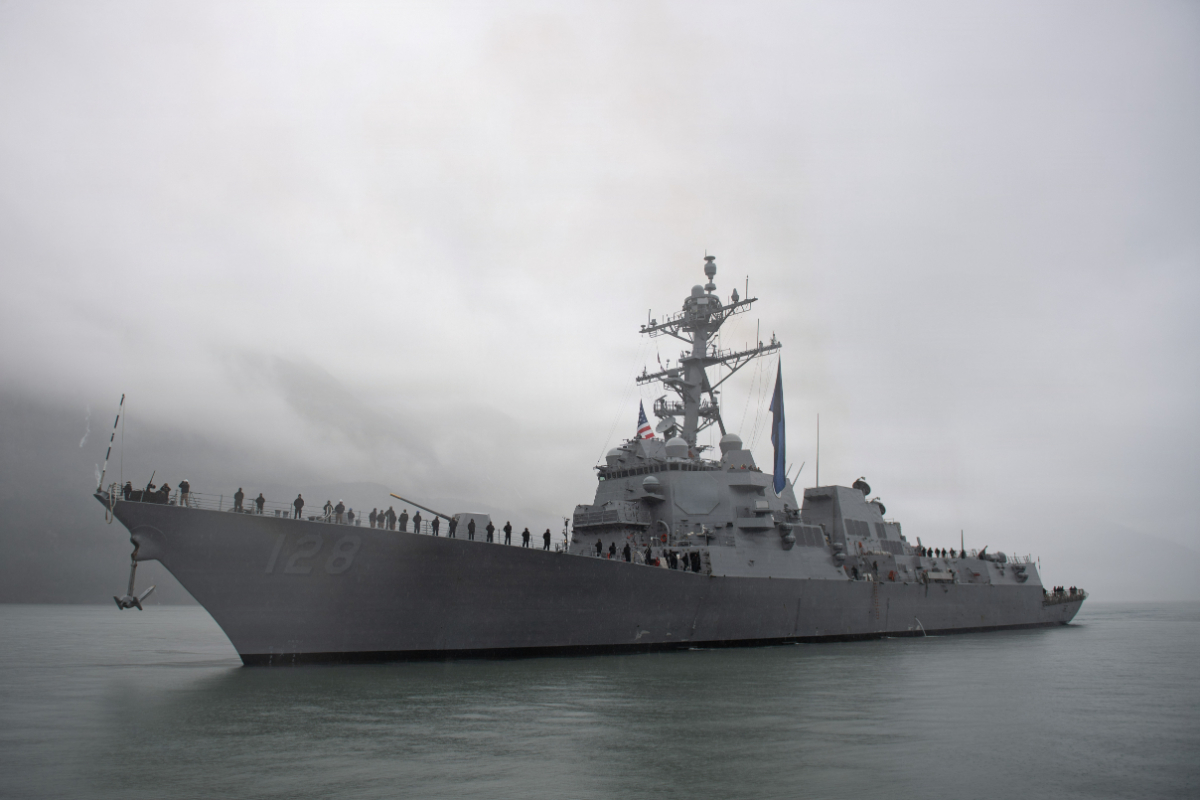
The U.S. Navy has awarded South Carolina-based Integer Technologies a $23.1 million contract to research how zero trust cybersecurity can protect the electrical power systems that run its warships, without slowing the split-second controls those systems depend on.
The Office of Naval Research awarded the cost-plus-fixed-fee contract for a program called Threat Resilient Integrated Defense for Enhanced Naval Technologies, or TRIDENT, the Department of War announced in its daily contract list this week. Integer is teaming with Florida State University and its Center for Advanced Power Systems, and work will take place in Columbia, South Carolina, through October 2030. The award is a science and technology effort, meaning it funds research and prototyping, and it does not put a new cybersecurity system on any ship.
The contract calls for investigations into “threat-informed” zero trust architecture frameworks tailored to the cyber-physical security needs of shipboard power systems. Zero trust is a security model that drops the old assumption that anything already inside a network can be trusted. Every user, device and command has to prove it is legitimate each time it asks for access. The Navy wants an architecture that lets a ship monitor the cyber and physical state of its power plant, change its defensive posture as threats change, and keep fighting through an attack while the electrical system keeps performing.
The funding structure is more complex than the headline figure. The contract has a 36-month base period and a 36-month option that would begin 12 months after award and run alongside the base, which is why the whole effort ends about four years from now. The Navy obligated $10.1 million in fiscal 2026 research, development, test and evaluation funds at award, enough to pay for the full base period, leaving about $13 million tied to the option. Navy research money is available for two years, so the fiscal 2026 funds expire at the end of fiscal 2027, the government’s current budget year. ONR bought the work through its long-range broad agency announcement for Navy and Marine Corps science and technology, an open solicitation that accepts proposals year-round, so the Navy could not say how many bids it received.
The problem TRIDENT is meant to study comes from how warship power has changed. Older surface combatants such as the Arleigh Burke-class destroyers use gas turbines geared directly to the propeller shafts, with separate, smaller generators for electricity. The three Zumwalt-class destroyers were the first U.S. Navy surface combatants built around an integrated power system that generates electricity for both propulsion and weapons. Two Rolls-Royce MT30 main turbine generators and two smaller auxiliary generators produce about 78 megawatts, which feeds the electric motors that turn the shafts and a shipwide grid for sensors, combat systems and hotel loads. The Navy’s planned DDG(X) next-generation destroyer is designed to use a similar integrated power system.
That architecture lets a ship shift power between propulsion and weapons on demand, which matters as electrical loads grow. L3Harris, which builds power distribution equipment for Virginia-class submarines, said this month that advanced radars, directed energy weapons and next-generation propulsion will place extraordinary demands on shipboard power. Laser weapons such as the 60-kilowatt-class HELIOS installed on USS Preble (DDG 88) in 2022 draw their “ammunition” straight from the ship’s electrical system.
It also means a single, software-managed grid now sits underneath nearly everything a warship does. Power is controlled by networked switchboards, power converters, protective relays and a machinery control system that decides how to route electricity and how to isolate a fault before it spreads. Those are operational technology systems: computers whose job is to move physical equipment. If an attacker could send false commands or corrupt the data those controllers rely on, the consequences would be physical, from tripping generators to cutting power to weapons or radars in combat.
The contract identifies two constraints that make zero trust hard to apply aboard ship. The first is latency. Integrated power systems rely on very fast control loops to protect equipment and keep the grid stable, and enterprise zero trust tools typically add checks, such as authentication, encryption and traffic inspection, that take time. A security layer that delays a protective trip or a power transfer by even a short interval could cause the damage it was meant to prevent. The second is the mix of legacy and modern equipment. Ships stay in service for decades and are upgraded in pieces, so a single power plant can contain older controllers that were never designed to authenticate commands alongside newer networked devices. The contract does not say which ship classes or systems the research will model.
Florida State’s Center for Advanced Power Systems is one of the Navy’s main university laboratories for electric ship research. Established in 2000 in Tallahassee, the center operates one of the largest real-time digital power system simulators along with 5-megawatt AC and DC test beds for power hardware-in-the-loop testing, in which real equipment is connected to a simulated ship grid so engineers can stress it under realistic conditions. Cybersecurity for power systems is one of its listed research areas, and it leads the Navy-funded Electric Ship Research and Development Consortium of universities. In June, Naval Sea Systems Command awarded the center an $88 million contract for modeling, simulation and testing of advanced shipboard electrical power and energy systems through 2031.
Integer Technologies is a small business founded in Columbia in 2021 by Duke Hartman and Josh Knight. It has built a portfolio of Navy research work focused on cyber-physical systems, often in partnership with universities. In September, ONR exercised a $10.2 million option on a separate Integer contract with Louisiana State University to develop a cyber-physical resilience framework for Navy maritime platforms, with work running through March 2030. The company was also among more than two dozen firms placed on the Navy’s $982 million multiple-award contract for its Unmanned Surface Vehicle Family of Systems in 2024.
The threat the Navy is preparing for has moved from theory to documented activity on land. In a February 2024 advisory, CISA, the National Security Agency and the FBI assessed with high confidence that Chinese state-sponsored hackers known as Volt Typhoon were pre-positioning themselves on IT networks to enable movement into operational technology and disrupt critical infrastructure in a crisis. The agencies said the group had compromised organizations in the continental United States and its territories, including Guam, a key hub for U.S. forces in the Pacific, and had kept access in some networks for at least five years.
Earlier cases showed what attacks on control systems can do. The Stuxnet worm, discovered in 2010, sabotaged Iranian uranium enrichment centrifuges by manipulating their industrial controllers while showing operators normal readings. In December 2015, a cyberattack on Ukrainian power distribution companies cut electricity to roughly 225,000 customers, the first publicly confirmed blackout caused by hackers. Both targeted fixed infrastructure on land, and a warship differs in important ways: its networks are smaller and more tightly controlled, and it often operates with limited outside connectivity. Ships still connect to shore networks in port and receive software and hardware updates from contractors during maintenance, which gives an attacker possible ways in.
The Department of the Navy has led the military services in applying the Pentagon’s 2022 zero trust strategy to enterprise IT, and its officials said in early 2025 that they were preparing zero trust standards for operational technology, the category that includes ship machinery and weapons platforms. TRIDENT is aimed at that harder category, where a security tool has to work within the timing and reliability limits of physical equipment.
Content preview only. Full article available at source. View Full Article
The U.S. Navy awarded a $23.1 million contract to Integer Technologies for research on zero trust cybersecurity to protect warship power systems. The work will occur in Columbia, South Carolina, through October 2030, focusing on enhancing the resilience of shipboard power systems against cyber threats.
- U.S. Navy awarded a $23.1 million contract to Integer Technologies for cybersecurity research.
- The contract focuses on protecting warship power systems using zero trust architecture.
- Work will take place in Columbia, South Carolina, through October 2030.
- The Navy aims to enhance the resilience of shipboard power systems against cyber threats.
- The contract includes a base period of 36 months with an option for an additional 36 months.