
US questionnaire to NATO partners turns the mutual defense guarantee into a Trump loyalty test
 Dr. Klaus Weber
US Questionnaire to NATO Partners Turns the Mutual Defense Guarantee into a Trump Loyalty Test
Washington has sent its alliance partners a document that Bloomberg published on August 14. It is not a memorandum on threat situations and not an inquiry into capability gaps. It is a questionnaire — and it does not measure what military alliances typically measure. It asks whether a country has “publicly supported” US foreign policy, whether it has denied American forces the use of its bases, and whether it has opposed procurement rules “Made in Europe.” The answers are meant to determine which military goods the United States will cut in Europe.
This is an institutional revolution in the fine print. Since 1949, NATO has been based on a trade-off: the US guaranteed the security of Europe, and the Europeans paid for it to varying degrees. The guarantee applied regardless of political agreement. France's de Gaulle, Germany's Schröder, Ankara's Erdoğan — no one had to like the American course to be protected. The questionnaire replaces this logic with another: protection becomes a reward for political conformity.
What the Questionnaire Really Asks
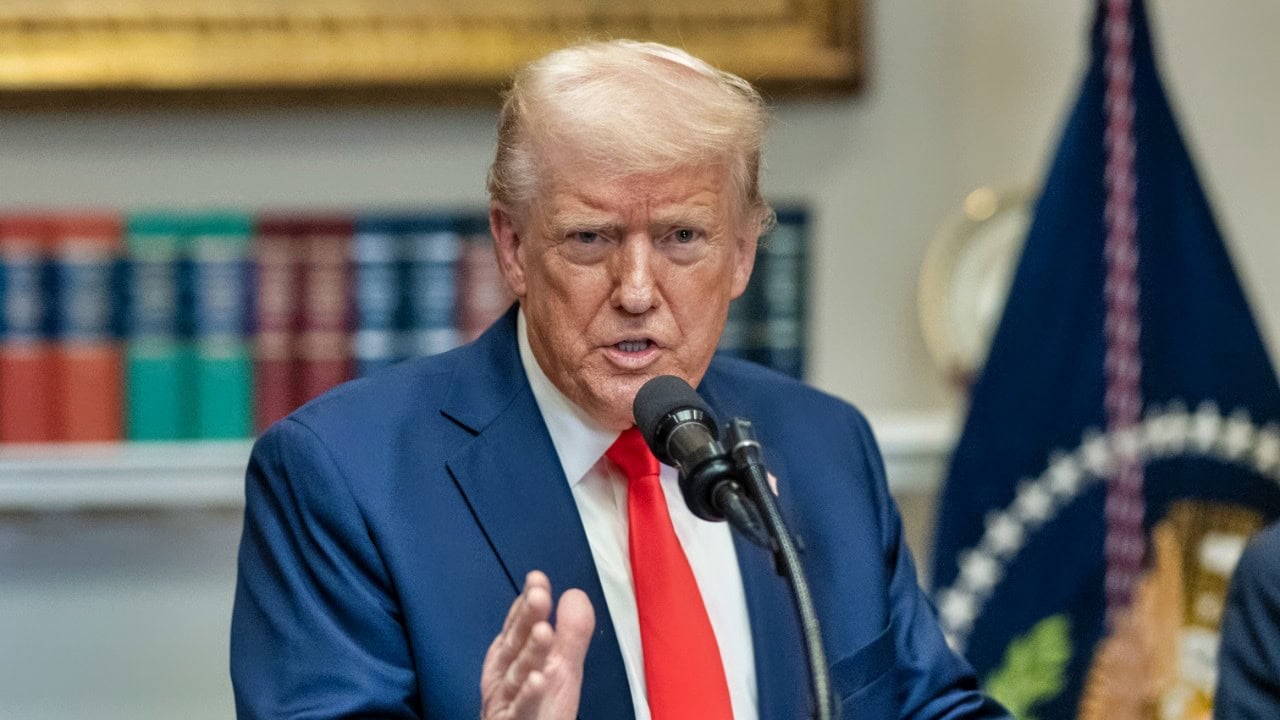
According to Bloomberg, the document contains several blocks of questions. One inquires whether the respective country has acted “publicly supportive” of US foreign policy — explicitly referring to initiatives in the Middle East and the Western Hemisphere, namely the Iran War and the arrest of Nicolás Maduro in January, which occurred without NATO consultation and were deemed illegal by many European governments. A second block asks about restrictions on the use of American bases. Spain had denied Washington the use of its bases after the start of the Iran War. A third block examines whether partners are purchasing from US defense contractors and whether they have publicly opposed “Made in Europe” rules. “If not, would they be willing to do so?” asks the document. And finally, the crucial question: “Has the country shown alignment with the US stance of ‘strong, clear, and quiet’?” — the formula from Defense Secretary Pete Hegseth.
“Allies are resisting the initiative and see it as an attempt to exchange ideological alignment for American protection.” — Bloomberg, August 14, 2026
From Threat to Attitude
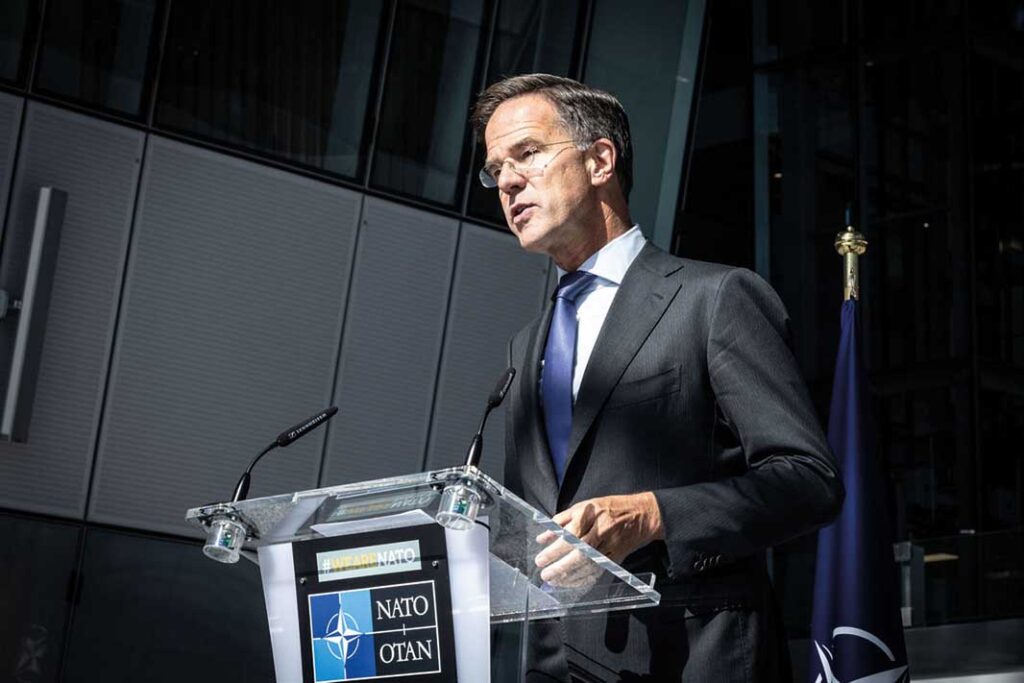
One must realize what this questionnaire means institutionally. The alliance was the answer to a failure of the 20th century: the belief that security could be organized nationally and ideologically. Article 5 is deliberately constructed to be attitude-neutral — it ties assistance to an armed attack, not to a political attitude check. NATO Secretary General Mark Rutte calls the American review “wise” and claims it brings the alliance closer together. This is either appeasement or self-deception. A review that asks whether an ally has “publicly supported” US policy does not measure burden-sharing — that can be expressed as a percentage of GDP. It measures loyalty. And loyalty is not a strategic parameter, but a question of attitude.
Poland as a Reward, Germany as a Punishment
The questionnaire is not an isolated document, but part of a logic that has already materialized in troop distribution. In May, the Pentagon announced the withdrawal of around 5,000 soldiers from Germany — in dispute over the Iran War, after Chancellor Friedrich Merz publicly criticized the US strategy. A few days later, Trump promised an additional 5,000 soldiers for Poland, explicitly referencing his personal relationship with newly elected President Karol Nawrocki. Troop presence thus becomes a tool for reward and punishment: those who publicly support Washington's course receive soldiers; those who criticize it lose them. The eastern flank geography of the US presence has long since become an ideological map.
What the Loyalty Test Means for Deterrence

The real problem is not the discontent in European capitals. It is the effect on deterrence itself. Deterrence only works if the opponent can predict the defender's response. A promise of assistance, whose fulfillment depends on a loyalty test that is reinterpreted annually in Washington, is no longer a guarantee but a variable. Moscow, which has been reading Western debates like an operations map for years, is being confirmed in what it claims: the alliance is divisible, and American protection has a political price that is negotiable.
And the Europeans? They will learn to answer questionnaires. This is the insidious nature of this form of review: it rewards performative loyalty, not capabilities. Those who, in doubt, do not deny a US base, publicly praise the course, and do not demand “Made in Europe” too loudly secure American goods — regardless of whether they are bringing their own military up to speed. The questionnaire thus creates an incentive that no defense summit has ever set: it rewards allegiance and punishes criticism. For European defense integration, this is a creeping poison. Because the sharpest criticism of US policy has recently come from the very capitals that are doing the most for their own defense.
Conclusion
The questionnaire is the logical culmination of a development that has been evident for months: Washington no longer treats the alliance as a collective defense alliance, but as a vassalage that it buys with troop presence. The paradox is that the US simultaneously demands more European responsibility — and precisely that independence necessary for it is to be answered with a loyalty test. One cannot demand independence and test obedience. Those who measure loyalty have already given up trust. And trust is the only currency that deterrence cannot replace.
The U.S. has redefined NATO support criteria, linking military aid to political alignment with U.S. foreign policy. In May 2026, the Pentagon announced the withdrawal of 5,000 troops from Germany while promising an additional 5,000 troops to Poland, reflecting a shift towards rewarding political loyalty. This change raises concerns about the implications for NATO's collective defense principles and deterrence effectiveness.
- The U.S. sent a questionnaire to NATO partners assessing their support for U.S. foreign policy.
- The Pentagon announced the withdrawal of 5,000 troops from Germany due to political disagreements.
- 5,000 troops were promised to Poland as a reward for political alignment with the U.S.
- The questionnaire replaces traditional NATO support criteria with a loyalty test.
- NATO Secretary General Mark Rutte described the U.S. review as wise, indicating a shift in alliance dynamics.