
USAF B-1 Bombers Leave UK Base, Exposing NATO's Iran War Gap
 Alexandra Reeves
USAF B-1 Bombers Leave UK Base, Exposing NATO's Iran War Gap
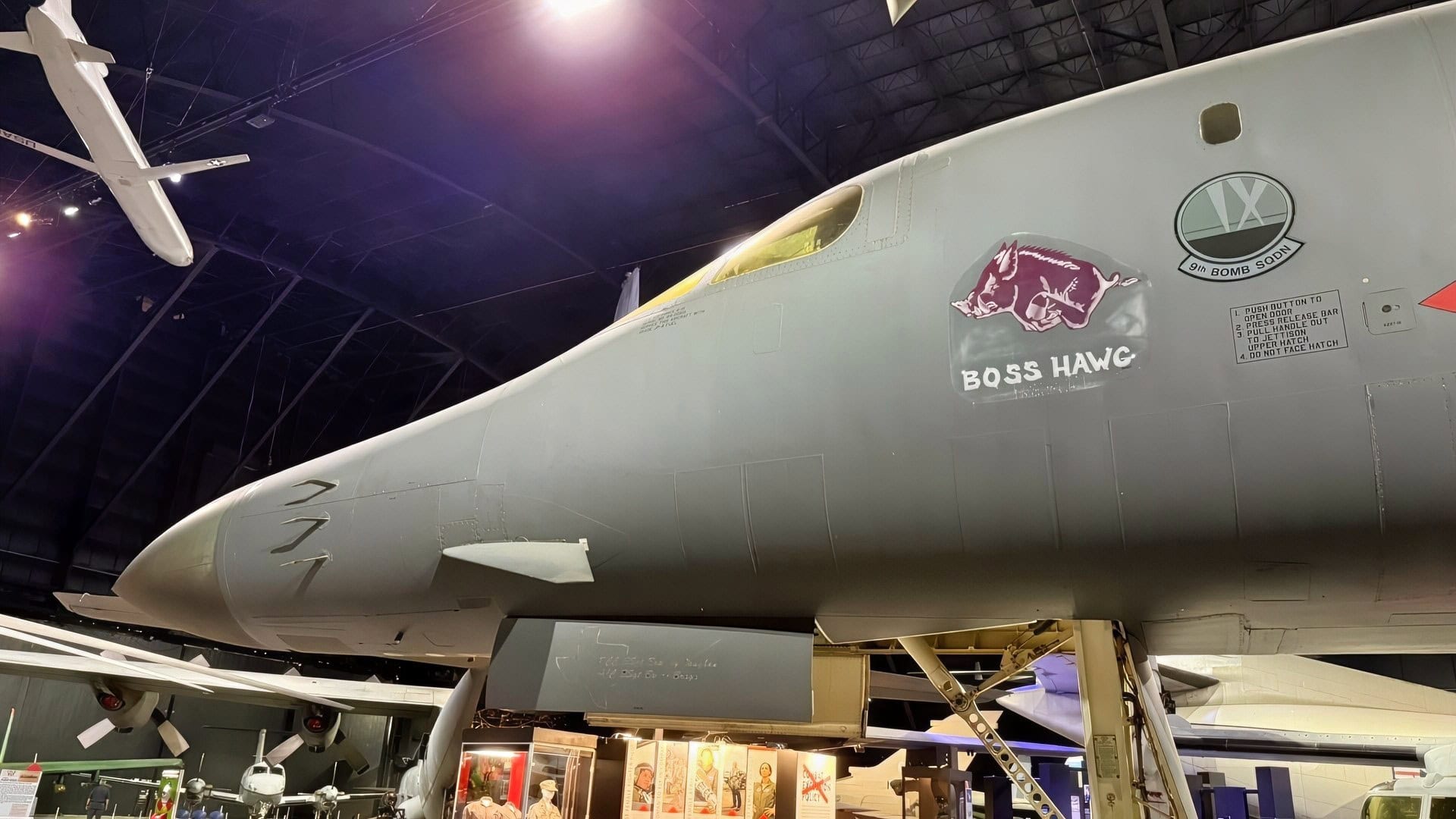
The United States has pulled roughly a dozen B-1 bombers out of RAF Fairford after a security incident near the Gloucestershire base. That is not a declaration that Washington is ending its war with Iran. It is something more revealing: the United States is still willing to fight a long-range air campaign, but one of its most useful European launchpads is now considered too exposed to keep the aircraft sitting there.
A Withdrawal Driven by Base Vulnerability
According to Al Jazeera's October 5 analysis, British authorities evacuated about 85 homes after police responded to three suspicious vehicles near Fairford. Five British men were arrested, then released on bail. British investigators have not publicly established a foreign link, while US Secretary of State Marco Rubio said the incident involved a “foreign actor” without naming one. Iran has denied involvement.
That evidentiary gap matters. The aircraft still left. Washington evidently judged that the immediate protection problem around the base outweighed the operational convenience of keeping the bombers in place. The decision may be temporary, but the military message is permanent enough: a Cold War-era airfield supporting modern strike operations is now part of the target set.
Why the B-1 Matters to the Iran Campaign
The B-1B is not a stealth aircraft. Its value is volume, speed and persistence. Analyst Arun Dawson, quoted by Al Jazeera, put its conventional weapons payload at at least 34 tonnes—the largest payload of any US aircraft. That makes the Lancer particularly useful for a campaign requiring repeated attacks on air-defence nodes, ballistic-missile sites and Islamic Revolutionary Guard Corps facilities.
- Payload: at least 34 tonnes of conventional ordnance, according to the analysts cited by Al Jazeera.
- Mission: high-volume precision strikes rather than nuclear delivery.
- Operational advantage: a forward European base reduces transit time and tanker demand compared with missions launched from the continental United States or Diego Garcia.
Fairford therefore offered a useful middle position. It was closer to Iran than the United States, less politically exposed than some Gulf bases and already connected to the infrastructure needed for heavy bombers. Removing the aircraft does not erase American strike capacity. It makes every sustained operation more expensive.
The Real Cost Is Sortie Generation
The short answer is that the B-1s can still fly. The harder question is how often they can fly, and for how long.
Al Jazeera's reporting, drawing on RUSI analyst Christoph Bergs and other specialists, identifies the practical penalties: longer routes, greater crew fatigue, more aerial refuelling and a harder logistics problem. Diego Garcia is more defensible and already supports major US air operations, but its distance from Iran is a tax paid on every sortie. Gulf bases shorten the flight but expose host governments to Iranian retaliation and make them look like direct participants in the war.
This is the familiar arithmetic of expeditionary air power. A bomber's range is not the same thing as a campaign's usable tempo. The aircraft can reach the target; the question is whether the United States can keep generating sorties without exhausting crews, tankers, munitions stocks and political permission.
This Is Also a NATO Problem
Fairford is a British base used by the United States, which makes its security a transatlantic issue even when the mission is outside NATO's formal Article 5 framework. London approved “defensive” US action from British facilities earlier in the Iran war. That arrangement gave Washington access and gave Britain a degree of influence over how American power was used. The bomber withdrawal narrows both benefits.
Europe has spent years assuming that American air power would remain available in a crisis, while treating the bases that enable it as background infrastructure. That assumption is getting harder to defend. If a small group of vehicles—or even the credible prospect of a small drone or mortar attack—can make a major bomber operating location unusable, the problem is not only Iranian reach. It is inadequate protection for high-value aircraft on allied soil.
There is a temptation to call this a terrorist incident and move on. That would miss the strategic point. Modern air campaigns are vulnerable at their edges: fuel farms, taxiways, maintenance areas, communications nodes and aircraft parked in the open. A base does not need to be destroyed to be operationally defeated. It only needs to become too risky, too politically embarrassing or too costly to use.
What Washington Is Likely to Do Next
The United States has three broad options. It can disperse bombers across several bases, which improves survivability but complicates maintenance. It can move them to Diego Garcia, accepting longer missions in exchange for security. Or it can place them in the Gulf, gaining sortie speed while asking regional partners to absorb the retaliation.
The arrival of additional US naval and Marine forces in the Middle East may reduce the immediate pressure on the B-1 fleet, but it does not solve the basing dilemma. Carriers and amphibious groups add options; they do not replace the efficiency of a forward bomber hub. Nor can Washington assume that Britain will provide an uncomplicated launchpad while the conflict keeps generating threats at home.
The next indicators are straightforward: whether B-1s reappear at another forward base, whether Fairford receives new counter-drone and overhead-protection measures, and whether London publicly tightens the conditions for US operations. Those details will show whether this was a precautionary pause or the first visible retreat from a vulnerable basing model.
Conclusion
The B-1 withdrawal does not mean Iran has neutralised American air power. It means Iran—or the possibility of Iranian-linked attacks—has forced Washington to trade proximity for protection. That trade will slow a prolonged bombing campaign and expose the thin layer of infrastructure beneath NATO's claims of rapid reinforcement.
The uncomfortable conclusion is that the alliance's problem is not a shortage of bombers. It is that too many of them still need to sit in places designed for yesterday's threat. If Fairford cannot safely host a dozen conventional bombers, NATO's next war will be decided as much by base defence as by what happens over Iran.
Sources:
The United States Air Force withdrew approximately a dozen B-1 bombers from RAF Fairford in October 2026 due to security concerns following a suspicious incident nearby. British authorities evacuated homes after reports of suspicious vehicles, prompting the U.S. to reassess the vulnerability of the base. This withdrawal underscores the challenges NATO faces in maintaining operational readiness in the region, particularly regarding air operations against Iran.
- USAF withdrew approximately a dozen B-1 bombers from RAF Fairford due to a security incident.
- British authorities evacuated about 85 homes after suspicious vehicles were reported near the base.
- The withdrawal highlights vulnerabilities in NATO's operational capabilities regarding Iran.
- The B-1 bombers are crucial for high-volume precision strikes in the Iran campaign.
- The incident raises concerns about the security of NATO bases and their ability to support air operations.