
USS Abraham Lincoln's Thailand Port Call Won't Fix Indo-Pacific Carrier Math
 Marcus Chen
USS Abraham Lincoln's Thailand Port Call Won't Fix Indo-Pacific Carrier Math
More than 200 days without a real liberty port is not a symbol of naval stamina. It is a balance-sheet entry. The announcement that USS Abraham Lincoln will dock in Thailand next week, after leaving the Middle East on August 23, matters less as a diplomatic courtesy call than as evidence that the U.S. Navy is still solving one theater's emergency by borrowing combat power from another. A Pacific-assigned carrier spent the better part of nine months doing Central Command work, and the Indo-Pacific got the bill.
That is the part Washington should worry about. Lincoln deployed from San Diego on November 21, 2025 for what was supposed to be a Pacific cruise. Instead it was redirected west, supported combat operations tied to the U.S.-Iran war, and by August had become a case study in how quickly carrier presence can be consumed by a second theater. Reuters reported that the ship had gone more than 200 days without a port call before the Thailand stop. Other reporting from NPR and Stars and Stripes described a crew under mounting strain after a deployment that had already blown past its expected end date.
The Port Call Is Recovery, Not Presence
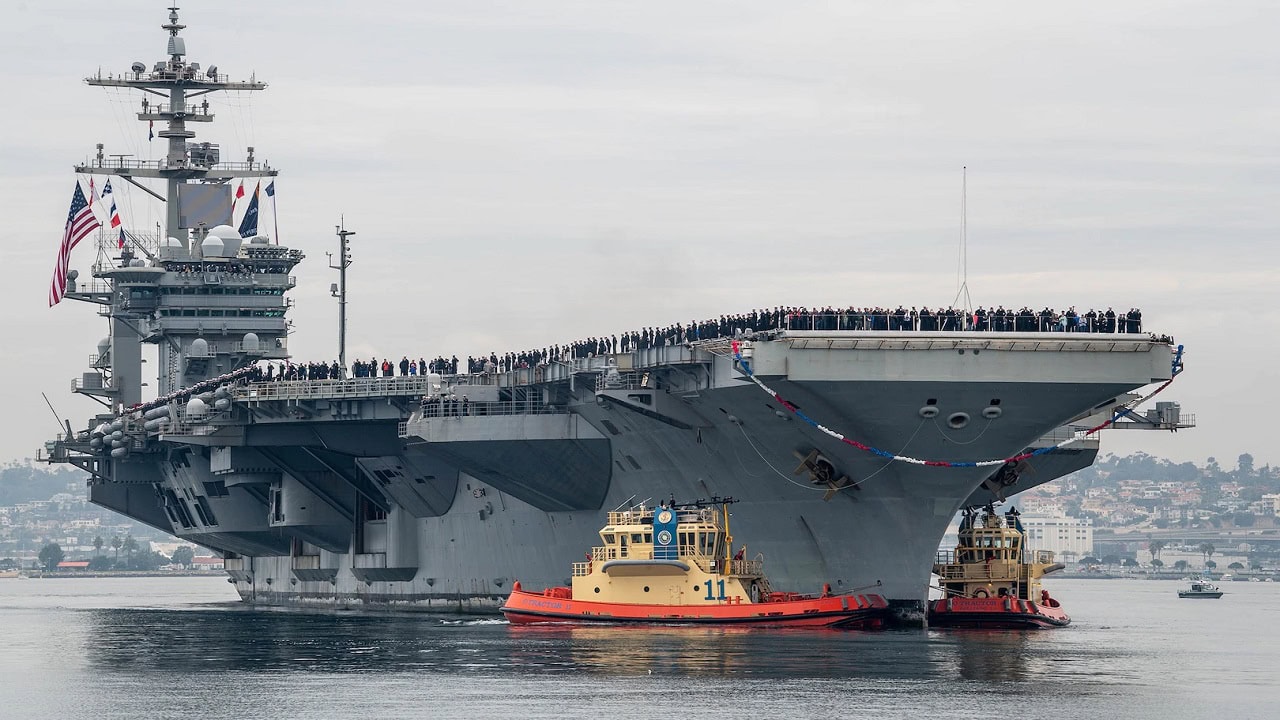
- Ship: USS Abraham Lincoln (CVN-72), a Nimitz-class nuclear aircraft carrier
- Air wing: Carrier Air Wing 9, including the Marine Corps' VMFA-314 F-35C squadron
- Crew: roughly 5,000 sailors and Marines
- Deployment: departed San Diego on November 21, 2025 and was later redirected to the Middle East
- Endurance: more than 240 consecutive days at sea during the 2025-26 deployment, with only a brief Guam stop earlier in the cruise
Those details matter because a Thailand port call should not be mistaken for a meaningful return of combat power to Asia. Anyone who has served at sea knows the difference between a ship arriving ready to surge and a ship arriving because the crew needs to get off the steel for a few days. Thailand's navy itself said the visit is for rest, recuperation and logistics, not for exercises. That is not a criticism of the crew. It is a reminder that operational presence is not the same thing as a hull appearing on the regional map.
Lincoln is a 100,000-ton nuclear carrier with a serious air wing, but a carrier's value is measured in sorties sustained over time, not in press releases about where it docks next. After a deployment stretched this hard, the real questions are maintenance backlog, aircraft readiness, spare parts, crew fatigue and how quickly the strike group can reset. A brief call in eastern Thailand does not answer any of them.
A Pacific Carrier Spent the Year Doing CENTCOM Work
The harder strategic point is that this was supposed to be Indo-Pacific combat power. Lincoln was not some extra hull conjured out of reserve. It was one of the Navy's finite deployable decks, and the same pattern has shown up before: Pacific-tasked carriers are regularly pulled toward the Middle East when Washington wants the visible weight of a flight deck. That creates a simple planning problem for the western Pacific. If one crisis in the Gulf can consume a carrier for nine months, then deterrence around Taiwan and the South China Sea rests on a much thinner bench than the headline number of eleven U.S. carriers suggests.
Marcus Chen's kind of math is not complicated here. Count ready decks, then count transit time, then count the number of theaters asking for the same ship. Lincoln spent months supporting combat operations and blockade-related tasks linked to the Strait of Hormuz. During that period, it was unavailable for the mission sets Washington says matter most in the first island chain: sea control, air defense reinforcement, long-range strike support and visible assurance for allies facing China. If a Pacific carrier can disappear into CENTCOM for most of a deployment, then U.S. force posture in Asia is less a standing fact than a temporary condition.
That matters even more because Lincoln's recent record is not one of effortless surplus. The ship had already come through a 49.5-month refueling and complex overhaul that kept it out of the fleet for over four years. Open-source profiles also show that both its 2024 and 2025-26 deployments ended up serving as examples of a shrinking carrier force being asked to cover too much ocean. The bottleneck is not whether carriers remain powerful. It is whether the Navy can keep enough of them forward in the theater they were assigned to cover.
Crew Strain Is Also Combat Readiness
The mental-health reporting around Lincoln should be read in that same operational frame. NPR described a shipboard environment of exhaustion, crowding and uncertainty after the deployment slipped well past its original timeline. Stars and Stripes reported that sailors and family members raised concerns about self-harm risk, declining morale, disrupted logistics and the absence of predictable port relief. Defense Secretary Pete Hegseth dismissed parts of that reporting, but even the Navy has acknowledged the strain of the deployment and the need for additional support.
This is not a soft issue. A tired carrier is a readiness issue. Fatigue on the flight deck, maintenance under compression, uncertainty about return dates and a crew that has lost confidence in the schedule all feed directly into sortie generation and risk management. Carrier operations already demand precision in one of the least forgiving work environments in the U.S. military. The crew's condition is therefore not separate from strategy; it is one of the variables that determines whether a carrier can keep fighting at the rate Washington assumes.
What Thailand Really Signals
Thailand is the United States' only treaty ally in mainland Southeast Asia, so the port call does carry diplomatic value. It reminds Bangkok that the relationship still has military substance, and it gives the U.S. Navy a visible touchpoint in a region where access politics matter. But that is the outer limit of what this visit means. It does not restore a full-strength U.S. carrier posture in the Indo-Pacific, and it certainly does not solve the larger allocation problem exposed by Lincoln's cruise.
The real signal is harsher. Washington needed a Pacific carrier to cover a Middle East war long enough to push the ship past 200 and then 240 consecutive days at sea. Now the same navy is expected to deter China, reassure allies and keep credible carrier options available across the western Pacific. The math does not work. Either the United States accepts more episodic carrier coverage in Asia, stops raiding Indo-Pacific forces for every Gulf contingency, or finds a larger pool of ready decks than it has today. Thailand gets a port visit. Beijing gets the more important data point.
USS Abraham Lincoln docked in Thailand after over 240 days at sea, primarily for crew rest and logistics. The deployment has raised concerns about crew fatigue and operational readiness, as the carrier was redirected to support Middle East operations, impacting U.S. military presence in the Indo-Pacific. This port call serves as a diplomatic gesture but does not restore the full strength of U.S. carrier capabilities in the region.
- USS Abraham Lincoln has been at sea for over 240 consecutive days with only a brief stop in Guam.
- The port call in Thailand is primarily for crew rest and logistics, not for military exercises.
- The deployment has strained the crew, raising concerns about mental health and operational readiness.
- The U.S. Navy is reallocating carriers from the Pacific to support operations in the Middle East, affecting deterrence in Asia.
- The visit to Thailand serves as a diplomatic gesture but does not restore full U.S. carrier strength in the region.