
USS Tucson Reaches Guam in 2026 as America Stretches Its Submarine Fleet
 Marcus Chen
USS Tucson Reaches Guam in 2026 as America Stretches Its Submarine Fleet
One more American attack submarine is now based 3,800 miles closer to the Taiwan Strait than it was at Pearl Harbor. That is the real meaning of USS Tucson arriving at Naval Base Guam on July 10, even if the Navy announcement used the safer language of “strategic laydown.”
The U.S. Pacific Fleet said the Los Angeles-class fast-attack submarine USS Tucson (SSN 770) reached its new Guam homeport as part of the Navy’s force posture in the Pacific. Tucson replaces part of the churn created by USS Jefferson City shifting back to Pearl Harbor, and it follows the 2024 arrival of USS Minnesota, the first Virginia-class SSN forward deployed to Guam.
This is not a headline-grabbing deployment like a carrier strike group visit or a missile battery rolling onto a Philippine airfield. It matters more because submarines are the one part of the U.S. Navy that China has the hardest time targeting before the shooting starts.
Guam Cuts the Transit Bill
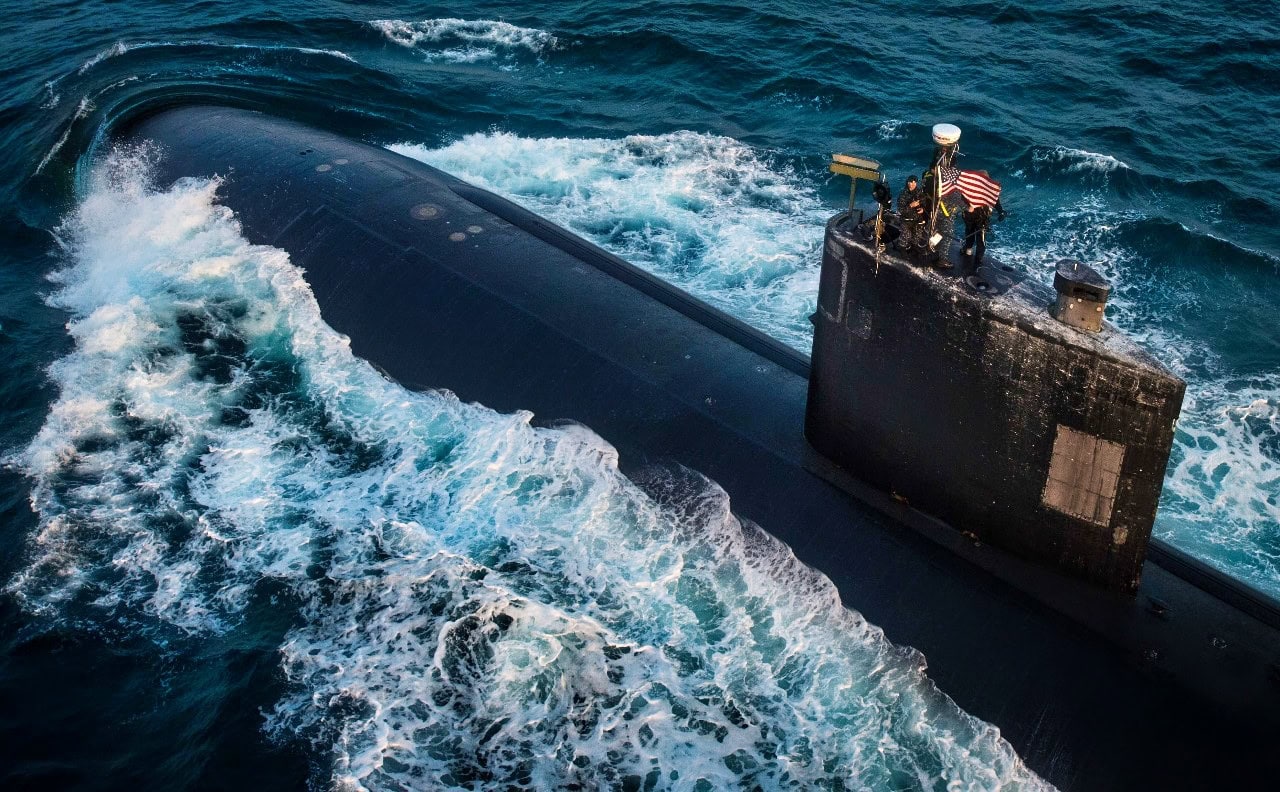
The distance math is blunt. Pearl Harbor to the Luzon Strait is roughly 4,800 nautical miles. Guam to the same operating area is about 1,500. A nuclear attack submarine can move fast, but speed is not free. High transit speed burns reactor life, increases mechanical stress, and leaves less time on station for the crew.
Forward basing does not create a new submarine. It creates more useful submarine days. If an SSN spends a week less getting to a patrol box and a week less coming home, that can be two additional weeks of presence in waters that matter: the Philippine Sea, the Luzon Strait, the Bashi Channel, and the approaches to the South China Sea.
Anyone who has served on a ship in the Western Pacific understands the tyranny of distance. Maps make Guam look close to everything. It is not close. It is simply close enough that the math starts to work. That is why the island keeps showing up in U.S. plans for bombers, tankers, submarines, munitions storage, missile defense, and repair capacity.
Tucson Is Useful But Old
Tucson is not a new boat. Commissioned in September 1995, it is a 688 Improved Los Angeles-class submarine, the 20th ship of that variant. The Navy’s own attack submarine fact file says Los Angeles-class boats remain the backbone of the force after four decades, with roughly two dozen still in commission. These submarines carry Mk 48 torpedoes and Tomahawk cruise missiles, with later boats fitted with vertical launch tubes.
That age matters. A 31-year-old submarine can still be lethal, especially in the undersea fight, but it also belongs to a force that is running hard while waiting for enough Virginia-class replacements. The Navy wants modern SSNs with better sensors, payload flexibility, special operations support, and eventually Virginia Payload Module capacity. What it has today is a mixed fleet that must cover the Atlantic, the Mediterranean, the Indian Ocean, the Western Pacific, and homeland training demands at once.
Guam therefore tells two stories at the same time. It is a stronger posture because an SSN based there can reach the fight faster. It is also evidence that Washington is squeezing every remaining mile out of older hulls because the shipbuilding pipeline cannot deliver relief quickly enough.
The Undersea Fight Is the Hardest Chinese Problem
China has built a surface fleet at a pace the U.S. Navy cannot match ship for ship. It has land-based missiles that can threaten fixed bases and large surface combatants. It has maritime patrol aircraft, satellites, unmanned systems, seabed sensors, and a growing anti-submarine warfare network. None of that makes American SSNs easy to find.
In a Taiwan contingency, U.S. attack submarines would be expected to hunt Chinese surface combatants, trail submarines, threaten amphibious shipping, collect intelligence, and complicate the People’s Liberation Army Navy’s movement through the first island chain. They are not a magic answer. They are finite assets with finite torpedoes, finite crews, and finite maintenance cycles. But they impose uncertainty on Chinese planners in a way few other platforms do.
The point is not that Tucson alone changes the balance. It does not. One SSN cannot close the Taiwan Strait, stop a blockade, or keep the South China Sea open. The point is that every forward-deployed SSN reduces the time between political warning and military effect.
The Navy said forward-deployed submarines give combatant commanders “responsive, mission-ready forces.” Strip out the press release language and the claim is simple: submarines in Guam can arrive before submarines from Hawaii.
Guam Is Also a Target
The weakness in this posture is not the submarine. It is the base. Guam is inside the missile problem. Andersen Air Force Base, Naval Base Guam, fuel farms, munitions storage, ports, dry docks, housing, and command nodes all sit on an island that China has studied for years. Forward basing increases responsiveness, but it also concentrates value.
That is why the submarine move has to be read alongside other recent Pacific developments. The Marines are testing and fielding expeditionary missile systems along the first island chain. Naval News reported this week that U.S. lawmakers want $40 million for Marine Corps integration of General Atomics’ Bullseye cruise missile, a 300-kilometer weapon aimed at maritime and land targets. The Air Force, according to another Naval News report, is looking at more than 11,000 JASSM and LRASM-family missiles over five to seven years.
Those programs point in the same direction. Washington knows it cannot rely on a few large platforms sailing from a few predictable bases. It needs submarines forward, missiles dispersed, aircraft loaded with long-range weapons, and enough stockpiles to keep firing after the first week.
The Real Test Is Maintenance
The question now is not whether Guam is valuable. It is whether Guam can sustain the force being pushed there. Submarines are maintenance-intensive machines. A forward homeport needs pier space, trained workers, spare parts, weapons handling, nuclear support, family infrastructure, and protection from missile attack. If those pieces lag, forward deployment becomes a scheduling trick instead of a combat advantage.
The U.S. Navy has made the right operational move by putting Tucson in Guam. It has shortened the route to the most likely fight and made better use of a scarce undersea asset. But the move also exposes the central American problem in the Pacific: the United States has a geography problem, a shipbuilding problem, and a magazine-depth problem at the same time.
Tucson helps with the first one. It does not solve the other two.
USS Tucson arrived at Naval Base Guam on July 10, 2026, enhancing U.S. Navy's strategic posture in the Pacific. This deployment reduces transit time to key operational areas, allowing for increased military presence. The submarine replaces USS Jefferson City, which has returned to Pearl Harbor, and reflects the U.S. Navy's ongoing reliance on older submarines while awaiting new Virginia-class replacements.
- USS Tucson arrived at Naval Base Guam on July 10, 2026.
- The submarine is part of the U.S. Navy's strategic posture in the Pacific.
- Guam is closer to key operational areas than Pearl Harbor, enhancing U.S. military presence.
- USS Tucson replaces USS Jefferson City, which has returned to Pearl Harbor.
- The deployment reflects the U.S. Navy's reliance on older submarines while awaiting new Virginia-class replacements.