
Video | Southern Theater Command's Combat Readiness Patrol at Huangyan Island: How Does the PLA Train in Its "Own Backyard"?
The Southern Theater Command of the People's Liberation Army recently organized naval and air forces to conduct combat readiness patrols in the territorial waters and airspace around China's Huangyan Island. Huangyan Island is an inherent territory of China. The theater command forces have continuously strengthened patrol vigilance, effectively responding to various infringement provocations and maintaining peace and stability in the South China Sea region. What signals does this multi-service normalized live-fire patrol send? How is the PLA training in its "own backyard"?
What is combat readiness patrol?
Military expert Li Yaqiang, a former captain of a patrol boat, told reporters that combat readiness patrols are not temporary tasks but are part of the daily combat readiness duties of the People's Navy.
Li Yaqiang: Combat readiness patrol is a type of standing combat readiness state of our military. The patrol itself is a combat mission, which involves maneuvering to detect suspicious situations on the sea surface, identifying potential enemy targets, and then striking them, which is real combat.
Cross-service equipment coordination makes an appearance
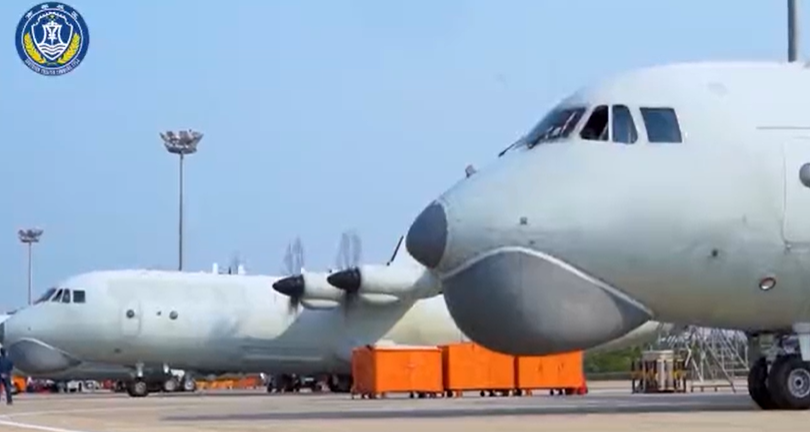
Anti-submarine patrol aircraft are a highlight
The H-6K bomber, J-16 multirole fighter, KJ-500 early warning aircraft, H-6 anti-submarine patrol aircraft, as well as the 054A and 056A class frigates were present during this combat readiness patrol. Li Yaqiang believes that achieving coordination among different service branches in the same maritime and aerial domain tests the command and organizational capabilities of joint operations.
Li Yaqiang: The H-6 is generally part of the Air Force and not in the Navy's order of battle. Although anti-submarine aircraft have been developed for many years, truly training and operating together in coordination is still a relatively new type of combat capability for the Navy. Frigates like the 054 and 056 are more convenient for daily combat readiness duties. Some may feel that using a sledgehammer to crack a nut is excessive, but I believe it is more about using the opportunity of combat readiness patrols to train, especially in joint operations.
Li Yaqiang pointed out that with the improvement of the performance of land-based aviation, the Chinese Air Force is fully capable of covering the entire South China Sea:
Li Yaqiang: Whether it is the H-6 medium bomber or the J-16, the operational radius is very large. The airports on the Spratly Islands are very advanced, and even civilian aircraft can land there, let alone these aircraft. Our land-based air forces can fully cover the entire South China Sea.
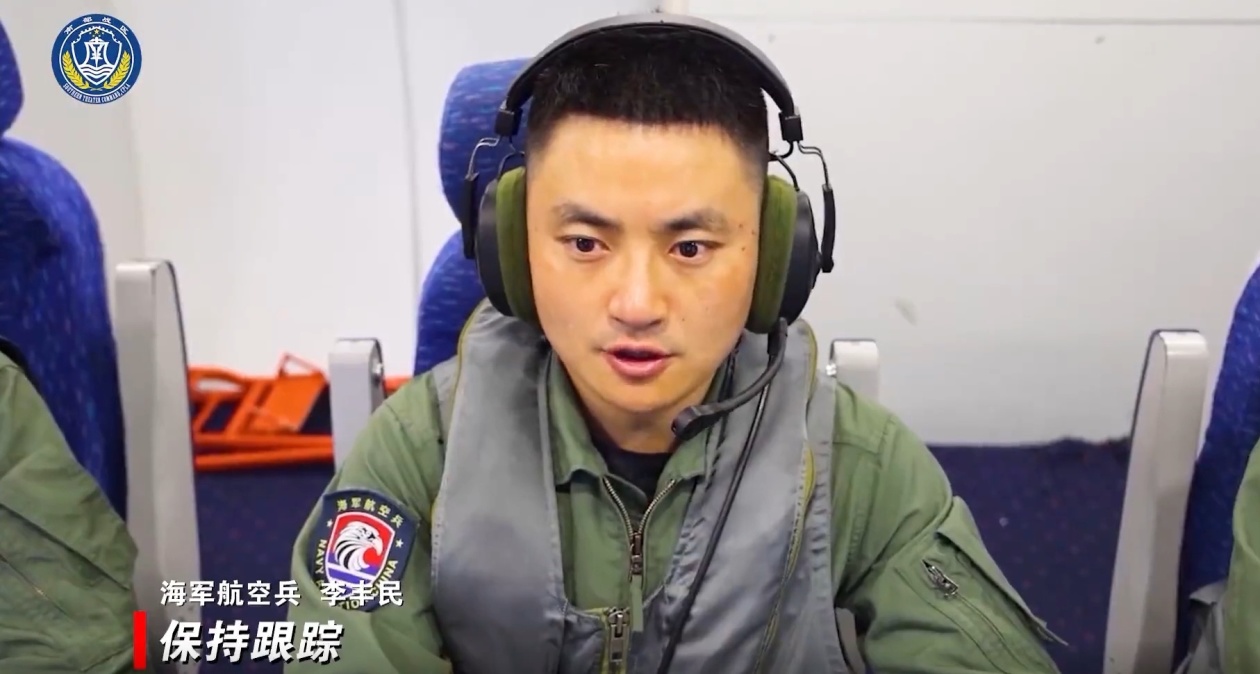
It is noteworthy that the video released this time revealed footage of the internal operations of the anti-submarine aircraft. The Philippines does not have submarines, so why are we sending anti-submarine aircraft?
Li Yaqiang: The main purpose of anti-submarine aircraft is to detect enemy submarines and other possible forces. For example, some Western countries that have mutual defense treaties with it, and even the Japan Maritime Self-Defense Force, which has been getting closer recently, may have their submarines operating in this area, and we need to detect and respond to them early using anti-submarine aircraft.
In the released footage from the anti-submarine aircraft's cabin, a command to "maintain tracking of the target situation" is particularly noteworthy. Who is the command given to? The video then shows the 054A and 056A class missile frigates with anti-submarine capabilities. This detail reflects the enhancement of our military's joint operational capabilities.
Li Yaqiang: Sending information to the vessels is not simply done through voice communication; many actual complex situations require transmitting a large amount of data, including images, optical, and radar signals through data links. Therefore, the smoothness of the downward communication channels and the reliability of communication means have a very important impact on the reliability of battlefield intelligence information exchange. The ability to conduct joint operations, coordinated operations, and comprehensive operations at sea has reached a level of close coordination in daily duties, indicating that our military has achieved a normalized state in joint operations.
Intelligence sharing is no longer "based on verbal communication," but "based on real-time data link transmission." This means that from detection to strike, it may only take a few seconds.
Wearing flame-retardant masks
Improving protection levels
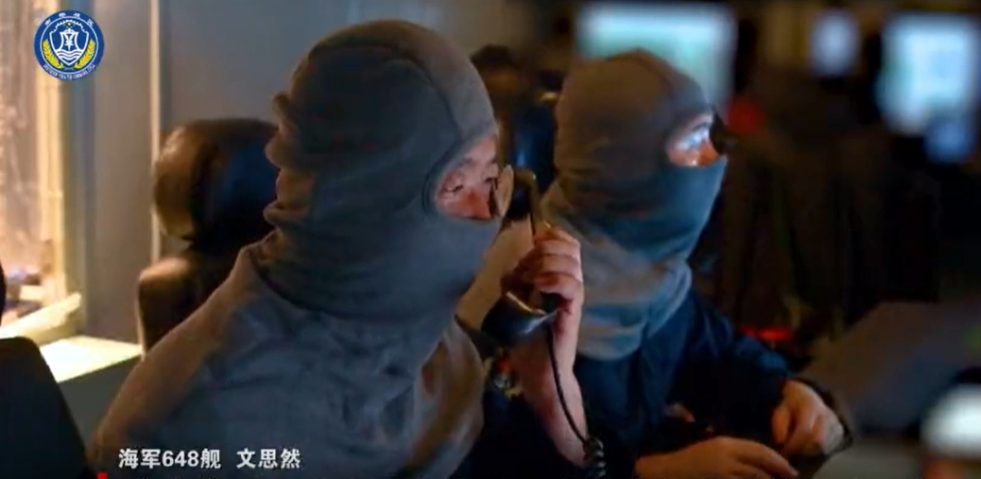
In addition to the invisible data links, there is another visible detail—soldiers are wearing a special mask. This is not an ordinary mask or a gas mask, but a flame-retardant mask. In the past, we only saw this during fire drills, but now it has become standard equipment for daily duty. What can a small mask indicate?
Li Yaqiang: In the past, many activities during combat took place on the deck, but now they are mostly inside the cabin. Once a fire breaks out, it poses a significant threat to the safety of people in the enclosed space of the cabin, largely due to suffocation issues. Now, specialized masks and flame-retardant clothing, as well as closed-loop firefighting equipment, have been provided. This indicates that our military's protective equipment level has reached a very high standard. A very mature and reliable operational process has already been formed in daily training. Although it is small, it reflects profound content—our combat readiness level, damage control capability, and firefighting protection capability have all reached a considerable level.
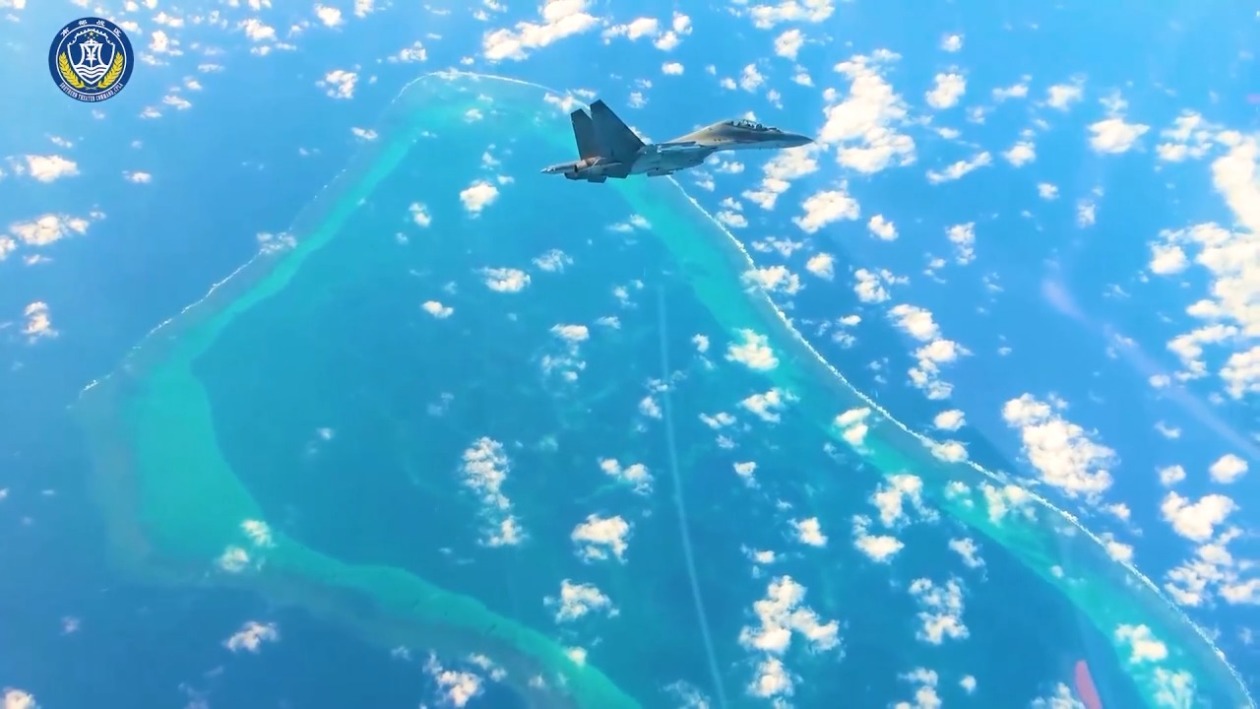
Anti-submarine aircraft, data links, flame-retardant masks—from the sky to the sea surface, and then to underwater, every dimension conveys the same message: this set of combined tactics is not a "one-time achievement," but rather the integration of the entire combat chain and the enhancement of the entire combat system. What signal did this combat readiness patrol ultimately send?
Li Yaqiang analyzes:
First, our military's joint operational level has reached a considerable degree, and the forces used have formed a very complex combat system;
Second, it did not deploy our military's strongest combat system; that is, with just a small effort, we have already posed a crushing threat to potential adversaries;
Third, the troops are always on standby in any situation, and any execution of combat readiness tasks is also the best training opportunity; the training level of the troops has reached a very high state.
Supervised by: Wu Zhehua, Luan Hong
Reporters: Yang Jun Tian, Wang Jiyun, Yang Kai
Video: Wei Ran
The People's Liberation Army conducted combat readiness patrols around Huangyan Island in the South China Sea, involving multiple aircraft and naval vessels. This operation is part of routine military readiness and training exercises aimed at responding to potential provocations and maintaining regional stability. The deployment of advanced military equipment highlights the PLA's operational capabilities in the area.
- The People's Liberation Army conducted combat readiness patrols around Huangyan Island.
- Various military aircraft and naval vessels were involved in the patrols.
- The operations are part of routine military readiness and training exercises.
- The patrols aim to respond to potential provocations and maintain stability in the South China Sea.
- The use of advanced equipment indicates a high level of operational capability.