
The Reality of Valiant Shield 26: How the JMSDF Submarine Torpedo Sank USS Juneau
 Tanaka Takashi
The Reality of the Sinking of USS Juneau by JMSDF Torpedoes during Valiant Shield 26
On June 27, the retired U.S. Navy Austin-class dock landing ship USS Juneau (LPD 10) sank below the surface over 200 nautical miles off the coast of the Mariana Islands. According to Defense News, the final blow was delivered by a torpedo from a Japan Maritime Self-Defense Force (JMSDF) submarine. In the footage, it appears as a momentary water column. However, to the author, this seems to be not just a SINKEX (sinking exercise with a real ship as a target), but rather a scene where the underwater strike capabilities of the Japan-U.S. alliance were visibly demonstrated in a practical manner for the first time.
What the Sinking of the Retired Ship Signified
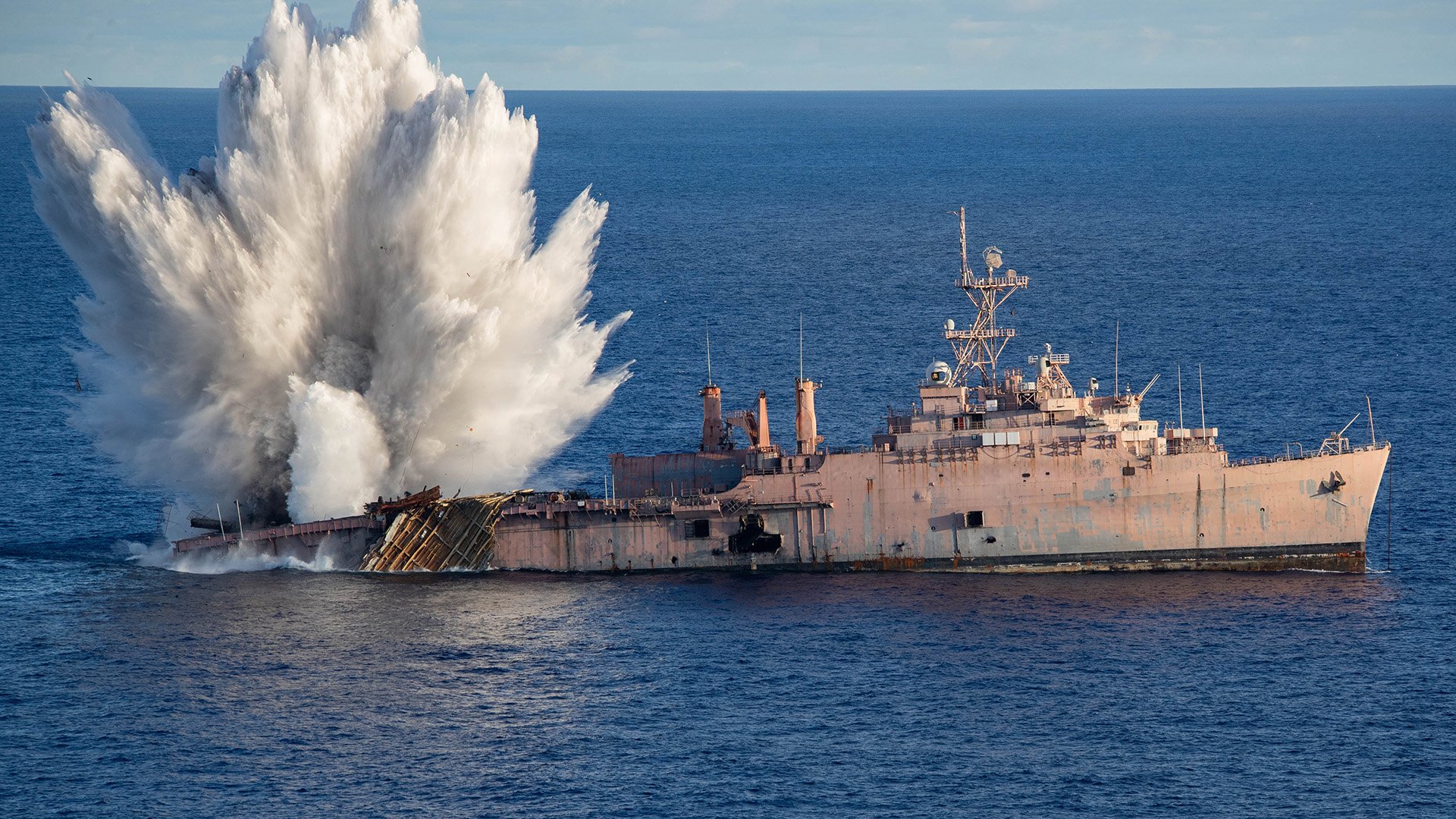
According to a DVIDS announcement, the targeted Juneau was subjected to a coordinated attack by air, surface, and underwater assets after the removal of hazardous materials. The exercise itself was part of Valiant Shield 26, conducted from June 22 to July 1 in the Northern Mariana Islands, Guam, Japan, and surrounding waters. The U.S. Pacific Fleet described the exercise as a multi-domain integrated training that spans sea, air, land, space, and cyber domains.
What is important is not the name of the submarine that fired the torpedo or the type of torpedo used. It is not appropriate to delve into that based solely on publicly available information. Rather, the significance lies in the fact that the alliance incorporated target detection, tracking, engagement, and battle damage assessment into a single training scenario, with the JMSDF responsible for the final underwater strike. During the Cold War, JMSDF submarines were primarily discussed in the context of SLOC (Sea Lines of Communication) defense and anti-submarine patrols. In this instance, it was demonstrated as an active maritime denial capability against enemy surface forces.
The Novelty of Valiant Shield 26
Valiant Shield is a biennial exercise that began in 2006, and 2026 marks its 11th iteration and the 20th anniversary. The U.S. Pacific Fleet stated that it will evolve into a multilateral and joint exercise after 2024, and this was the second Valiant Shield in which the Self-Defense Forces were deeply integrated into planning and execution. Participating countries include the United States, Japan, Australia, Canada, and New Zealand, and the DVIDS summary article noted that trilateral anti-submarine warfare, flights of the MQ-28 Ghost Bat, replenishment and cross-deck operations, expeditionary reloading, and live-fire medium-range intercept capabilities were also conducted.
This goes a bit beyond the conventional term "interoperability." For example, for a JMSDF submarine to hit a target ship with a torpedo, it is not enough for the submarine to be excellent on its own. Information on the target's location, organization of the engagement area and waters, safe separation from friendly vessels and aircraft, and post-launch battle damage assessment are all necessary. In other words, behind a single torpedo shot lies the entire alliance's C4ISR, ammunition usage authority, and range management.
Strategic Implications for Japan
Japanese readers should not interpret this news simply as "a JMSDF submarine sank a U.S. retired ship." Rather, it should be viewed in the context of the Chinese Navy's large surface fleet becoming a regular presence in the Western Pacific, and the repeated joint flights of Russia and China around Japan, raising the question of in which maritime areas, at what stages, and based on which alliance information Japan will make engagement decisions.
JMSDF submarines, represented by the Soryu and Taigei classes, have been highly regarded for their stealth and training standards. On the other hand, submarines are politically less visible military assets. Unlike surface ships and fighter jets, it is difficult to "show deterrence" in times of crisis. Therefore, public training exercises like SINKEX provide one of the few opportunities to demonstrate some of their capabilities to adversaries. This is not intimidation, but rather a signal to reduce miscalculations.
Overlooked Weaknesses
However, I believe we should not overestimate this water column. The target ship was a retired vessel, and in actual combat, the opponent would evade, disrupt, and counterattack. Furthermore, in the real combat environment of the Western Pacific, the supply, communication silence, and presence of friendly air superiority before a submarine enters the attack position can significantly influence the outcome. As emphasized by DVIDS, while there is training value that cannot be replicated in a simulator, that value resides not in the sinking of the ship itself, but in the procedures leading up to the sinking.
Japan's challenge is no longer merely possessing submarines capable of firing torpedoes. The true challenge lies in whether Tokyo, Yokosuka, Hawaii, and the submarine's captain can share the same operational picture at the moment they need to fire. The silence of underwater warfare does not wait for delayed political decisions.
Major Sources
- Defense News, June 30, 2026, Japanese torpedo sends US ship to the ocean floor during Valiant Shield exercise
- DVIDS, Task Force 70 Public Affairs, Multilateral, Joint Forces execute sinking exercise during Valiant Shield 2026
- U.S. Pacific Fleet, Allies come together in the Indo-Pacific Valiant Shield 26
- DVIDS, Valiant Shield 2026 concludes in Western Pacific
On June 27, 2026, the Japan Maritime Self-Defense Force sank the retired USS Juneau using a torpedo during the Valiant Shield 26 military exercise off the Mariana Islands. This exercise involved coordinated attacks from air, surface, and underwater assets, highlighting the operational capabilities of the Japan-U.S. alliance. The event marked a significant demonstration of Japan's underwater strike capabilities in a multilateral context.
- USS Juneau sank on June 27, 2026, during Valiant Shield 26 exercise.
- The sinking was caused by a torpedo from a Japanese submarine.
- The exercise involved multiple nations including the US, Japan, Australia, Canada, and New Zealand.
- The event showcased the integration of Japanese forces in a multilateral military exercise.
- The sinking was part of a training scenario, not a real combat situation.