
Wang Gang Takes Command of the People's Liberation Army Air Force: The Pressure of Equipment Upgrades Behind the Promotion of Two Generals
 Li Minghui
Wang Gang Takes Command of the PLA Air Force: The Pressure of Equipment Upgrades Behind the Promotion of Two Generals
On the evening of July 3, there was a detail in this appointment that is easy to overlook: Wang Gang was promoted to general and appointed as the commander of the Air Force, while Zhang Shengguang was promoted to general and took over the Central Military Commission's Discipline Inspection Commission. One oversees the Air Force, and the other manages military anti-corruption; announcing them on the same day is not just a personnel news item. For the modernization of the PLA, it feels more like two lines tightening simultaneously: one is the Air Force's continued transformation towards stealth and systemization, and the other is the increasing disciplinary constraints on equipment procurement and personnel appointments.
The Air Force Change of Command Occurs During High-Pressure Equipment Upgrades
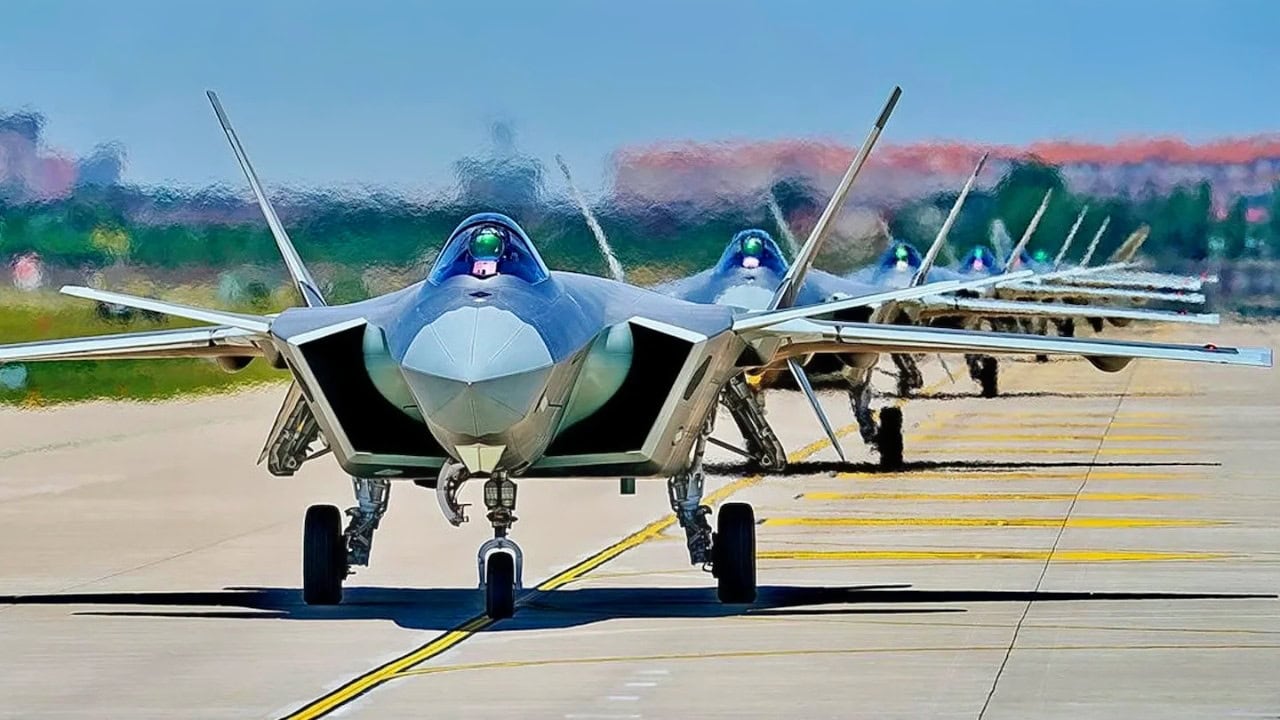
According to reports from the South China Morning Post citing CCTV, Wang Gang will succeed the position of Air Force commander. Public information shows that in recent years, the main line of the Chinese Air Force has not simply been about buying more aircraft, but rather transitioning from a scale air force primarily composed of third-generation aircraft to a system air force made up of the J-20, Y-20, KJ series, H-6N, and unmanned systems. In simple terms, single aircraft performance is no longer the only issue; the real challenge is to weave reconnaissance, early warning, electronic warfare, long-range delivery, and precision strikes into a cohesive network.
This is also the reality facing Wang Gang during his tenure. The J-20 is no longer a small batch showcase; there is a general consensus that its induction speed has significantly accelerated. The J-35A and carrier-based J-35 have expanded stealth fighters into multi-service scenarios; on the tenth anniversary of the Y-20's induction, official videos have subtly showcased images referred to by outsiders as sixth-generation fighters for the first time. I believe these signals collectively indicate that the Air Force leadership is not facing the acceptance of a single model, but rather a rebalancing of an entire aerial combat structure.
The Promotion of Two Generals Contrasts with the Dismissal of Six Senior Officers
In the same batch of news, Zhang Shengguang was appointed as the head of the Central Military Commission's Discipline Inspection Commission, succeeding Zhang Shengmin. The South China Morning Post previously reported that in late June, the Standing Committee of the National People's Congress revoked the representative qualifications of six senior PLA officers, including personnel from the Equipment Development Department and theater systems. This context cannot be overlooked. The Equipment Development Department, theater commands, and military branches are all under the anti-corruption spotlight, indicating that the issues at hand are not just about individual conduct but may involve procurement, engineering, logistics, and promotion chains.
From the perspective of the military-industrial sector, anti-corruption has a dual impact on equipment construction. In the short term, project approvals, procurement rhythms, and personnel decisions will be more cautious, and some projects that originally relied on connections may be suppressed. In the long term, if budgets can be squeezed out from inefficient projects, it may actually benefit the stable mass production of high-value equipment. This judgment should not be overstated, as public information is scarce, but after the continuous shocks to the Rocket Force and equipment systems, the PLA is clearly attempting to re-establish a controllable procurement order.
The Real Bottleneck in Air Force Modernization Lies in the System, Not Just Slogans
Many discussions tend to focus on the number of J-20s. This number is certainly important, but it is not everything. Modern air combat resembles a production line, with the J-20 being the most conspicuous workstation. The front end requires early warning aircraft and satellites to provide targets, the mid-section needs data links and electronic suppression, and the back end must have fuel, engine life, spare parts, and pilot training hours to support it. If any segment falls behind, advanced fighters will become expensive islands.
One observation point after Wang Gang took command of the Air Force is whether the Air Force will continue to strengthen long-range system training. For example, can the Y-20 and Y-20 tanker support higher frequency cross-regional maneuvers? Can the KJ-500 and fighter formations achieve stable beyond-visual-range coordination? Is the training of the H-6N with new air-launched weapons more transparent? These issues are more telling than a single military parade. A shortcoming that is easily overlooked is that the ability to deliver equipment in bulk does not equate to the troops being able to generate combat power at the same pace.
Tighter Discipline May Change Expectations for Military-Industrial Enterprises
For aviation and electronic information companies, the implications of this new round of personnel adjustments are also very direct: project evaluations will place greater emphasis on deliverability rather than advanced indicators on PowerPoint presentations. Taking stealth aircraft as an example, engine life, radar reliability, composite material consistency, and cockpit avionics supply chains—any one of these factors could impact the mass production curve. It is often said in the industry that the most challenging aspect of a new model is not the maiden flight, but rather turning prototype parts into stable mass-produced items; this statement still holds true today.
Therefore, when looking at the appointments of Wang Gang and Zhang Shengguang together, the core issue is not who has been promoted to general, but whether the PLA can continue to maintain the pace of equipment upgrades under the high pressure of anti-corruption. If it is too loose, the procurement chain is likely to encounter problems; if it is too tight, grassroots units and enterprises may hesitate to make decisions. What is truly worth monitoring is whether more details of cross-theater, large formations, and manned-unmanned coordination will appear in the Air Force training reports in the second half of this year. Personnel adjustments have already been made; next, we need to see what answers the training grounds and production lines will provide.
Main references: South China Morning Post reports on the promotions of Wang Gang and Zhang Shengguang and military anti-corruption appointments; South China Morning Post reports on the revocation of representative qualifications for six senior PLA officers by the National People's Congress; official media of the Chinese military regarding the tenth anniversary of the Y-20's induction and public information on new generation fighter images.
Wang Gang was appointed as the commander of the People's Liberation Army Air Force (PLAAF) on July 3, amid ongoing pressures for equipment modernization. The Air Force is shifting towards a more integrated force structure, emphasizing stealth and advanced systems. Concurrently, anti-corruption measures are tightening oversight on procurement and personnel decisions, impacting the pace of modernization efforts.
- Wang Gang was appointed as the commander of the PLAAF on July 3.
- Zhang Shengguang was promoted and appointed to the Central Military Commission's Discipline Inspection Commission.
- The Chinese Air Force is transitioning to a more integrated and stealth-oriented force structure.
- There is increased scrutiny on procurement and personnel decisions due to anti-corruption efforts.
- The modernization of the Air Force is under pressure to maintain pace with technological advancements.