
Washington's Request for $87.6 Billion for the Iran War Reveals the Cost of the Gulf Umbrella 2026
 Ahmed Al-Rashid
Washington's Request for $87.6 Billion for the Iran War Reveals the Cost of the Gulf Umbrella 2026
On June 24, 2026, the Trump administration requested from the U.S. Congress an urgent additional funding of $87.6 billion, most of which is related to the Iran War. The figure alone is enough to open a discussion that is not only Arab but also American, because what passes through the appropriations committees in Washington today will appear tomorrow in the insurance prices for Gulf tankers, in ammunition delivery schedules, and in the ability of U.S. bases around us to continue fighting or to de-escalate.
According to a Defense News report based on Reuters, the request includes $67.15 billion for the military side, on top of nearly a trillion dollars previously approved and another defense request of $1.5 trillion for the next year. The administration indicates that the money will cover the costs of operations, salaries and deployment of troops, restoring readiness, rebuilding weapon stockpiles, and classified programs. In a clearly significant item, $21 billion has been allocated for purchasing munitions, strengthening the U.S. industrial base, and supporting critical capabilities.
The Figure is Not Accounting but Military
Militarily, $87.6 billion is not read as a political bill in Washington, but as an acknowledgment that the Iran War has entered a phase of depleting munitions, platforms, and readiness. The first strike may be a presidential decision, but the fourth month of operations requires interceptors, precision bombs, spare parts, maintenance crews, secured maritime corridors, and the ability to compensate for what has been launched, what has been damaged, and what has been depleted in flight hours.
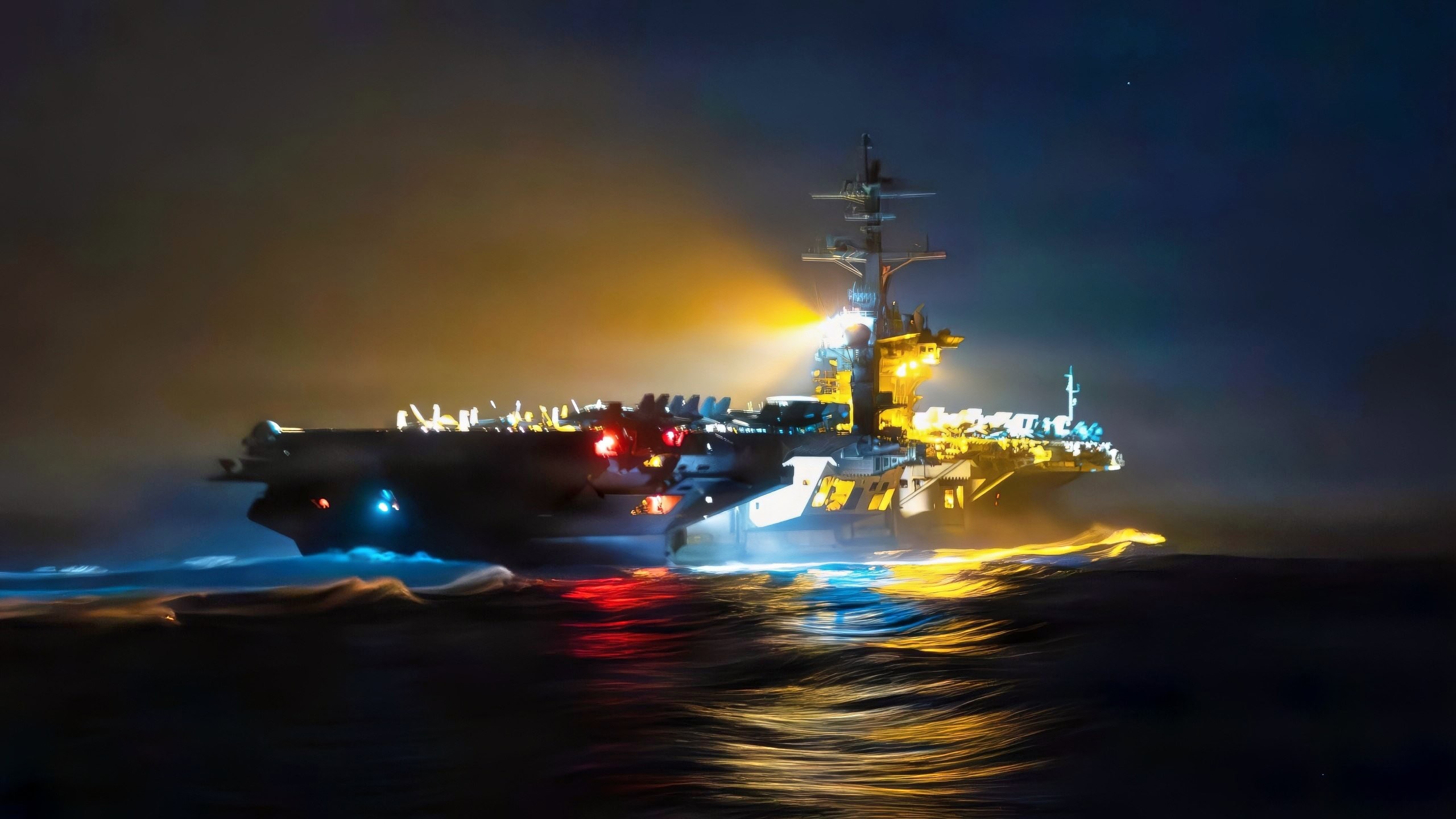
Here lies the difference between the deterrence we see in images and the deterrence that is paid for by workshops and warehouses. An aircraft carrier in the Arabian Sea sends a political message, but its continued operation depends on a supply chain that extends from munitions factories in the United States to forward depots in the Gulf. If Washington needs an additional $21 billion for munitions and the industrial base, it means that the stockpile is no longer a technical detail, but has become part of the balance of power in the region.
Congress Pressures While Leadership Requests Money
The irony is that the funding request came just one day after the Senate voted 50 to 48 in favor of a resolution directing Trump to halt military action against Iran, after a similar resolution passed in the House of Representatives. The resolution may remain symbolic legally, but it is not symbolic politically. When the White House requests tens of billions while Congress votes to curb the war, we are faced with a military machine that needs money and a political machine that has begun to fear its cost.
This contradiction is more important for the Gulf than it seems. Gulf countries have become accustomed to considering the U.S. presence as an available umbrella when needed, but they rarely ask how much patience Congress has left and how much ammunition stock remains. Any officer who has served in the region knows that the base does not fight alone; it fights alongside a political will in Washington. If this will weakens, the latest command and control systems become less valuable than what the screens suggest.
Ammunition First, Then Politics
The $21 billion item for munitions is more important than the big headline. The Iran War since February 28, according to U.S. reports, is not a short campaign against a limited target. It is a mix of airstrikes, air defense, maritime protection, intelligence operations, and classified programs whose details we do not know. In such a pattern, the question is not how many carriers or bombers the United States has, but how many precision missiles it can launch without weakening other theaters like the Pacific and Europe.
This point directly affects the Gulf. When Patriot, SM-6, Tomahawk, JASSM munitions, and guided bomb chains are depleted, the U.S. priority will not always be Gulf delivery requests. A country that has purchased a multi-billion dollar air defense system may find that intercepting Iranian or Houthi missiles does not depend solely on having the platform, but on the availability of the interceptor missile in the U.S. stockpile and Washington's decision to expedite or delay delivery.
The Cost of Protection Amid Rising Oil and Food Prices
The Democratic and Republican opposition within Congress is no longer technical. The report mentions that lawmakers from both parties complain about the administration's weak briefing since the start of U.S.-Israeli bombing of Iran, and that the Constitution gives Congress, not the president, the right to engage the country in war. Opponents also link the cost of war to rising fuel and food prices within the United States.
For Riyadh, Abu Dhabi, Doha, and Kuwait, this is not a distant internal American squabble. The more funding the Iran War becomes an electoral burden in Washington, the narrower American freedom of movement in the Gulf becomes. We have seen in recent years that U.S. administrations do not withdraw from the region in one fell swoop, but rather reprice commitments. The base remains, but the rules of engagement change. The batteries remain, but the response speed changes. And diplomatic data always remains, as it is the cheapest item in the budget.
The Gulf's Lesson from Washington's Bill
The practical lesson for Gulf countries is not to distance themselves from the United States; this is nice talk on platforms but difficult in operations rooms. The lesson is that relying on the American umbrella without building a national stockpile, joint operational leadership, and a real maintenance industry is a flawed bet. Purchasing F-15, F-16, Rafale fighters, and Patriot and THAAD systems provides significant capability, but does not guarantee continuation in a long war if ammunition, software, and repair chains are in the hands of an external party also preoccupied with its internal calculations.
Iran, for its part, will read the U.S. request in its own way. It will say that Washington is forced to spend $87.6 billion to continue applying pressure, which means that Iran's ability to impose costs has not failed. As for Israel, it will see in the request evidence that the war is no longer a surgical operation but an open American commitment. Between these two readings, Gulf capitals find themselves in a difficult position: they want to deter Iran, but they do not want their facilities, ports, and bases to become part of a war they do not have the power to stop.
The old military adage says that amateurs talk about tactics while professionals talk about logistics. The request for $87.6 billion is a moment of logistics par excellence, and thus it is more dangerous than a sharp speech or a new bomber sortie.
In my estimation, this bill reveals the real tension in Gulf security in 2026: the region wants strong American protection, but it suffers when this protection becomes a long, costly, and politically unstable war within Washington. This is not an equation that can be solved with a new arms deal. It is a gap between the desire for independence and the fear of paying its price.
On June 24, 2026, the U.S. government requested $87.6 billion for military operations related to Iran, with $67.15 billion earmarked for military purposes. This funding aims to cover operational costs, personnel salaries, and munitions, indicating a shift towards a prolonged military engagement. The request follows a Senate vote aimed at limiting military action against Iran, highlighting the political tensions surrounding U.S. military involvement in the region.
- The U.S. requested $87.6 billion for military operations related to Iran.
- $67.15 billion of the request is for military purposes.
- $21 billion is specifically allocated for munitions and strengthening the U.S. industrial base.
- The request follows a Senate vote to limit military action against Iran.
- The funding request indicates a shift towards a prolonged military engagement with Iran.