
What are Japan's intentions in going to the Middle East to clear landmines?
【Global Times Special Correspondent Chen Yang】In response to the ongoing airstrikes by the U.S. and Israel, Iran's Defense Council issued a threat on the 23rd, stating that if Iranian coasts or islands are attacked, it will lay mines throughout the Persian Gulf to block navigation routes. In light of this threat, the U.S. military, which has severely degraded mine-clearing capabilities, has had to seek help from allies. There is widespread belief that the Pentagon has its sights set on the Japan Maritime Self-Defense Force, which possesses a considerable mine-clearing capability.
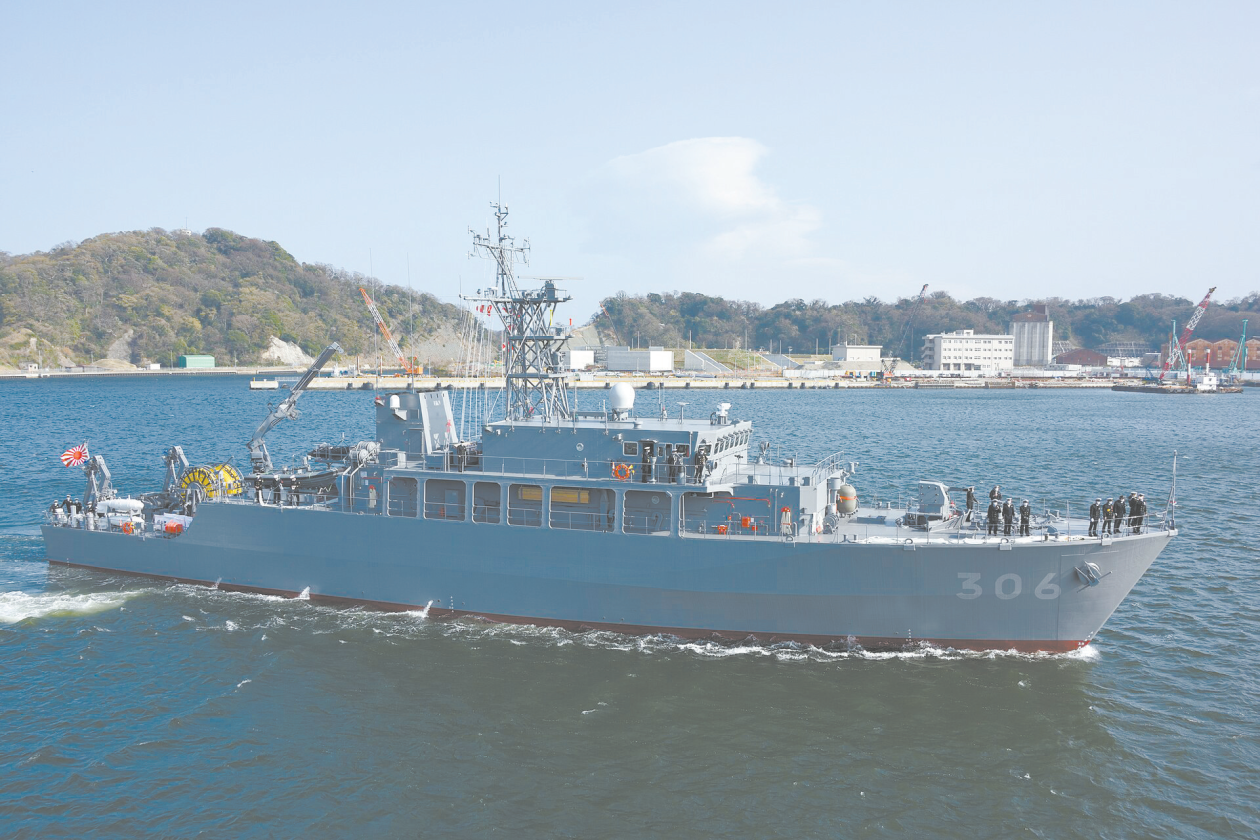
Japan's mine-clearing fleet is large
According to a report by Kyodo News on March 22, Japanese Foreign Minister Toshimitsu Motegi stated in a Fuji TV program that during a meeting at the White House on the 19th, U.S. President Trump mentioned Japan's assistance in restoring navigation in the Strait of Hormuz to Japanese Prime Minister Sanae Takaichi. Takaichi told Trump, "There are some things Japan can do, and some things Japan cannot do," implying that the Self-Defense Forces' actions are limited by Japan's pacifist constitution. However, Motegi indicated that after a ceasefire is reached between the U.S., Israel, and Iran, Japan may send the Self-Defense Forces to the Strait of Hormuz to participate in mine-clearing operations, stating, "If a ceasefire can be achieved and mines become an obstacle, I think it is worth considering."
Since the Cold War, the Japan Maritime Self-Defense Force has maintained a mine-clearing capability that is globally leading in both scale and equipment performance. As early as 1991, right after the Gulf War ended, the Maritime Self-Defense Force dispatched four "Shirase" class mine warfare vessels, one "Hayase" class mine warfare mother ship, and one "Towada" class supply ship to the Gulf region to participate in mine-clearing operations, marking Japan's first overseas deployment of troops since World War II. During this mission, the Japanese mine-clearing fleet cleared 13 anchor mines and 21 bottom mines.
Today, Japan continues to maintain a large-scale mine-clearing fleet, with core equipment primarily including the latest "Awaji" class mine warfare vessels, numerous "Sugashima" class coastal mine warfare vessels, and the "Uraga" class mine warfare mother ships, which serve as the command and supply core.
The "Awaji" class ocean-going mine warfare vessel, which began service in 2017, is the new generation of dedicated mine warfare vessels following the "Shirase" class mine warfare vessels. Six vessels are planned for construction, with four already in service. Compared to the now-retired "Shirase" and "Yaeyama" class mine warfare vessels, the hull material has been changed from traditional wood to fiberglass, making it not only more durable but also with very low magnetic properties, effectively avoiding the detonation of magnetic mines. The "Awaji" class mine warfare vessels are also equipped with variable-depth sonar and can carry unmanned underwater vehicles to detect and clear various types of mines remotely using unmanned control technology.
The "Awaji" class mine warfare vessel has a displacement of about 680 tons, exceeding the 440 tons of the "Shirase" class but significantly smaller than the 1000 tons of the "Yaeyama" class. The difference in tonnage does not imply that the "Awaji" class has regressed in performance and sustained ocean-going capability compared to the "Yaeyama" class; relying on automation technology and the support of the "Uraga" class mine warfare mother ships, the "Awaji" class can maintain prolonged mine-clearing operations. It is reported that the two active "Uraga" class mine warfare mother ships—"Uraga" and "Bungo"—have a displacement of about 5600 tons, with large hulls and storage space, specifically designed to provide fuel, fresh water, ammunition supplies, and maintenance services for the ocean-going mine-clearing fleet. Additionally, their sterns are equipped with large hangars and flight decks, capable of carrying MCH-101 mine-clearing helicopters for rapid large-scale mine detection. Furthermore, Japan has about seven "Sugashima" class coastal mine warfare vessels, primarily responsible for anti-mine operations in coastal and port areas.
In recent years, Japan has frequently discussed sending Self-Defense Force vessels to participate in mine-clearing operations in the Middle East, with the "Uraga" class mine warfare mother ships, "Yaeyama" class, and "Awaji" class mine warfare vessels all listed among the candidates. In August 2012, the Japan Maritime Self-Defense Force dispatched the "Uraga" mine warfare mother ship and one "Yaeyama" class mine warfare vessel to the Persian Gulf to participate in a multinational mine-clearing exercise conducted by the U.S. near the Strait of Hormuz.
Frequent joint mine-clearing exercises with the U.S. Navy
The Japan Maritime Self-Defense Force's extreme emphasis on mine-clearing capabilities stems from the experience during World War II when the U.S. military conducted large-scale airdrops of mines to blockade the sea routes around the Japanese archipelago, leading to a near-total cessation of Japanese maritime transport. Because of this, in addition to maintaining a large dedicated mine-clearing fleet, the Maritime Self-Defense Force is also highly focused on enhancing the mine-clearing capabilities of other vessels.
For example, the newly commissioned "Mogami" class frigate is the first multi-purpose frigate in the Japan Maritime Self-Defense Force to be equipped with a complete unmanned anti-mine system, which will gradually replace the "Sugashima" class coastal mine warfare vessels. It is equipped with a complete anti-mine system that can use onboard sonar to search for suspicious targets over a wide area, then deploy unmanned boats and unmanned underwater vehicles to complete the entire process of mine detection, hunting, and neutralization from a safe distance. Due to the limited self-defense capabilities of traditional mine warfare vessels, they are easily susceptible to attacks during mine-clearing operations; therefore, the Maritime Self-Defense Force hopes to enable multi-purpose main vessels with strong air defense and anti-ship capabilities to also undertake this high-risk anti-mine task, enhancing the fleet's operational flexibility. In June 2025, the "Mogami" frigate completed a live-fire exercise involving unmanned systems near Iwo Jima, validating the effectiveness of this new combat method.
At the same time, Japan and the U.S. are maintaining close cooperation and joint training in mine-clearing. Currently, the U.S. Navy's Seventh Fleet stationed in Japan has the last four "Avenger" class dedicated mine warfare vessels, and the Japan Maritime Self-Defense Force conducts joint mine-clearing exercises with the U.S. Navy every year. From January 30 to February 11, 2026, U.S. and Japanese mine-clearing forces completed a joint mine-clearing exercise codenamed MINEX 26 1JA in the waters near Ise Bay, Japan. The U.S. Navy stated in a press release that both sides practiced mine searching, detection, and clearance, jointly removing obstacles in simulated minefields. As the U.S. Seventh Fleet has now placed mine warfare and landing operation forces under the same command, Japan has also begun to make adjustments. According to Kyodo News, on March 23, the Japan Self-Defense Forces implemented a large-scale reorganization, in which the Maritime Self-Defense Force will integrate the original frigate fleet and mine-clearing units to establish a unified command "Surface Fleet." Reports indicate that the "Surface Fleet" will establish a new "Amphibious Mine Warfare Group," incorporating mine-clearing boats and transport vessels, with the flagship being the "Hyuga" class helicopter destroyer "Ise."
Repeatedly deploying troops overseas under the banner of "non-combat missions"
In the current context of the Takaichi government in Japan pushing for "new militarism," sending the mine-clearing fleet overseas to carry out mine-clearing missions could very well become an excuse for the Self-Defense Forces to break through restrictions on overseas deployment, which warrants high vigilance from all countries.
The website of the "Nihon Keizai Shimbun" states that if Japan is in a state of war, it must recognize it as a "crisis situation for survival" or as an "important situation" that could lead to direct military attacks on Japan if left unchecked, in order to take action, but there are no actual precedents for initiating either. However, some analysts believe that the ambiguity of mine-clearing operations could provide Japan with an opportunity to break through restrictions on overseas deployment. During hostilities, conducting mine-clearing operations to restore freedom of navigation would be recognized as the use of force; however, if mine-clearing is conducted after the war has ended or during a ceasefire, it could be viewed as "humanitarian mine clearance."
Therefore, in 1991, the Japanese government deliberately chose to send the mine-clearing fleet after the Gulf War ended to avoid legal restrictions, emphasizing that this was a "peaceful activity to ensure the safety of Japanese tankers," rather than "overseas deployment." However, there is widespread belief that this move was essentially the first overseas deployment of the Self-Defense Forces since World War II, setting a dangerous precedent—once a suitable reason and legal interpretation are found, the Self-Defense Forces can break through the restrictions of Article 9 of the Japanese Constitution. Subsequently, in 1992, Japan passed the "Law on Cooperation for United Nations Peacekeeping Activities," which legally allowed the Self-Defense Forces to participate in overseas peacekeeping for the first time. Since then, the Self-Defense Forces have frequently deployed overseas under the guise of "non-combat missions." After the U.S. was attacked on September 11, 2001, the Japan Self-Defense Forces provided logistical support to the U.S. military in the war on terror. During the Iraq War in 2003, Japan dispatched Self-Defense Forces to "non-combat areas" for so-called post-disaster reconstruction.
In September 2015, the Japanese government forcibly passed new security legislation despite constitutional controversies, further legalizing the Self-Defense Forces' exercise of collective self-defense and overseas deployment. Then-Prime Minister Shinzo Abe declared in the House of Representatives' Special Committee on Peace and Security that overseas deployment "is generally not permitted by the Japanese Constitution," but "mine-clearing at sea may meet the conditions for exercising force in foreign territories."
Japanese Prime Minister Sanae Takaichi has been advocating for amending Article 9 of the Japanese Constitution, relaxing arms exports, and increasing defense spending, and her push for military expansion has sparked growing opposition and criticism from the Japanese public and knowledgeable individuals. In the Senate Budget Committee on March 16, Takaichi stated that the Self-Defense Forces could carry out mine-clearing, ship protection, and assist various countries' militaries, and indicated that "we are sorting out what Japan can and cannot do."
Japan is considering deploying its Maritime Self-Defense Force to the Strait of Hormuz to assist in mine-clearing operations following Iran's threats to lay mines in the Persian Gulf. The Japanese fleet includes advanced minesweepers and has a history of participating in similar operations. This potential deployment reflects Japan's ongoing military cooperation with the U.S. and its strategic interests in the region.
- Iran threatened to lay mines in the Persian Gulf if attacked.
- Japan's Maritime Self-Defense Force has a significant mine-clearing capability.
- Japan is considering deploying its forces to the Strait of Hormuz for mine-clearing operations.
- The U.S. is seeking Japan's assistance due to its degraded mine-clearing capabilities.
- Japan has previously participated in mine-clearing operations in the Gulf region.