
What Are the Intentions Behind the Japan Self-Defense Forces' Major Restructuring? Expert Analysis

According to Japanese sources, under the guise of "island defense," the Japan Self-Defense Forces implemented a large-scale organizational adjustment on the 23rd, including a significant reorganization of the Maritime Self-Defense Force, an expansion of the space forces, and the establishment of intelligence units.
What intentions lie behind the large-scale adjustments of the Japan Ground, Maritime, and Air Self-Defense Forces? Japan claims the adjustments are for the so-called "island defense," but what calculations are behind this?
The Japan Self-Defense Forces aim to strengthen offensive capabilities through reorganization
Military observer Wei Dongxu: The Japan Self-Defense Forces are undergoing a restructuring of their forces, with the core and fundamental goal being to enhance their offensive capabilities and mobility in combat operations, including joint operations among the Ground, Maritime, and Air Self-Defense Forces.
First, the amphibious operations units of the Japan Ground Self-Defense Force will be further expanded, with personnel and combat equipment continuously increasing, and they will conduct more joint training with the U.S. Marine Corps. Secondly, the Ground Self-Defense Force will be equipped with more new, longer-range missiles, seeking to achieve a preemptive strike capability. Such adjustments in military strength are aimed at seizing islands, utilizing long-range firepower strike platforms to blockade surrounding straits and threaten and deter large nearby islands.
The Japan Maritime Self-Defense Force aims to create multiple large joint fleets, integrating various military forces together. Additionally, mine countermeasure units and transport units will also be integrated to provide more effective and comprehensive support and assurance for amphibious assault operations.
The Japan Air Self-Defense Force is set to upgrade to the "Aerospace Self-Defense Force." In the future, some of Japan's space technologies will be deeply integrated with aerial combat systems, not only deploying more spy satellites in space to gather intelligence and guide targets for Japan's offensive forces but also potentially emulating the U.S. Space Force in seeking space warfare capabilities.
Therefore, from a series of actions, we can see that Japan's military ambitions are continuously expanding, and with the expansion of military ambitions, the restructuring of forces also exhibits increasingly strong offensive attributes.
Frequent Japanese military actions threaten regional peace and stability
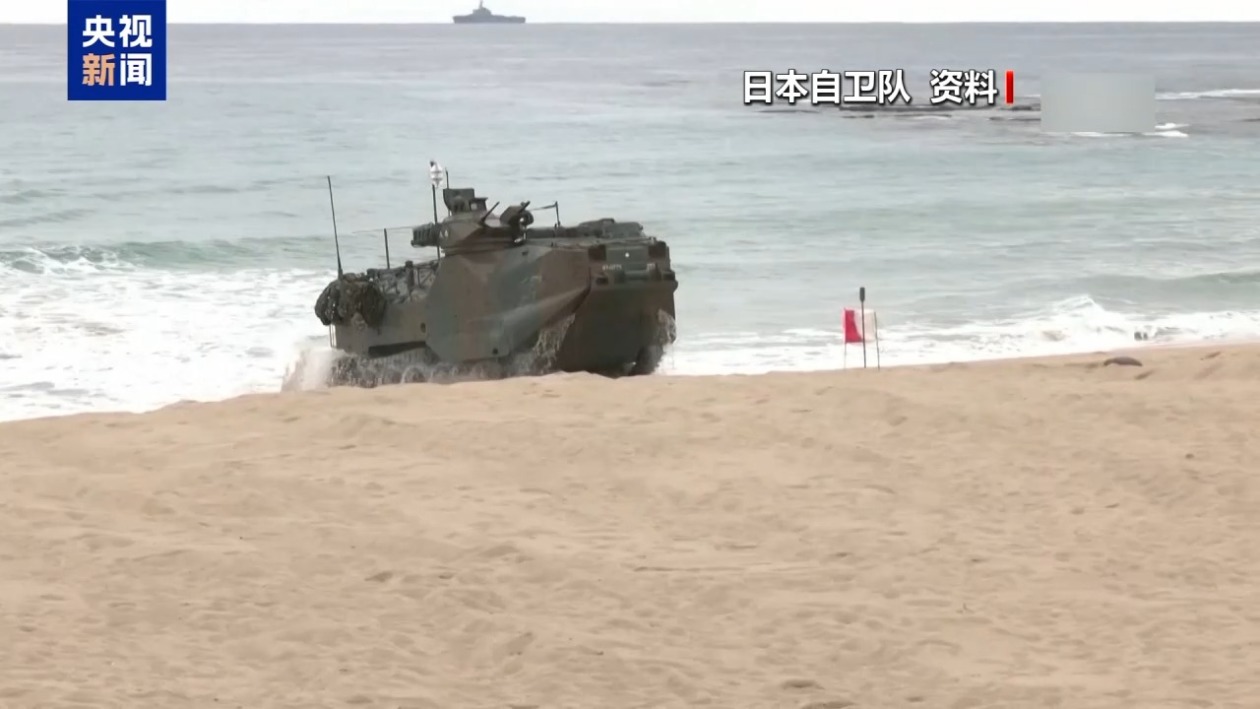
Military observer Wei Dongxu: Japan's military actions are becoming increasingly bold and dangerous. The continuous integration of military power, enhancement of long-range strike capabilities, and even the pursuit of preemptive strikes indicate that the Japan Self-Defense Forces are edging closer to war. They are also adopting a posture of military intervention regarding sensitive regional issues, which can be said to represent a growing number of actions that break through the principle of "defensive defense" and the pacifist constitution, with their military ambitions continuously expanding, posing a greater negative impact on regional peace and stability.
Japan's Self-Defense Forces implemented a large-scale organizational adjustment on the 23rd, enhancing offensive capabilities and mobility across land, sea, and air forces. This includes expanding amphibious combat units and acquiring long-range missiles, with increased joint training with the U.S. Marine Corps. The Air Self-Defense Force is transitioning to an Aerospace Self-Defense Force, indicating a significant shift in Japan's military posture and ambitions.
- Japan's Self-Defense Forces are reorganizing under the guise of 'island defense'.
- The restructuring includes expanding amphibious forces and acquiring long-range missiles.
- Japan aims to enhance joint operations with the U.S. Marine Corps.
- The Air Self-Defense Force plans to evolve into an 'Aerospace Self-Defense Force'.
- Japan's military ambitions are perceived to be growing, posing risks to regional stability.