
What is the Background of Japanese Entities Controlled by China?

[Global Times Special Correspondent Chen Yang] Editor's Note: In recent years, Japan has been moving further down the path of reviving militarism, continuously developing offensive weapons, attempting to amend its pacifist constitution, and expanding the scope of defense equipment exports to strengthen the capabilities of its defense industry. In response, on the 24th, China's Ministry of Commerce issued two announcements, deciding to include 20 Japanese entities, such as Mitsubishi Shipbuilding Co., Ltd. and Kawasaki Heavy Industries Aerospace Systems Co., Ltd., which are involved in enhancing Japan's military capabilities, in the export control list. At the same time, it decided to place 20 Japanese entities, including Subaru Corporation, that cannot verify the end users and end uses of dual-use items on a watch list. What are these Japanese entities listed by China? How did they become accomplices in reviving Japanese militarism?
Mitsubishi Heavy Industries is Japan's top military-industrial giant
Among the 20 Japanese entities included in the export control list by China's Ministry of Commerce, the Mitsubishi group stands out, including Mitsubishi Shipbuilding Co., Ltd., Mitsubishi Heavy Industries Aero Engines Co., Ltd., Mitsubishi Heavy Industries Marine Machinery Co., Ltd., Mitsubishi Heavy Industries Engine and Turbocharger Co., Ltd., and Mitsubishi Heavy Industries Maritime Systems Co., Ltd. According to the Global Defense Industry Top 100 report published by the Stockholm International Peace Research Institute (SIPRI) in December 2025, Mitsubishi Heavy Industries, as Japan's largest comprehensive military contractor, had arms revenues reaching $5 billion in 2024, ranking 32nd globally, with a year-on-year revenue growth of 37%, mainly from sales of aircraft and missile systems.
In recent years, the Japan Self-Defense Forces have deployed Type 12 anti-ship missiles on the southwestern islands near Taiwan to block the passage of Chinese naval vessels into and out of the Pacific. They are also preparing to replace them with an improved version of the Type 12 missile, which has better stealth capabilities and a longer range. These missiles are all developed by Mitsubishi Heavy Industries' subsidiaries. The Japanese Ministry of Defense is also developing a domestically produced hypersonic missile—the "High-Speed Glide Projectile for Island Defense," which has a range of approximately 500-900 kilometers and is set to be deployed starting in the 2026 fiscal year, equipping at least four missile regiments, planned to be stationed in Kyushu and Hokkaido. Mitsubishi Heavy Industries is also the main contractor for this hypersonic missile.
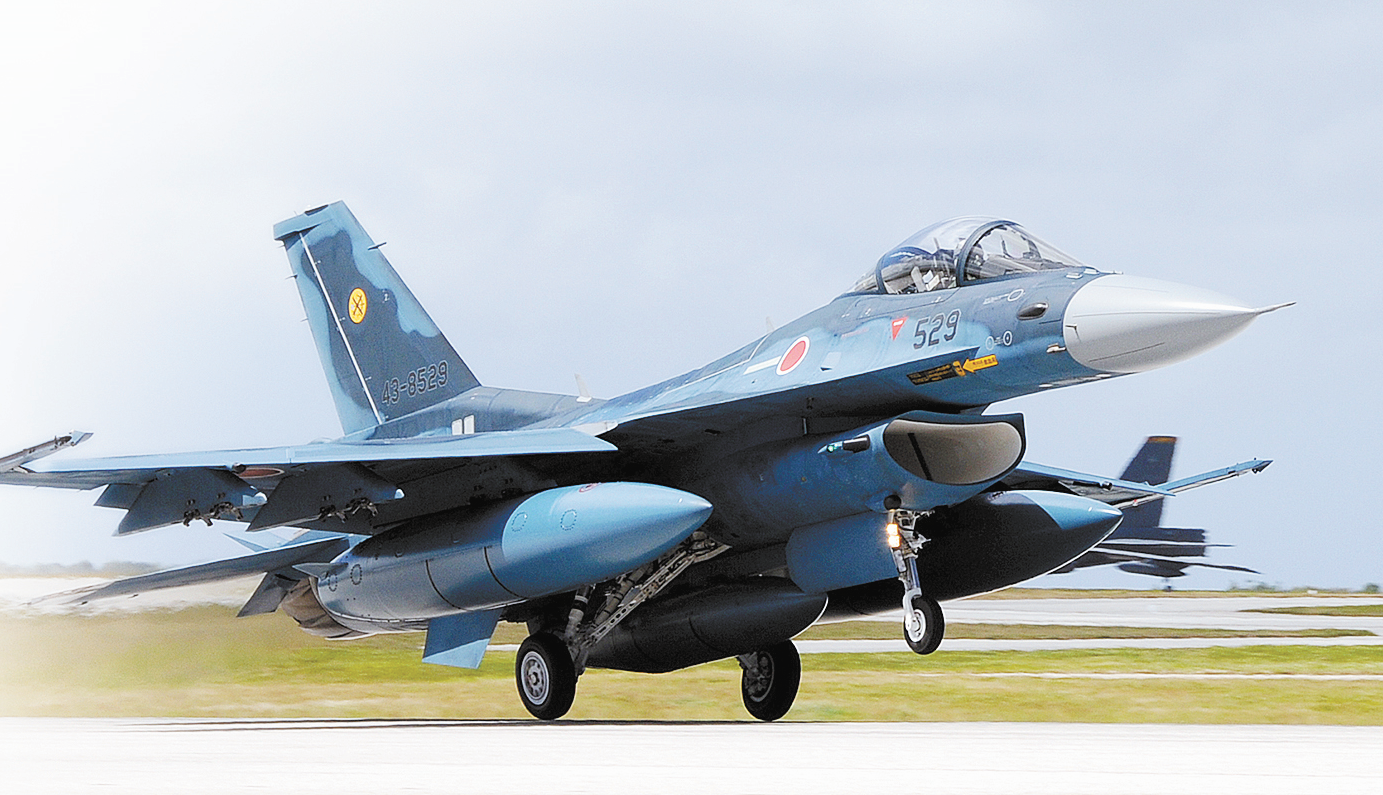
At the same time, Mitsubishi Heavy Industries provides critical support for the Japan Air Self-Defense Force's aircraft. For example, the domestically produced F-2 fighter, the Type 93 air-launched anti-ship missile, and the ASM-3 supersonic air-launched anti-ship missile are all developed by Mitsubishi Heavy Industries. The company is also responsible for the final assembly and flight testing of the F-35A stealth fighter jets imported from the United States for the Japan Air Self-Defense Force. Mitsubishi Heavy Industries Aero Engines Co., Ltd., which is included in the export control list, is directly involved in the manufacturing of components for the F-135 engine used in the F-35 fighter jet.
To expand overseas military sales and strengthen the defense industry, the Liberal Democratic Party's Security Research Committee held a meeting on the 25th and passed a draft proposal aimed at expanding the scope of defense equipment exports. The draft proposes to abolish the previous "five-category standard" that limited equipment exports to rescue and transport purposes, and in principle, allows the export of weapons with lethal capabilities, such as fighter jets and frigates. Currently, Japan's main export weapon is the "Mogami" class frigate sold to Australia, which is also produced by Mitsubishi Heavy Industries.
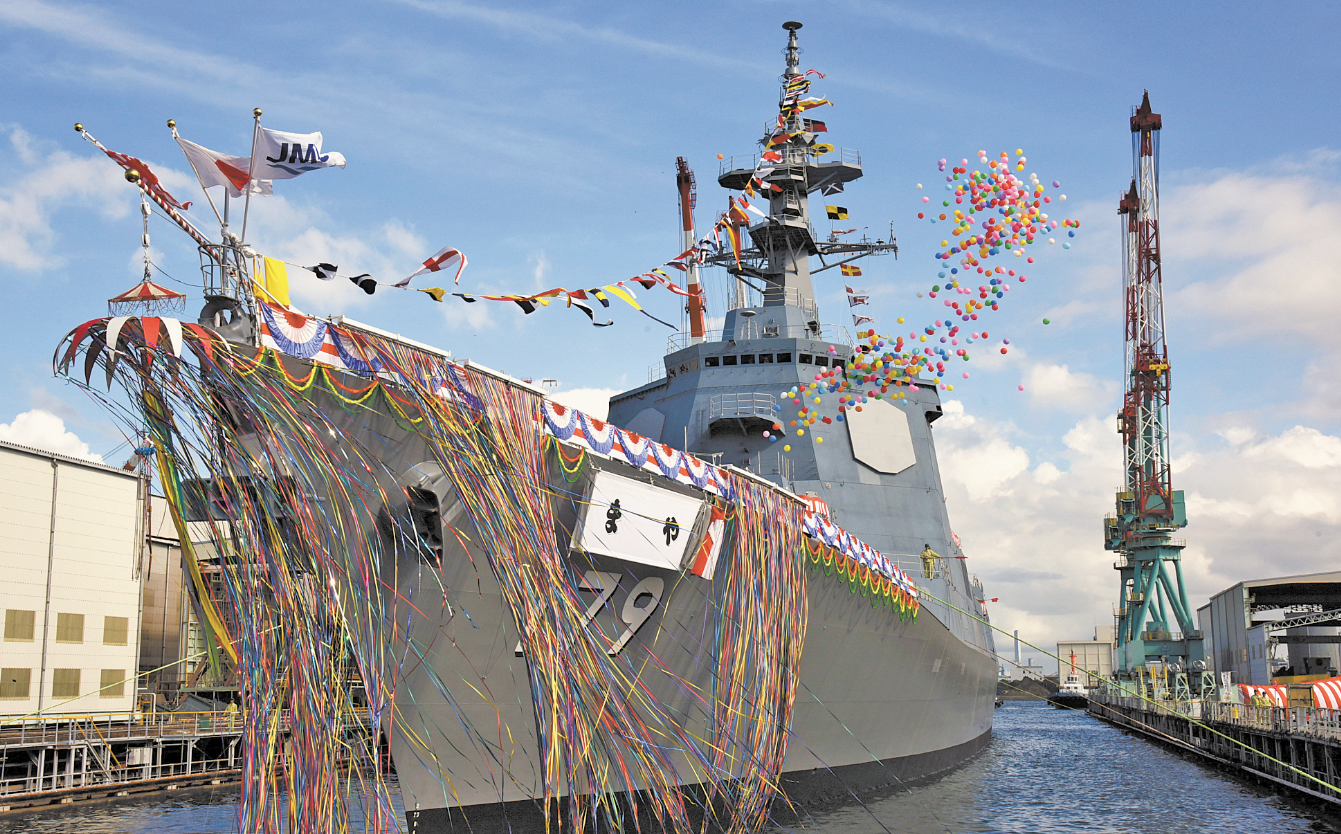
It is reported that the core shipyards under Mitsubishi Heavy Industries include the Shimonoseki Shipyard, Kobe Shipyard, and Nagasaki Shipyard, which have been continuously undertaking the construction of various types of major vessels for the Maritime Self-Defense Force. For example, the Nagasaki Shipyard built the "Kongo" class and "Atago" class Aegis destroyers, the "Akizuki" class general destroyers, and the "Mogami" class frigates; the Kobe Shipyard constructed the "Soryu" class and "Taigei" class conventional submarines for the Maritime Self-Defense Force, with the "Soryu" class submarine being a key export product that Japan previously attempted to sell to Australia; the Shimonoseki Shipyard built two "Theresa Magbanua" class large patrol vessels for the Philippines, which have been the main equipment used by the Philippine Coast Guard in recent years to provoke China in the South China Sea.
In addition, Japan Marine United Corporation, which is included in the export control list, is also a core contractor for the Japan Maritime Self-Defense Force's active vessels, responsible for constructing Japan's most advanced "Maya" class Aegis destroyers. The company is also a key player in Japan's post-war re-acquisition of aircraft carriers, having developed and modified the two largest "Izumo" class light aircraft carriers for the Maritime Self-Defense Force. At the same time, the company has built 10 44-meter class fast response boats for the Philippines.
IHI involves multiple fields of land, sea, air, and space
Entering the 2025 Global Defense Industry Top 100 list, Kawasaki Heavy Industries (ranked 55th), Fujitsu (ranked 64th), NEC (ranked 83rd), and several other Japanese defense contractors have also been included in the export control list by China's Ministry of Commerce. Among them, Kawasaki Heavy Industries is Japan's second-largest comprehensive defense contractor after Mitsubishi Heavy Industries, with its business covering key areas such as aviation, aerospace, ships, power systems, and precision-guided weapons. From anti-submarine patrol aircraft and conventional submarines to anti-tank missiles, Kawasaki Heavy Industries' product line almost covers all fields of the Self-Defense Forces' land, sea, air, and space. The Kawasaki Aerospace Systems Company, which is included in the list, has long served the Japan Air Self-Defense Force, while Kawasaki Gifu Engineering Co., Ltd. undertakes a large number of aviation design, manufacturing, testing, and maintenance projects, serving both active equipment and participating in engineering support for new generation aviation platforms.
NEC Network Sensors Co., Ltd., also included in the export control list by China's Ministry of Commerce, is responsible for the research and development of military radars, sensors, and network communication systems, while Fujitsu Defense and National Security Co., Ltd. participates in software development and hardware manufacturing for the Self-Defense Forces.
Also listed in the export control list by China's Ministry of Commerce are six companies under Japan's IHI Corporation (formerly Ishikawajima-Harima Heavy Industries). IHI provides the "heart" (engines) and "nerves" (monitoring systems) for various equipment of the Japan Self-Defense Forces across land, sea, air, and space. For example, most of the engines for the Self-Defense Forces' active fighter jets are produced and maintained by IHI, which holds a near-monopoly in this field. The F-100 engines used in the Air Self-Defense Force's F-15J/DJ fighters and the F-110 engines used in the F-2 fighters are both produced under license by IHI. The company is also deeply involved in the next-generation fighter project of Japan, the UK, and Italy—the "Global Combat Air Programme" (GCAP), responsible for the joint development of advanced engines.
As the main contractor, IHI has also built two "Hyuga" class helicopter destroyers for the Maritime Self-Defense Force, as well as various types of destroyers including the "Kongo," "Murasame," and "Akizuki" classes.
At the same time, IHI provides power systems for various missiles and launch vehicles in Japan. Many of the small turbofan and turbojet engines used in domestically produced Japanese missiles are developed by the company, including the active Type 12 anti-ship missile and its extended range variant. The improved Type 12 missile has a range of over 1,000 kilometers and is a core weapon for the Ground Self-Defense Force's construction of "out-of-area strike capabilities." According to the plans of the Japanese Ministry of Defense, IHI is also working on key technologies for the scramjet engine of Japan's hypersonic cruise missile, which has a range of over 3,000 kilometers.
In addition, IHI is also an important contractor in Japan's aerospace field. IHI Aerospace Co., Ltd., which is included in the export control list, is IHI's core subsidiary responsible for the aerospace sector, having participated in the development of Japan's domestically produced H-2 and H-3 series launch vehicles. Currently, its most critical defense project is leading the construction of a large ground observation satellite constellation with multi-sensor fusion, planning to establish a space-based observation network consisting of 100 remote sensing satellites by around 2030, aimed at providing near-real-time global surface intelligence for the Japanese Ministry of Defense and other agencies.
JAXA is directly related to Japan's space ambitions
Also included in the export control list by China is the Japan Aerospace Exploration Agency (JAXA). As Japan's national space agency, JAXA is very active internationally. It not only collaborates closely with NASA and the European Space Agency (ESA), but also has gained widespread international reputation for its achievements, such as the successful return of samples from the asteroid "Ryugu" by its "Hayabusa2" spacecraft and the high-precision lunar landing achieved by the "SLIM" probe.
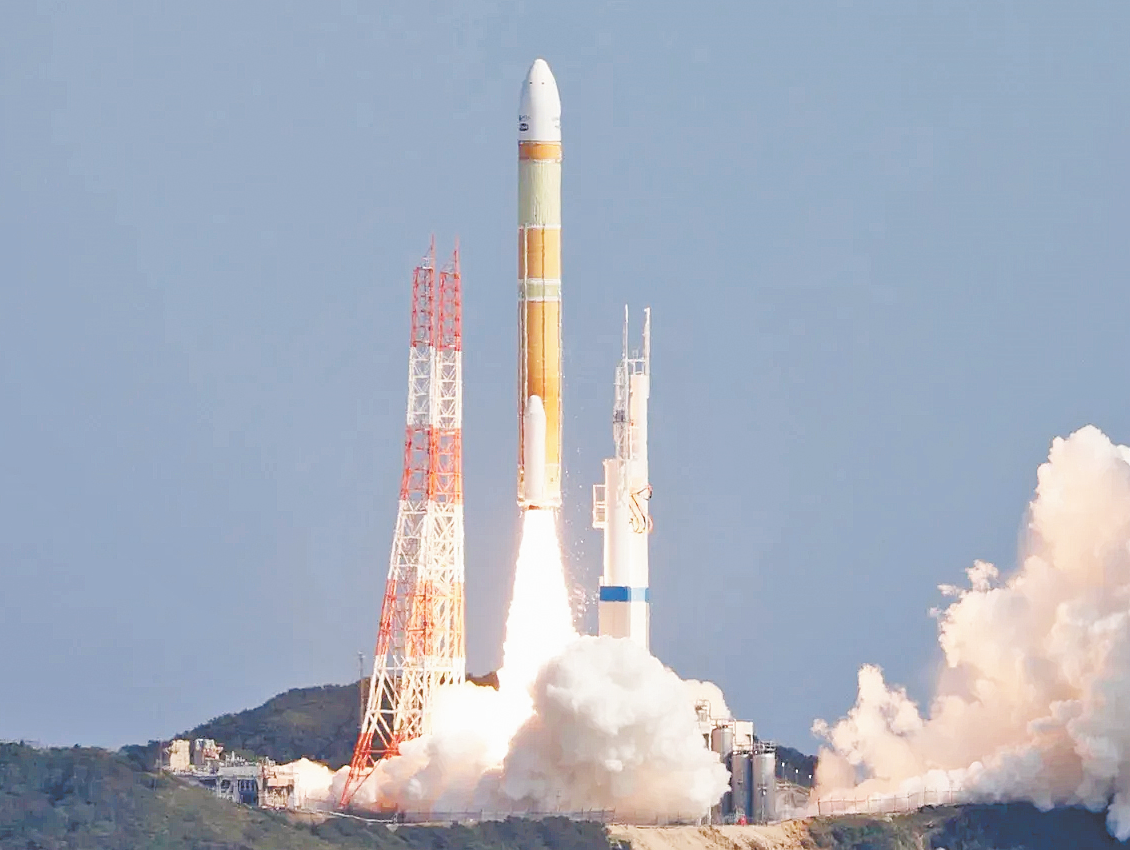
However, in recent years, JAXA has increasingly become part of Japan's ambitions for militarization in space. In 2012, Japan passed legislation to expand the agency's mission from its original peaceful purposes to include military space development. For example, the "Space Operations Squadron" established by the Japan Air Self-Defense Force in 2020 explicitly stated its intention to share space intelligence with JAXA and the U.S. military. In addition to geostationary orbit, JAXA is also responsible for monitoring low-altitude orbits below 1,000 kilometers. The H-2A launch vehicle and the Tanegashima Space Center, led by JAXA, have long been used to launch optical and radar reconnaissance satellites for Japan's Cabinet Satellite Intelligence Center, directly supporting Japan's independent space reconnaissance capabilities. JAXA has also led the development, launch, and management of Japan's Quasi-Zenith Satellite System, which not only enhances the positioning accuracy of the U.S. GPS satellite navigation system in Japan but also serves the Self-Defense Forces' precision-guided weapons, vessel navigation, and troop mobility, with the ultimate goal of achieving autonomous navigation and ensuring independence from GPS during wartime.
In 2024, the Japanese Ministry of Defense proposed a plan to strengthen space surveillance mechanisms, planning to collaborate with JAXA to establish a database by 2026, summarizing relevant information such as the positions of foreign artificial satellites and the signals they emit, collected separately by the Self-Defense Forces and JAXA. According to the relevant plan, JAXA will also launch space domain awareness satellites specifically for monitoring space.
Furthermore, JAXA is increasingly directly involved in the research and development of the Self-Defense Forces' next-generation space military projects. For example, under the pretext of "responding to the hypersonic missile threats from China and Russia," the new generation HTV-X cargo spacecraft to be launched in 2025 is being used by JAXA as a space testing platform. After completing supply missions to the International Space Station, the spacecraft will continue to fly in orbit for about a year. It carries infrared sensors from the Ministry of Defense to test their detection and tracking capabilities against hypersonic missiles. This will help Japan explore key technologies for deploying dedicated hypersonic missile early warning satellite constellations in the future, utilizing high-performance infrared sensors to detect low-flying, high-speed hypersonic weapons from space, filling the blind spots of ground-based radars.
China has imposed export controls on 20 Japanese entities, including Mitsubishi Heavy Industries, due to their involvement in enhancing Japan's military capabilities. This move reflects Japan's ongoing efforts to develop offensive weapons and amend its pacifist constitution. The Japanese government is also expanding defense equipment exports, indicating a shift towards a more militarized stance in response to regional security concerns.
- China has added 20 Japanese entities to its export control list.
- Mitsubishi Heavy Industries is a major player in Japan's defense industry.
- Japan is enhancing its military capabilities, including missile systems and fighter jets.
- The Japanese government is expanding the scope of defense equipment exports.
- JAXA is involved in military space development.