
Why Did Our Country Test Fire an Intercontinental Missile in 2024 After a 44-Year Gap? What Can Be Inferred from the On-Site Photos?
This year marks the 60th anniversary of the establishment of China's Strategic Missile Forces. In June 1964, China's first independently developed ballistic missile, the "Dongfeng-2," was successfully launched. On July 1, 1966, the "Second Artillery" of China's Strategic Missile Forces was officially established. Over the past 60 years, this strategic force, entrusted with the heavy responsibility of a major power and embodying the nation's confidence, has undergone iterations, transformations, and forged growth through trials.
60 years, from nothing to having both nuclear and conventional capabilities
From the initial establishment of the ground-to-ground missile battalion to the intercontinental missile showcasing in the open sea, from its first public appearance to being renamed the Rocket Force, China's Strategic Missile Forces have achieved a leap in development from nothing to having capabilities, from weak to strong, and from a single model to a combination of nuclear and conventional capabilities, with a comprehensive deterrent capability.
In July 1959, the artillery of the Military Commission established the first ground-to-ground missile battalion.
In November 1960, the first domestically produced "Dongfeng-1" missile was successfully launched.
In June 1964, the research and testing of the "Dongfeng-2" missile were successful.
In October 1964, China's first atomic bomb was successfully detonated.
On July 1, 1966, the leadership organization of the Second Artillery of the People's Liberation Army was established.
In June 1967, China's first hydrogen bomb was successfully detonated.
In May 1980, the Second Artillery launched the "Dongfeng-5" intercontinental missile in the South Pacific for testing.
On October 1, 1984, the Second Artillery participated in the National Day parade, making its first public appearance.
In April 1993, China's first conventional missile force was established.
On December 31, 2015, the Second Artillery was renamed the Rocket Force.
Why was there a 44-year gap between the two test launches of intercontinental missiles?
Military commentator Du Wenlong stated that there are two considerations for the long intervals in testing intercontinental weaponry, especially nuclear weapon systems—
First, national strategic assets should not be easily revealed.
Second, this full-range strike operation has a series of high requirements for support, indicating that we have the capability and surveying ability in this area. Conducting a full-range test is a challenging yet proud training process for the Rocket Force.
What can be inferred from the photos released after the September 2024 test launch of the intercontinental ballistic missile?
Du Wenlong pointed out that first, the outdoor conditions indicate that we can launch intercontinental ballistic missiles under any terrain and weather conditions.
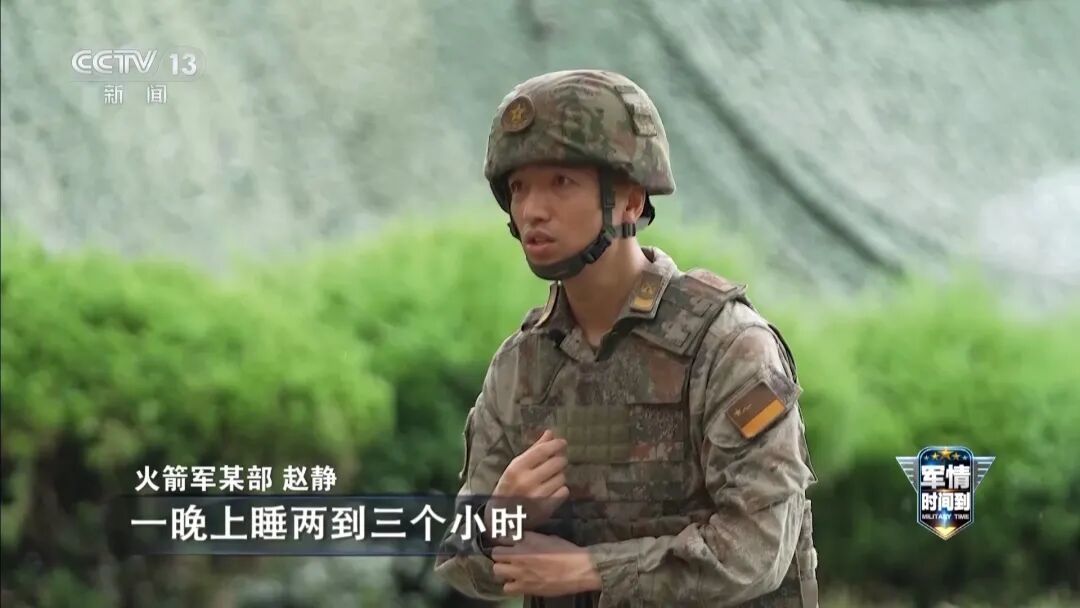
Second, the mobile launch indicates that a vehicle-mounted mobile method was used, rather than relying on fixed facilities for launch, showing that we can reach designated locations via roads, railways, and other mobile means to launch missiles and complete a series of combat tasks.
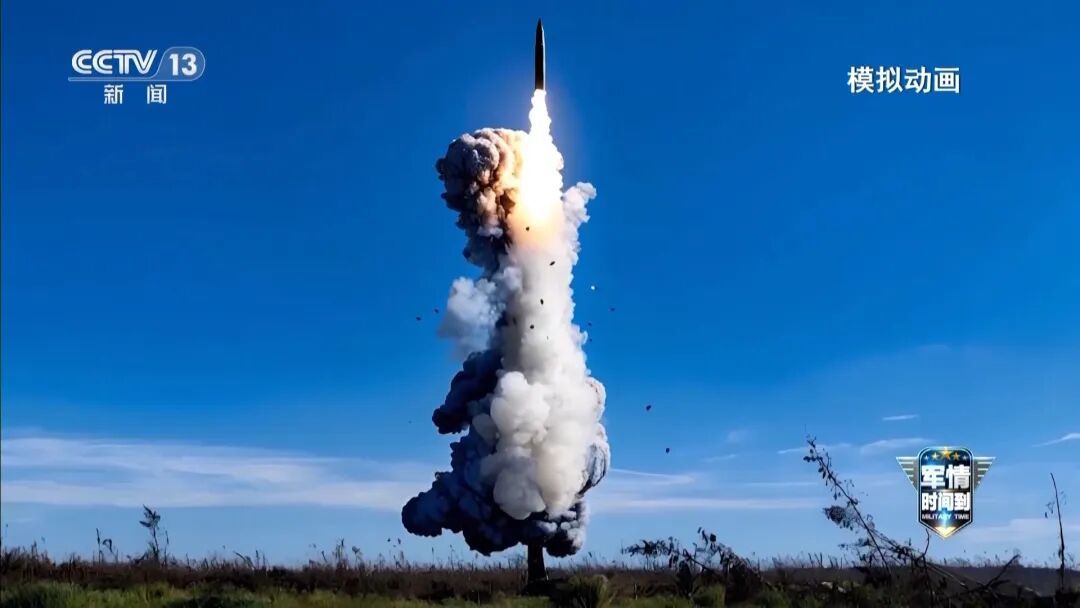
Third, the cold launch process shows that the colors of the smoke from the upper and lower sections are different, with the upper section being lighter and the lower section darker. Cold launch is particularly important for protecting the launch device and ensuring personnel safety, indicating that the Rocket Force's mobile strike capability has reached combat standards.
Vehicle-mounted launchers have strong mobility; why do we still retain the method of silo launches?
Silo-based launches are the most primitive method and were also the safest at the time, as the auxiliary facilities of the silo can quickly complete missile maintenance and enable rapid strikes upon receiving orders.
Additionally, silo-based missiles are generally larger and heavier, capable of forming a strong comprehensive destruction capability. During strategic deterrent strikes, land-based silo missiles still play a major role, so as technology advances, the response capability, protection capability, and strike level of silo-based missiles will also improve in tandem with other comprehensive factors.
On September 25, 2024, China's Rocket Force successfully launched an intercontinental ballistic missile from a mobile platform into the Pacific Ocean. This marked the first test of such a missile in 44 years, showcasing China's advanced missile capabilities and operational readiness. The launch was conducted under challenging environmental conditions, emphasizing the Rocket Force's preparedness for real combat scenarios.
- China's Rocket Force successfully launched an intercontinental ballistic missile on September 25, 2024.
- This was the first test of an intercontinental ballistic missile in 44 years.
- The missile was launched from a mobile platform and hit a designated area in the Pacific Ocean.
- The launch demonstrates China's capability to conduct missile operations under various conditions.