
Why Do Naval Helicopters Carry Full Loads for Maritime Shooting Training?
Recently, a certain brigade of the Army's 73rd Group Army organized a helicopter live-fire training exercise at sea, featuring multi-type coordination, multi-munitions fire strikes, and continuous implementation across day and night.
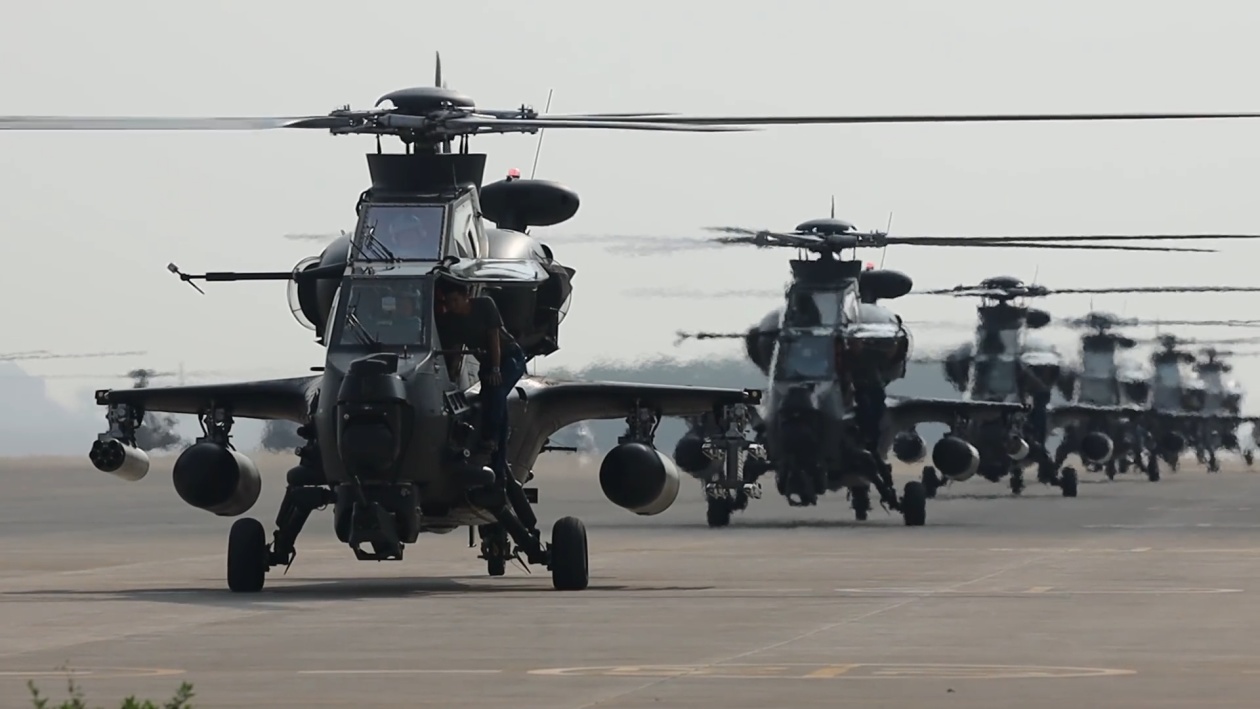
As one of the main aircraft types of the Army Aviation, why does the WZ-10 leave the battlefield to conduct live-fire training at sea?
Military commentator Zhang Xuefeng: Where future battles will be fought, training must take place there. The training of troops must consider all possible battlefield environments in the future. Army aviation may operate in border areas, carry out counter-terrorism missions, and may very well participate in military struggles at sea.
In future maritime operations, Army aviation units can perform two main tasks:
First is offense, supporting amphibious landing operations, including providing fire support and cover for troops conducting vertical landings, primarily targeting the enemy's coastal fire support points, personnel, armored vehicles, etc. At the same time, they will strive for air superiority at ultra-low altitudes and engage in air combat with the enemy's armed helicopters to strike them down.
Second is defense, especially against enemy forces in coastal areas, which can use small fast boats, unmanned boats, and drones to harass us. In this situation, armed helicopters serve as an excellent counter-unmanned system platform, capable of using onboard sensors for search and tracking, and their onboard weapons are very suitable for dealing with such small targets.
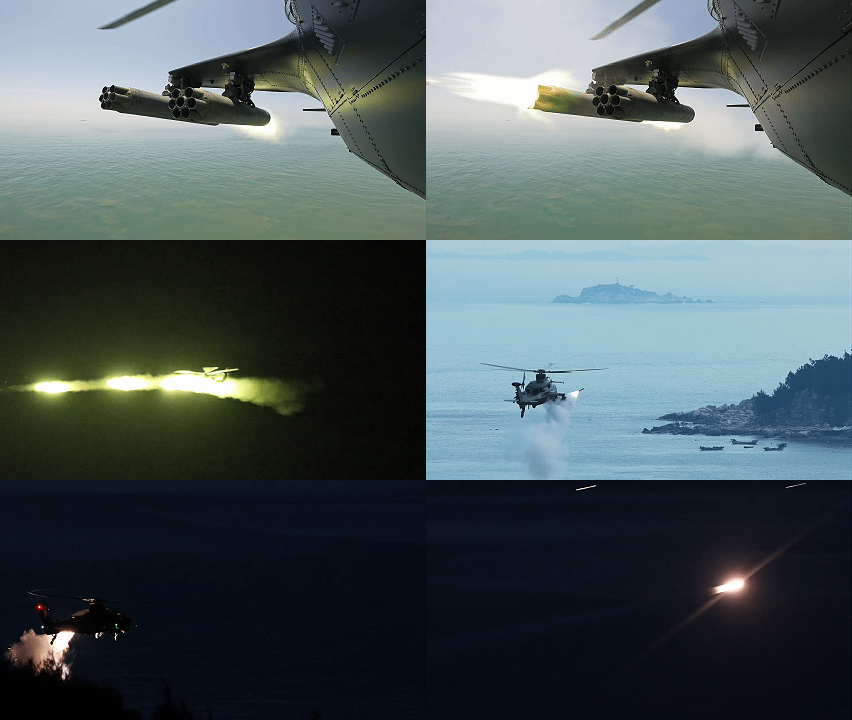
When the Z-10 armed helicopter takes off, it is equipped with various types of weapons. What different attack methods will the armed helicopter adopt for different targets?
Military commentator Zhang Xuefeng: An armed helicopter cannot face a single target in one flight. When facing soft targets or surface targets, it uses unguided rockets for saturation fire or cannon fire for strikes; when facing tanks and armored vehicles, it primarily uses anti-tank missiles; against aerial targets, it can choose air-to-air missiles or cannon fire for attacks. The methods of weapon strikes differ, as do the guidance modes and operational techniques. Pilots must be proficient in the performance of these weapons, able to switch quickly and operate them skillfully, so that they can successfully complete combat missions during wartime.
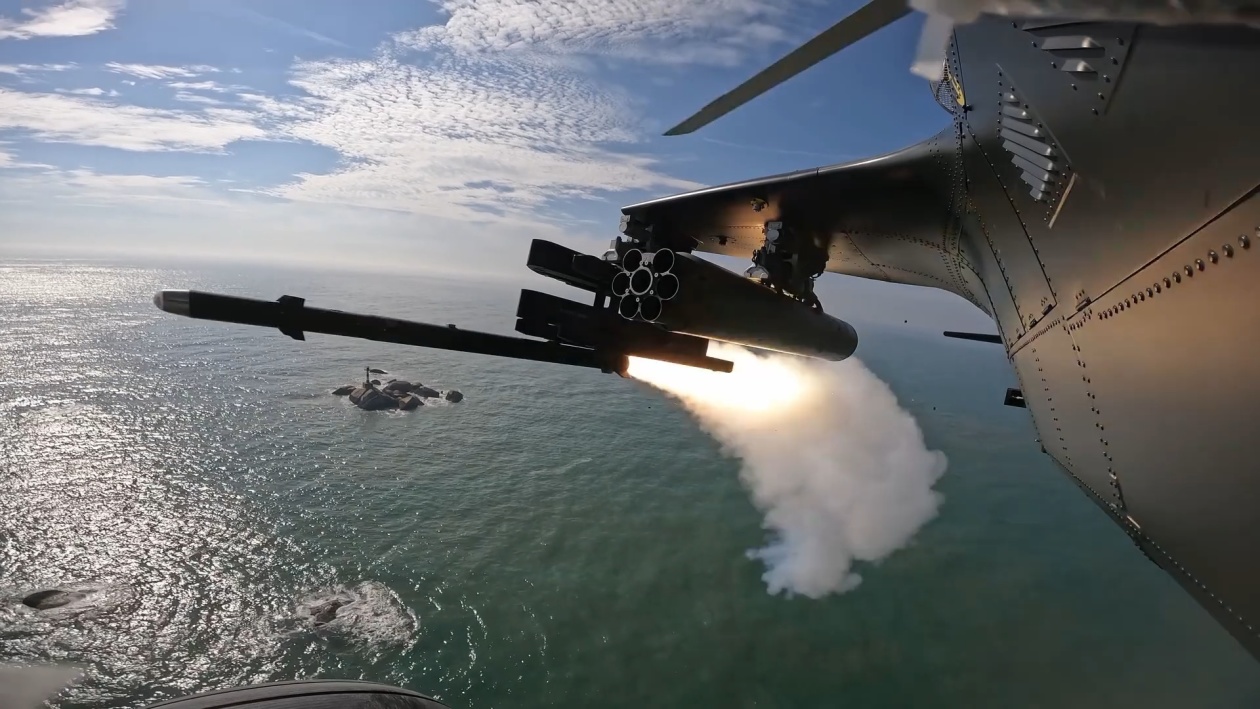
Nighttime live-fire shooting is difficult and dangerous. What is the significance of this cross-day-and-night, cross-regional training for Army aviation units?
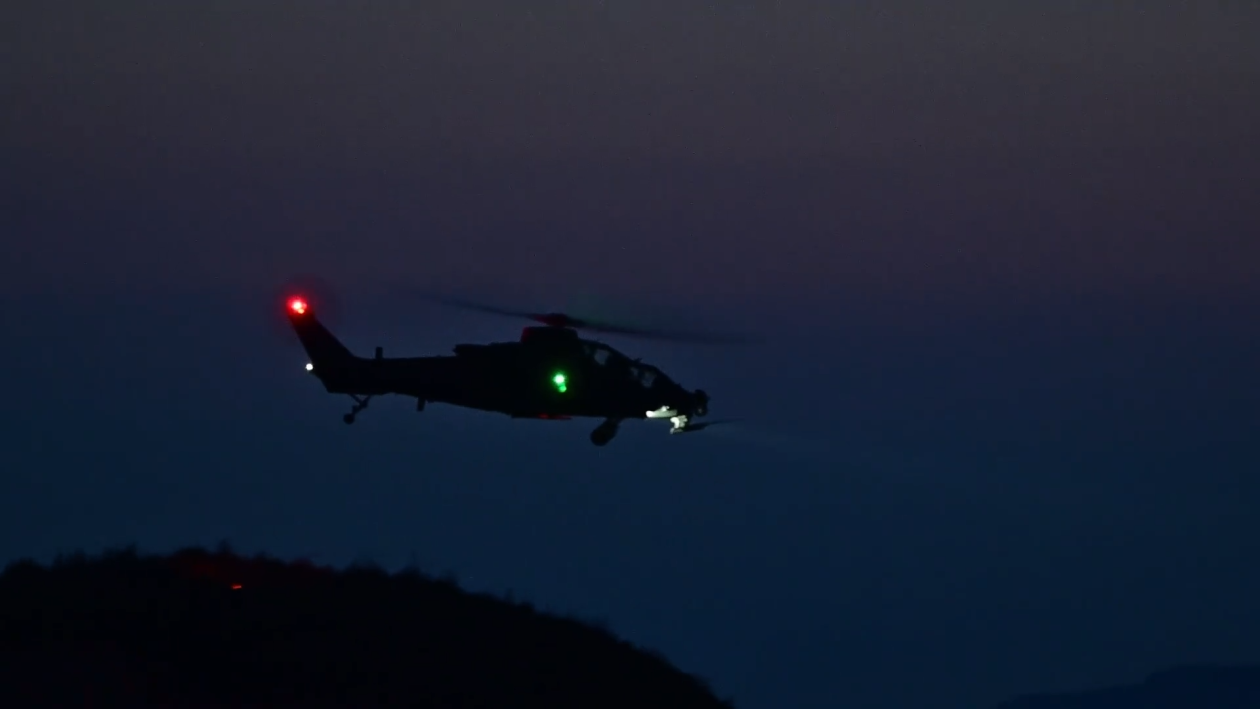
Military commentator Zhang Xuefeng: Cross-day-and-night live-fire shooting at sea is more in line with real combat requirements. At night, especially at midnight, it is often a low point in the human biological clock, making the enemy more likely to relax and lower their guard. Conducting attacks at night can enhance the element of surprise while fully utilizing the cover of darkness to improve the survival capability of helicopters flying at low altitudes.
Cross-day-and-night live-fire shooting at sea not only tests and improves pilots' night combat capabilities but also assesses and enhances their adaptability to the unique environmental conditions of this special time period, while also training the crew's ability to sustain flight and continuous combat.
Supervisor|Huang Xianwen
Editor-in-chief|Tan Lin
Editors|Chen Lianjun Wang Shiqi
Authors|Ma Yuchen Xiong Zhongda Shi Zhipeng Zhou Zilai Chen Zhipeng
The 73rd Group Army conducted a live-fire training exercise at sea involving multiple helicopter types, including the Z-10. The training focused on both offensive and defensive operations, emphasizing nighttime attacks to enhance surprise. This exercise aimed to prepare the unit for potential future maritime conflicts.
- The 73rd Group Army conducted a multi-type helicopter live-fire training exercise at sea.
- The Z-10 helicopter was used as a primary model for the training.
- The training included both offensive and defensive operations against potential threats at sea.
- Nighttime operations were emphasized to enhance surprise and effectiveness.
- The exercise aimed to improve pilots' adaptability to different combat environments.