
Why is U.S. Legislation Extending the Life of "Antique" Warplanes?
[Global Times Special Correspondent Chen Yang, Global Times Reporter Ma Jun] In recent years, the trend of aging U.S. Air Force aircraft has become increasingly apparent, drawing significant attention within the United States. Ironically, however, the U.S. Congress has strongly opposed the Air Force's plan to retire the A-10 attack aircraft, which has been in service for decades, even repeatedly rejecting the Pentagon's retirement plans. Recent reports from the U.S. newspaper Stars and Stripes and the website Aviation Week indicate that bipartisan members of Congress are attempting to introduce a new bill that would force the Air Force to keep the A-10 in service until a new generation of dedicated ground attack aircraft is operational.
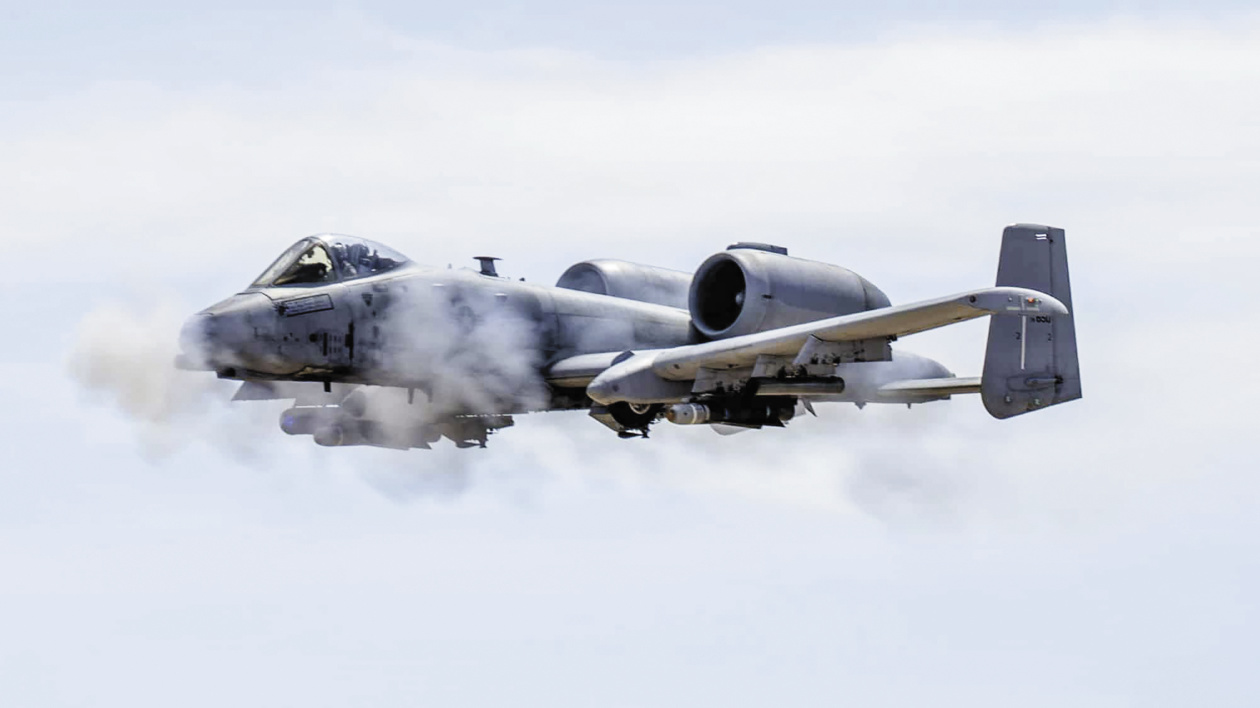
Reports indicate that the future of the A-10 "Thunderbolt II" attack aircraft has once again become a focal point of debate on Capitol Hill—rare bipartisan cooperation has led to the introduction of legislation aimed at preventing the retirement of this aircraft model before the deployment of a dedicated successor. The core content of this bill mandates that the majority of A-10 attack aircraft remain in service for the next decade, requiring the Air Force to retain at least 126 A-10s before the fiscal year 2033, while also maintaining the necessary maintenance infrastructure, logistics network, and pilot training systems to support this fleet, effectively halting the Air Force's current process to retire the A-10. The bill requires the Air Force to maintain a fleet size of at least 126 aircraft, which may force the Air Force to reopen some retired A-10s stored at the famous "aircraft boneyard" at Davis-Monthan Air Force Base.
The A-10 attack aircraft entered service in the 1970s, equipped with powerful ground attack capabilities, originally developed specifically to counter the Soviet "Iron Flood" assault. After the Cold War, it remained the only aircraft in the U.S. Air Force responsible for providing close air support to ground troops, still being used in various regional conflicts.
However, as its service time increased and battlefield environments changed, the A-10 has become increasingly difficult to adapt to new threats on the modern battlefield. As early as the early 21st century, the U.S. Air Force planned to gradually phase it out, but faced strong opposition from Congress, leading to a decades-long struggle between the Air Force and Congress.
The U.S. Air Force argues that the overall performance of the A-10 is outdated, with increasing risks associated with close air support, and that many of the tasks performed by the A-10 can be replaced by newer generation fighters such as the F-35A, F-16, and F-15E. However, members of Congress believe that these new fighters are not specifically designed for sustained low-altitude support of ground troops, and compared to the rugged A-10, the operational costs of these modern fighters are much higher.
One of the bill's sponsors, Arizona Congressman Abe Hamadeh, believes that this legislation aims to avoid repeating the mistakes of the premature retirement of other military aircraft. Supporters of the bill also argue that recent U.S. airstrikes against Iran further confirm that the A-10 still has military value. It recently completed a new test for adding a refueling capability to the nose to improve interoperability with tankers in high-threat environments.
In fact, another less publicly acknowledged reason for Congress's insistence on keeping the A-10 in service is the electoral considerations behind it. The maintenance, upgrades, and parts production for the A-10 create numerous job opportunities in many congressional districts. Retiring the entire fleet would have a significant economic impact on these areas. Many members of Congress refuse to retire the A-10 primarily to ensure the economic interests and military bases in their districts.
Reports from several U.S. media outlets also mention that a previous congressional report stated that the Air Force has systematically reduced the A-10's readiness rate through means such as cutting parts supply, refusing upgrades, and prematurely disbanding squadrons, attempting to create a fait accompli of it being "outdated and difficult to maintain." To this end, the bill sets extremely high thresholds for the Air Force to retire the A-10, not allowing the Air Force to transfer close air support missions to existing multirole fighters, but stipulating that the A-10 can only be retired after obtaining certification for a specially built close air support platform. Moreover, this certification requires not only technical validation submitted by the Air Force itself but also approval from the U.S. Army, U.S. Marine Corps, and U.S. Special Operations Command.
Chinese experts interviewed by the Global Times stated that the introduction of this bill marks a new phase in the decades-long divergence between Congress and the Air Force regarding the A-10 retirement plan. It exposes the fact that although the U.S. military still possesses overall military strength, it is facing systemic and severe challenges in maintaining global deployments, updating aging equipment, ensuring industrial capacity, and maintaining technological advantages.
U.S. Congress is working on legislation to prevent the retirement of A-10 Thunderbolt II aircraft until new dedicated ground attack aircraft are operational. This legislation mandates that at least 126 A-10s remain in service for the next decade, reflecting ongoing debates about military readiness and economic interests tied to the aircraft's maintenance. The A-10, which has been in service since the 1970s, is valued for its close air support capabilities.
- U.S. Congress is pushing to prevent the retirement of A-10 aircraft until new models are operational.
- The legislation requires the Air Force to maintain at least 126 A-10s for the next decade.
- The A-10 has been in service since the 1970s and is designed for close air support.
- Congressional support for the A-10 is partly driven by economic interests in maintaining jobs related to its operation.
- The Air Force has faced criticism for allegedly trying to reduce the A-10's operational readiness.