
Why Merz has discovered after nine years that France needs a different fighter jet — and what this says about Germany's lack of strategy
 Dr. Klaus Weber
Why Merz has discovered after nine years that France needs a different fighter jet — and what this says about Germany's lack of strategy
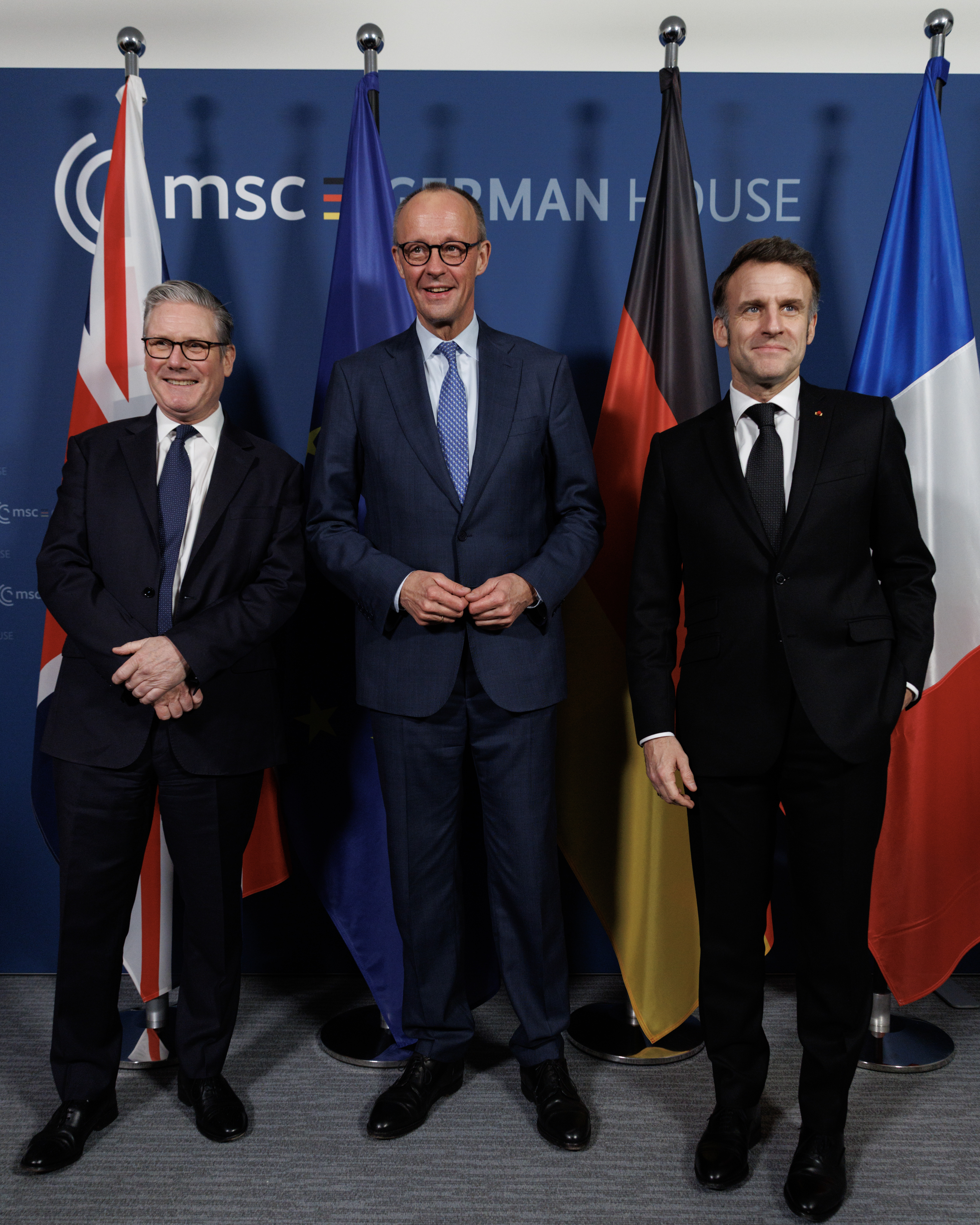
On February 18, 2026, Chancellor Friedrich Merz stated in the podcast "Machtwechsel" that Germany and France have fundamentally different requirements for the next generation of combat aircraft. "The French need an aircraft in the next generation of combat aircraft that is nuclear-capable and carrier-based. We do not need that in the Bundeswehr at the moment," said Merz, suggesting that the Future Combat Air System (FCAS) in its current form might not be salvageable. Belgium's Defense Minister Theo Francken immediately drew the conclusion: "SCAF is dead" — the French abbreviation for the program.
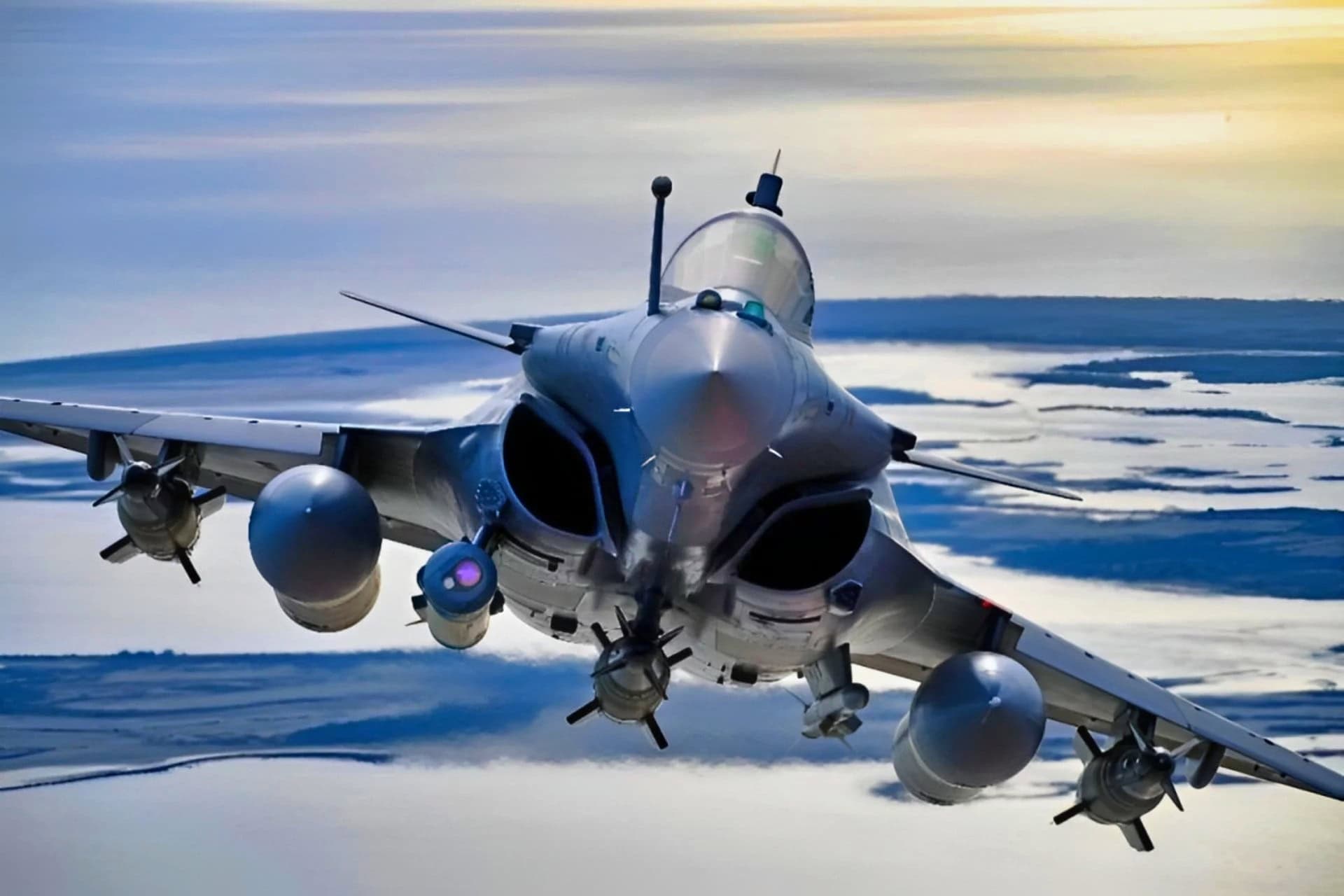
What Merz presents as a newly discovered compatibility problem has, in fact, been known since the beginning of the program. France must replace the Rafale in all its missions — including nuclear deterrence and carrier-based operations. These requirements were never a secret. They were documented in the Senate report of 2019, recorded in technical specifications, and — perhaps most obviously — translated into the design of the new French aircraft carrier PANG, which is specifically sized for a heavier and larger combat aircraft than the Rafale: about 78,000 tons displacement and 310 meters in length, compared to 42,000 tons and 261 meters of the Charles de Gaulle.
France's requirements were never the problem
That Merz presents these requirements as incompatible with German needs nine years after the program's launch is remarkable. Not because France's requirements have changed, but because Germany apparently never clearly defined what the Bundeswehr actually needs after the Eurofighter.
Paul Taylor, Senior Fellow at the European Policy Centre in Brussels, summarized the situation to Breaking Defense: "My impression is that it has been clear for a year or two that FCAS is dead. It just doesn't want to fall over because it is a political project." Merz's recent statement is another way of saying: "This thing is dead."
The real question is: What does Germany want? Berlin has procured the F-35 for NATO's nuclear sharing. This has institutionally resolved the question of nuclear capability for the Air Force — through an American platform under American export control. What remains as a requirement profile for a European sixth-generation fighter jet?
Merz himself raised a provocative question in the same interview: whether Germany will even need a manned combat aircraft in 20 years. This is not strategic clarity — it is an admission that Berlin lacks strategic clarity.
Germany criticizes what it cannot define itself
The irony of Merz's intervention lies in the fact that he criticizes France for requirements that result from a coherent strategic logic: France possesses nuclear weapons, operates aircraft carriers, and needs a platform that supports both. Germany, on the other hand, criticizes these requirements without naming its own alternative.
Should the Bundeswehr rely on unmanned systems? On more F-35s? On a cheaper European platform without nuclear and carrier capability? Merz provides no answer. Instead, he offers a scenario in which Germany could develop a new fighter jet "with Spain and other partners" — as if the organizational and industrial chaos that has destroyed FCAS could be resolved by replacing France with Spain.
Paul Lever, former British ambassador to Germany, interpreted Merz's statements as preparation for a program cancellation: "My suspicion would be that Merz is laying the groundwork for a cancellation of the project. And of course, the project has been struggling for some time, partly because the Germans say they cannot work with Dassault."
The real problem: Workshare dispute masquerading as a requirement conflict
It is no coincidence that Merz's new framing — "different requirements" instead of "industrial governance" — has only now emerged. The dispute between Dassault and Airbus over leadership responsibility and work shares has been blocking FCAS for years. Dassault insists that a fighter aircraft program requires a single prime contractor with clear design authority. Airbus, representing German and Spanish industrial interests, rejects this and demands a more balanced distribution.
German parliamentarians have repeatedly signaled that a model with "French leadership" at this investment volume is politically untenable. Angela Merkel publicly questioned in 2021 whether Germany's role in the program corresponds to the partnership model.
What Merz is doing now is a political framing: Instead of admitting that Germany and France cannot agree on industrial governance, he presents the problem as a technical incompatibility. This is not only insincere — it is dangerous because it avoids the real question that needs to be answered: What does the Bundeswehr actually want to fly?
Three fighter jets instead of a European solution
Industry insiders expect, according to Breaking Defense, that Germany and France will abandon the development of a joint fighter jet but will continue to collaborate on drones and the "Combat Cloud" — the digital backbone that connects manned and unmanned platforms. This would mean: Europe is now developing three sixth-generation fighter jets simultaneously — FCAS (Germany/Spain), FCAS (France), and GCAP (United Kingdom/Italy/Japan).
This fragmentation is not only inefficient. It exactly repeats the mistake that Europe has made in every major armaments program over the last 60 years: The costs of sovereignty are multiplied by national parallel developments, while the benefits of European integration are rhetorically invoked but never institutionally realized.
France at least has the option to continue modernizing the Rafale. President Emmanuel Macron is currently negotiating a contract with India for 114 Rafale fighter jets — an export success that could secure the industrial base for a French successor program. Germany, on the other hand, has neither a clear requirement nor an industrial base to rely on.
The real question that Merz does not answer
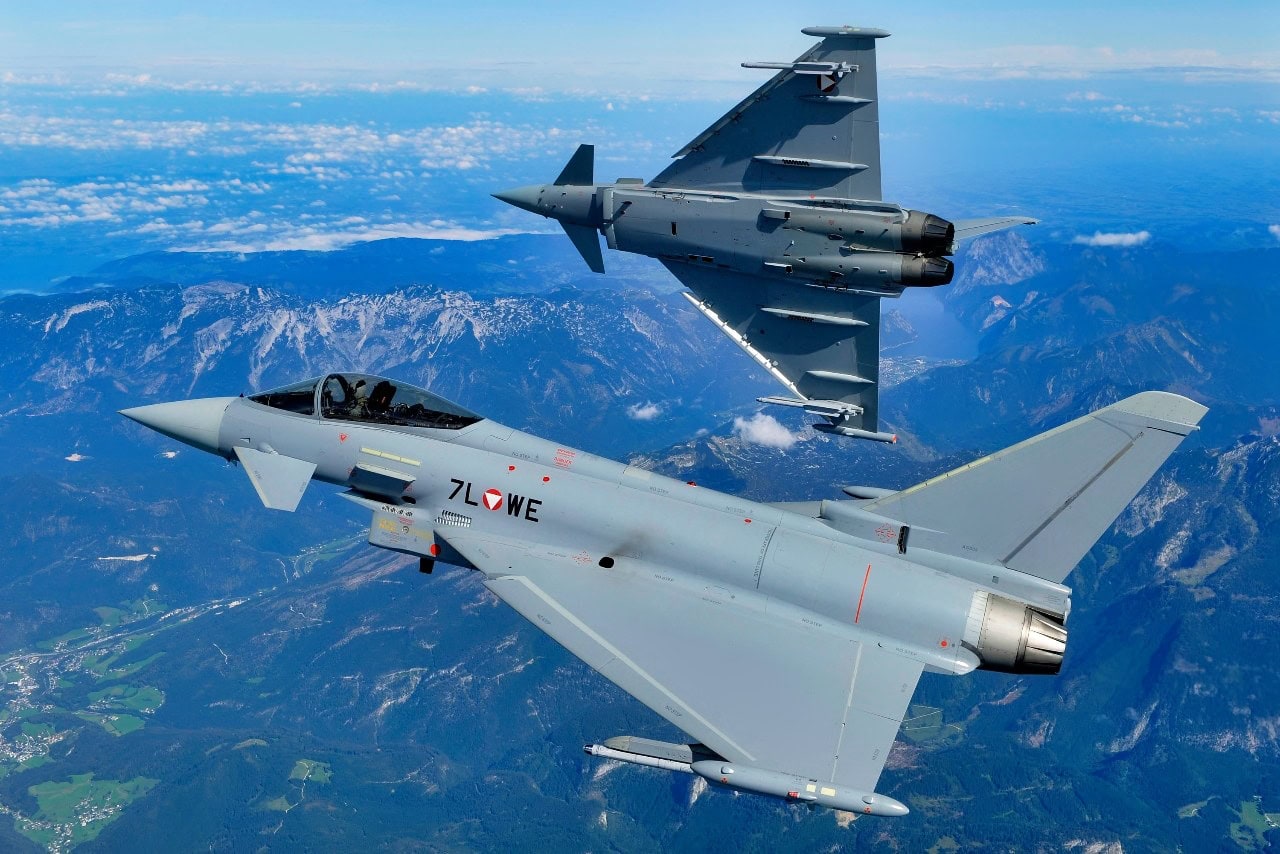
Merz's statements raise a question that has so far been overlooked in the political debate: How does the Air Force define its future air combat capability after the Eurofighter? Beyond the Combat Cloud and Remote Carrier (unmanned companion drones) — what role should a manned combat aircraft play in a future German armed forces model?
This question gains additional weight as Merz has simultaneously confirmed discussions with Emmanuel Macron about European nuclear cooperation. If Germany is willing to discuss a French-British nuclear umbrella, why not also discuss a fighter jet that carries this deterrence?
The Élysée Palace responded to Merz's statements with a clear message: "The military needs of the three involved states have not changed, and from the beginning, French deterrence has been part of the future aircraft's missions. Given the strategic importance for our Europe, it would be incomprehensible if industrial divergences could not be overcome when we must show unity and performance in all areas that affect our industry, technology, and defense."
France knows what it wants — Germany does not
The paradox is obvious: France is criticized for requirements that follow from a coherent strategic logic. Germany criticizes these requirements without defining its own. Merz has "discovered" after nine years that France's needs do not fit Germany — but he has not explained what would fit Germany.
FCAS is not dying from incompatible requirements. It is dying because Germany has never clearly articulated what requirements it actually wants to impose. And as long as this question remains unanswered, every new fighter jet program — whether with France, Spain, or other partners — will fail due to the same institutional vacuum.
France has designed an aircraft carrier tailored to its future air combat platform. Germany is debating whether it will even need pilots in 20 years. This is not a strategy debate. This is strategic disorientation.
Chancellor Friedrich Merz stated that Germany and France have fundamentally different requirements for the next generation of combat aircraft during a podcast on February 18, 2026. He suggested that the Future Combat Air System (FCAS) may not be viable, as France's needs for a nuclear-capable, carrier-based aircraft differ from Germany's current requirements. The report also highlights ongoing disputes between Dassault and Airbus regarding the FCAS project, indicating a lack of strategic clarity in Germany's defense planning.
- Chancellor Merz stated that Germany and France have fundamentally different requirements for the next generation of combat aircraft.
- Merz indicated that the Future Combat Air System (FCAS) may not be viable in its current form.
- Belgium's Defense Minister declared the SCAF program dead, reflecting concerns about compatibility with German needs.
- Germany has procured the F-35 for NATO nuclear sharing, complicating its requirements for a European sixth-generation fighter.
- The report highlights ongoing disputes between Dassault and Airbus over leadership and workshare in the FCAS project.