
Why the Draft Proposal of Japan's "Three Security Documents" Keeps Defense Spending Ambiguous: Expert Interpretation
Surrounding the Japanese government's attempt to revise the "Three Security Documents," including the "National Security Strategy," within this year, the ruling Liberal Democratic Party (LDP) continues to push forward with ongoing actions. According to Japanese sources, the LDP's Security Research Committee held a meeting on the 18th to discuss a draft proposal for revising the "Three Security Documents." The draft maintains a vague stance on defense spending; what considerations lie behind this?
Increased military spending may compress social welfare, potentially causing public discontent
Meng Mingming, Assistant Researcher at the Institute of Japanese Studies, Chinese Academy of Social Sciences: The vagueness in Japan's defense spending mainly stems from the following considerations: first, to avoid public backlash. Currently, after the rise of Sanae Takaichi, there has been an intensified push for Japan's "re-militarization." The defense budget for the fiscal year 2026 has already reached a historic high of 9 trillion yen, and any further increase would inevitably involve tax hikes, cuts to social welfare, or a halt to the expansion of deficits. Given the backdrop of high debt, inflationary pressures, and an aging society, this could easily provoke a backlash from the Japanese public and attacks from opposition parties, thus the Takaichi government has to handle the draft ambiguously.
Second, the Japanese government hopes to maintain fiscal initiative in increasing defense spending. If a clear budget proposal regarding the relevant defense expenses were drafted around the current proposal, it could limit the Takaichi government's future military strengthening actions. By keeping this ambiguity now, it reduces short-term fiscal impact and allows for adjustments to targets in the long term based on government needs, without being constrained by the documents.
Japan adopts a risk-averse control approach under external pressure
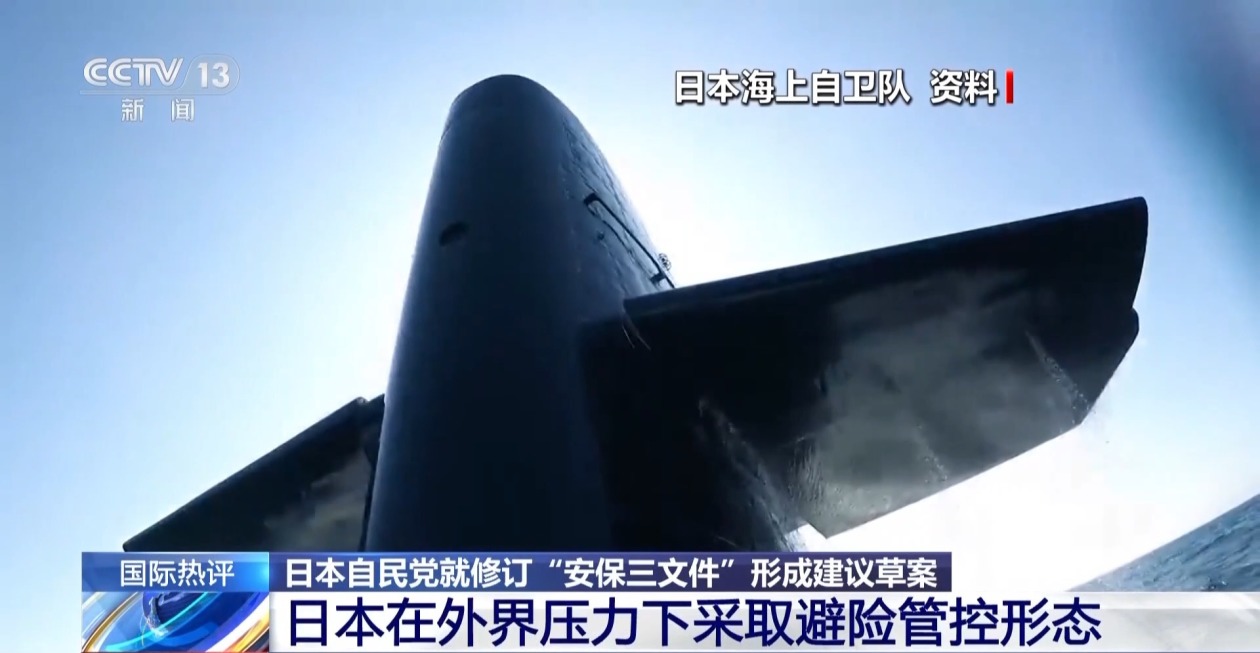
Meng Mingming, Assistant Researcher at the Institute of Japanese Studies, Chinese Academy of Social Sciences: Third, the Japanese government's approach under external pressure is a form of risk-averse control. Takaichi's increased military investment has sparked intense criticism and resistance both domestically and internationally. China and other neighboring countries are increasingly vigilant about Japan's push for a new militarism that alters the post-World War II international order, with clear attitudes. An increasing number of people within Japan are also joining the peaceful activities opposing Takaichi's militarization. In the current complex situation, to avoid heightened external pressure, the Takaichi government has no choice but to adopt this ambiguous stance, akin to burying its head in the sand, to appease the past.
The Japanese government, led by the Liberal Democratic Party, is currently discussing a draft proposal to revise its security documents, focusing on defense spending. The proposal maintains ambiguity to prevent public backlash against potential increases in military expenditure, which is projected to reach a historic high of 9 trillion yen in 2026. This approach is also a response to growing domestic and international criticism of Japan's militarization efforts.
- Japan's Liberal Democratic Party is discussing a draft proposal for revising security documents.
- The draft maintains ambiguity regarding defense spending to avoid public backlash.
- The defense budget for 2026 is projected to reach a historic high of 9 trillion yen.
- There is increasing domestic and international criticism of Japan's militarization efforts.
- The government aims to retain fiscal flexibility in defense spending.