
"With the Delivery of 'Quasi-Stealth' Fighter Jets, How Far is South Korea from Fifth-Generation Aircraft?"
[Global Times Report, Journalists Guo Yuandan and Liu Yang] Recently, the Korean Central News Agency reported that South Korea's first mass-produced KF-21 fighter jet has officially been delivered to the South Korean Air Force. This aircraft is seen as an important symbol of South Korea solidifying its defense autonomy and is also part of South Korea's efforts to enter the global high-end aviation market and seize opportunities in the international arms trade. Why are multiple countries, including South Korea, advancing the development of fifth-generation or "near-stealth" fighter jets? What is the competitive landscape in this field globally? To address these questions, a reporter from the Global Times interviewed military experts.
What is the performance like?
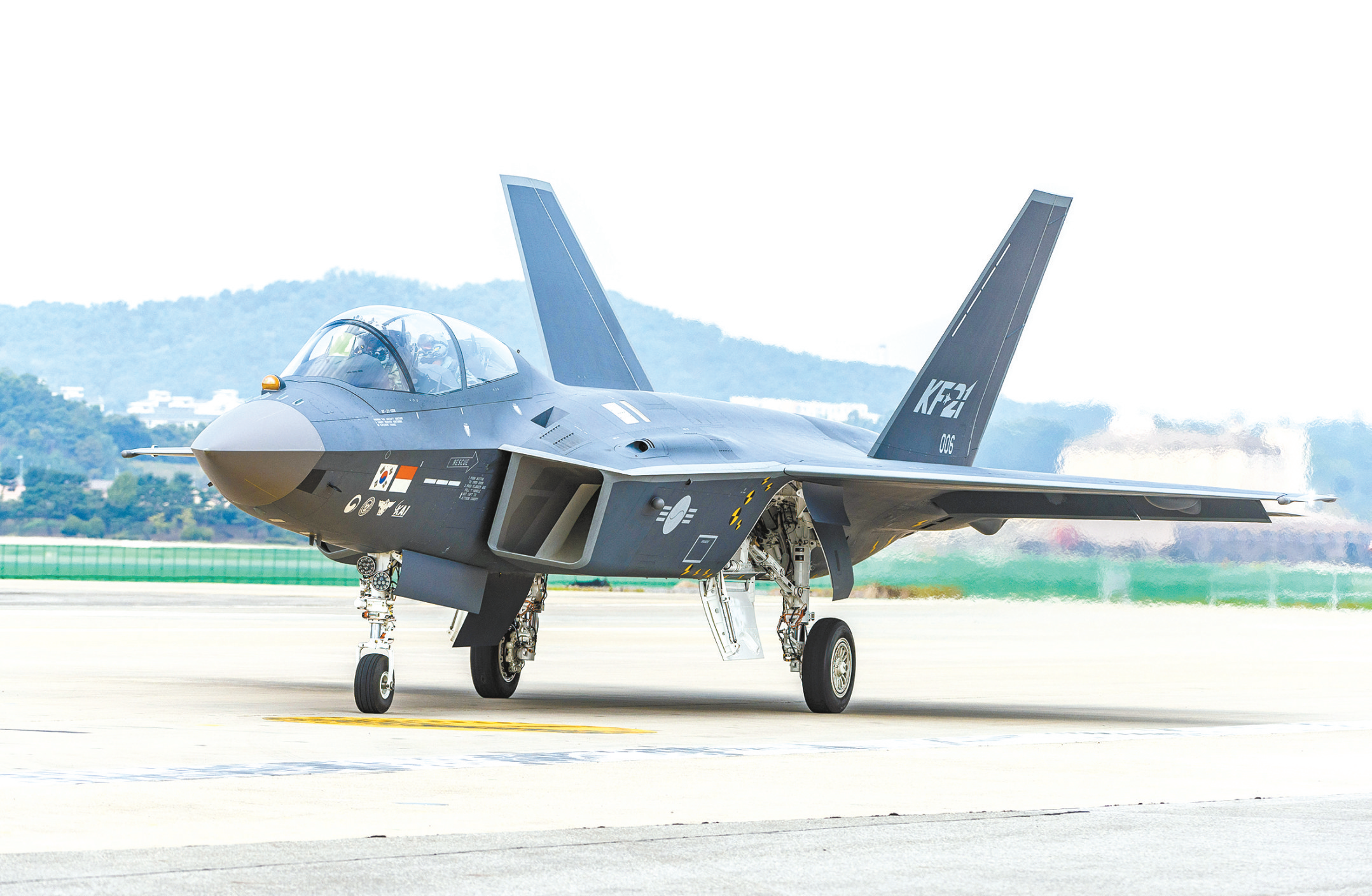
The Korean Central News Agency recently reported that Korea Aerospace Industries (KAI) has delivered the first mass-produced KF-21 supersonic fighter jet to the South Korean Air Force at its Sacheon factory. This aircraft is a two-seat model.
According to South Korean media reports, South Korea is the eighth country in the world to successfully develop a supersonic fighter jet of the 4.5 generation or above independently. The KF-21 is a 4.5 generation fighter that will replace older aircraft such as the F-4 and F-5 to address changes in future battlefield environments. After performance improvements, it may also possess stealth capabilities.
The South Korean Air Force plans to equip the KF-21 fighter jets into its forces in the second half of 2027, with plans to introduce over 100 KF-21 aircraft by the early 2030s. Previously, the Defense Acquisition Program Administration of South Korea stated that it plans to deliver the first batch of 40 mass-produced aircraft to the South Korean Air Force by 2028, and complete the delivery of an additional 80 aircraft by 2032.
"There is actually some controversy regarding South Korea defining this aircraft as a 4.5 generation or 4+ generation fighter," military expert Zhang Xuefeng told a reporter from the Global Times. One important reason South Korea defines it as a 4.5 generation fighter is that the currently operational models do not use internal weapon bays, and munitions are carried externally in a semi-buried form. "Additionally, some of the sensors on this aircraft have not been treated for stealth, so it cannot be considered a true stealth fighter."
Zhang Xuefeng believes that this aircraft can be referred to as a fifth-generation fighter because its shape is designed according to stealth fighter principles. It is generally believed that the design of a stealth fighter contributes over 80% to its stealth capabilities. For example, a fourth-generation fighter cannot be called a fifth-generation fighter regardless of how it is modified, because its shape has already been determined.
Furthermore, Zhang Xuefeng analyzed that this aircraft will undergo modifications and upgrades in the future, including the installation of internal weapon bays and modifications to sensors and other details, ultimately evolving into a fifth-generation fighter.
Why does South Korea want to independently develop new fighter jets?
The journey of South Korea developing its own new fighter jet has been long and tortuous; it has been over 25 years since the announcement of the development of a domestic fighter jet to its official delivery. The Korean Central News Agency stated that in March 2001, former South Korean President Kim Dae-jung announced the launch of the domestic fighter jet development, namely the KF-X advanced fighter project. South Korea fully commenced the systematic development of the KF-21 fighter jet in December 2015. The KF-21 passed operational suitability evaluation in May this year, and the systematic development work was completed in June. In 2023, just before the opening of the Seoul International Aerospace and Defense Exhibition, the KF-21 made its public debut.
In this regard, Zhang Xuefeng stated that South Korea's independent development of new fighter jets is, on one hand, to achieve equipment autonomy and reduce dependence on foreign countries. On the other hand, it is also to promote the aircraft in the international market. Currently, South Korea is actively marketing the KF-21 fighter jet to Southeast Asia, the Middle East, and other regions.
Multiple countries are developing new fighter jets
Currently, the development of stealth fighter jets and next-generation aircraft has become a competitive focus among multiple countries. Public reports indicate that the countries capable of independently developing fifth-generation stealth fighter jets are still mainly concentrated in a few countries, such as the United States and China.
At the same time, South Korea is advancing the KF-21 near-stealth fighter jet project, India is promoting the AMCA self-developed stealth fighter, and Turkey is advancing the development of the "Khan" fighter jet. Some viewpoints suggest that these models belong to "near fifth-generation fighters," and their actual performance is still constrained by technology and integration capabilities. Additionally, some countries have begun to lay the groundwork for sixth-generation fighter jets.
Zhang Xuefeng stated that currently, the only fifth-generation fighter available for purchase in the Western market is the U.S. F-35. Europe has not even launched a fighter of the same generation, which has significantly impacted its domestic aviation industry. Therefore, many countries have begun to promote the independent development of new fighter jets. "Relevant countries hope to reduce excessive dependence on the United States through independent development, strengthen their own aviation industries, and strive to secure a place in the future international military aircraft market. On the other hand, these countries are unwilling to hand over the critical lifeline of national security to Western countries."
The South Korean Air Force received its first production KF-21 fighter jet, marking a significant step in the country's defense capabilities. South Korea plans to introduce over 100 KF-21 jets by the early 2030s, aiming to enhance its military independence and compete in the global arms market. The KF-21 is considered a 4.5 generation fighter with potential stealth features, reflecting South Korea's long-term investment in indigenous military technology.
- The first production KF-21 fighter jet has been delivered to the South Korean Air Force.
- South Korea plans to introduce over 100 KF-21 jets by the early 2030s.
- The KF-21 is classified as a 4.5 generation fighter jet with potential stealth capabilities.
- The development of the KF-21 has been ongoing for over 25 years, starting in 2001.
- South Korea aims to reduce reliance on foreign military equipment and promote its defense industry.