
WZ-7 Debuts in the Huangyan Island Joint Air and Sea Exercise, What Are Its Advantages?
The Southern Theater Command of the People's Liberation Army organized a joint naval and air exercise around Huangyan Island yesterday, deploying the WZ-7 drone, KJ-500 early warning aircraft, and naval vessels such as the Yulin, Tianmen, and Qinghai Lake. The exercise focused on practical combat scenarios including reconnaissance and early warning, rapid maneuvering, and joint search and rescue. Among them, the domestically developed high-altitude large unmanned reconnaissance aircraft WZ-7 was particularly eye-catching. What are the characteristics of the WZ-7, and what role did it play in the joint exercise around Huangyan Island?
What are the characteristics of the WZ-7 drone that appeared at Huangyan Island?
"WZ" stands for "unmanned reconnaissance aircraft," primarily tasked with border reconnaissance, patrols of territorial waters and exclusive economic zones, and monitoring key areas.
Military commentator Fu Qianshao from China Voice introduced that the deployment of the WZ-7 drone in this joint exercise was due to its advantages in efficient flight and precise reconnaissance capabilities, which highly match the practical needs for continuous monitoring of the vast South China Sea, quickly capturing targets, and guiding strikes.
Fu Qianshao: The characteristic of the WZ-7 is that it flies high. It uses a connected wing design, which means that two elongated wings are connected to form a frame structure, ensuring that both wings have considerable structural strength. This high-altitude unmanned reconnaissance aircraft has a maximum flight altitude of 19,000 to 20,000 meters. The higher it flies, the further it can see, providing a larger field of view and detecting more targets. The WZ-7 has a fast flight speed, allowing it to quickly reach the areas that need reconnaissance and rapidly engage in surveillance tasks.
This high-altitude unmanned reconnaissance aircraft is equipped with a very advanced electro-optical system, capable of accurately detecting, tracking, and observing ground and sea targets both day and night. Of course, it may also be equipped with synthetic aperture radar, which can detect ground or sea targets under complex weather conditions. The combination of these systems ensures that this unmanned reconnaissance aircraft can conduct precise monitoring and observation of relevant areas under various conditions.
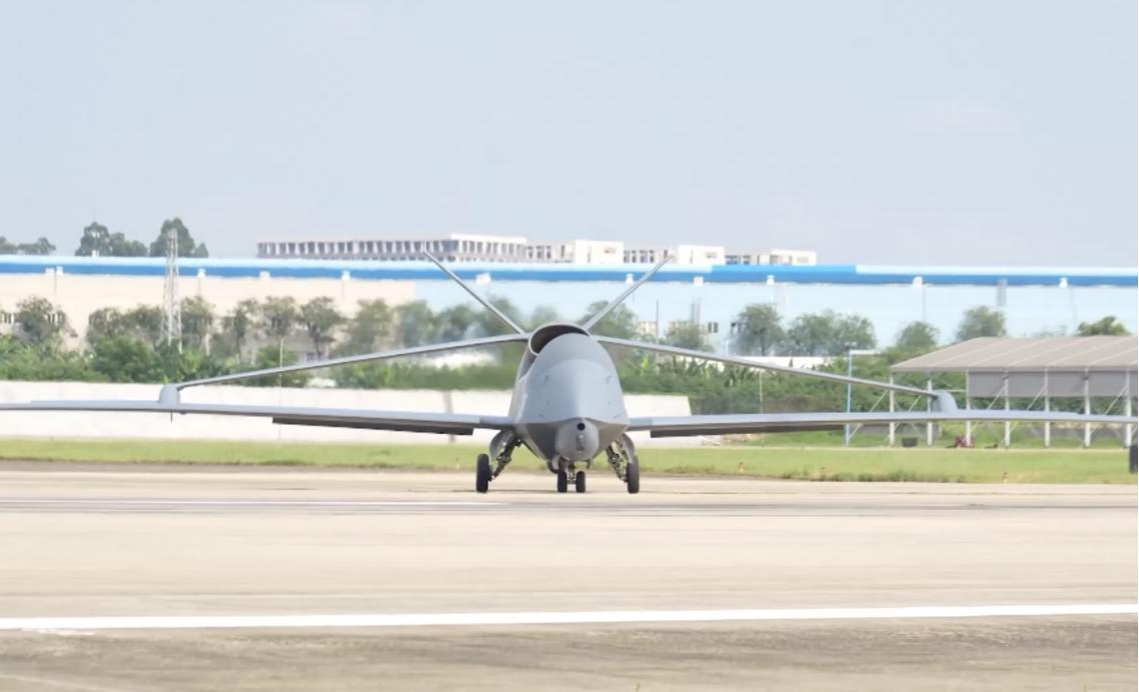
△ WZ-7 drone
The WZ-7 attracted countless eyes as early as the 15th China International Aviation and Aerospace Exhibition in November 2024. At that time, the WZ-7 flew autonomously throughout the entire journey, crossing multiple provinces, and autonomously landed at Jinwan Airport in Zhuhai, Guangdong. This was the first time a large unmanned aircraft entered the airshow site in this manner for static display, showcasing its robust long-range navigation, satellite communication, and automatic control capabilities. Fu Qianshao believes that more and more advanced unmanned equipment represented by the WZ-7 has demonstrated strong combat effectiveness and deterrence in recent years while maintaining national territorial integrity and maritime rights.
Fu Qianshao: As our military's weaponry continues to improve, many heavy fighter jets can patrol the South China Sea, but the flight speed of fighter jets is relatively high, and their time in the air is relatively short. Therefore, we also need some long-endurance platforms that can conduct reconnaissance and surveillance over the South China Sea for extended periods. Drones are a good choice.
Of course, we also have many different types of long-range reconnaissance drones that can perform corresponding mission tasks. For example, we can provide export versions of the Rainbow series drones, the Wing Loong series drones, etc. It can be said that within the drone system, we have formed a complete set of equipment, including platforms for executing long-range reconnaissance missions and platforms capable of conducting long-endurance battlefield surveillance and strikes.
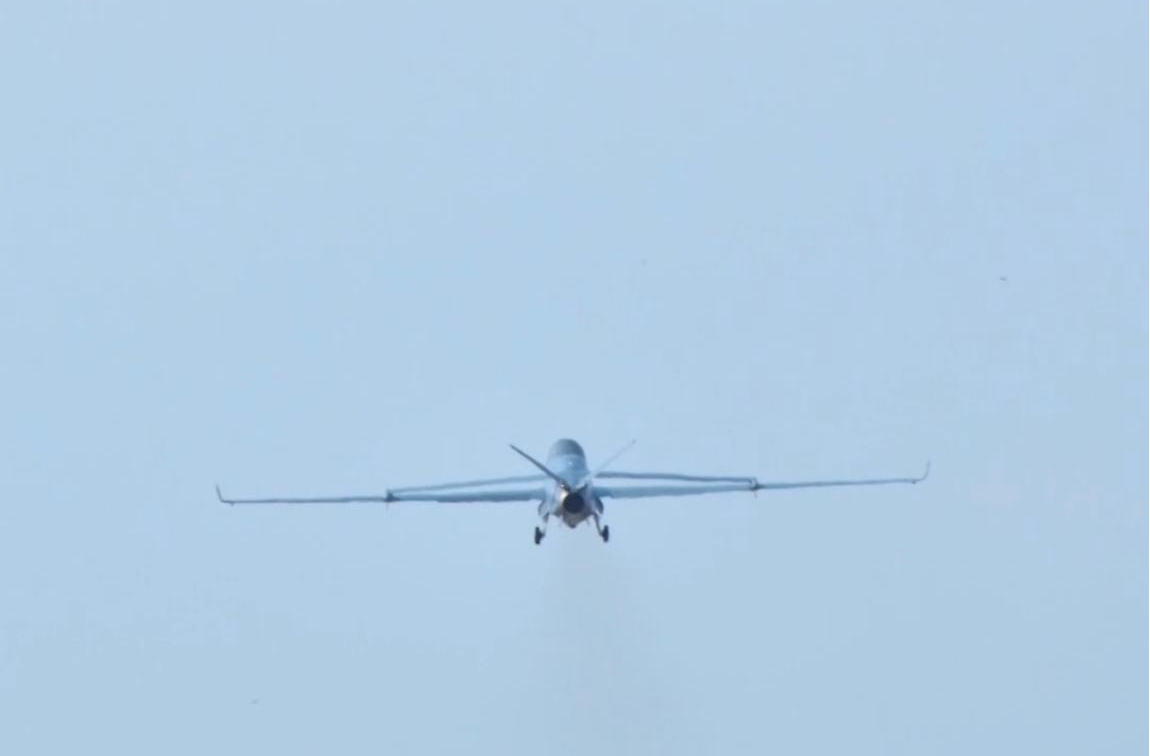
△ WZ-7 drone
Drones tracking, early warning aircraft commanding, frigates patrolling
It is worth noting that this time the WZ-7 did not act alone but formed a complete joint naval and air system with early warning aircraft and surface combat platforms. "Drones tracking, early warning aircraft commanding, frigates patrolling," the WZ-7 conducted wide-area reconnaissance outside the formation's defense zone, transmitting the acquired target information back to the rear via data links; the early warning aircraft processed the data, summarized the situation, and issued commands to fighter jets or surface vessels to carry out strikes. Military commentator Song Xiaojun from China Voice introduced that this configuration not only forms a complete reconnaissance and strike chain but also allows each service and each piece of equipment in the chain to fully exert its strength.
Song Xiaojun: The WZ-7 collects data and transmits it to the early warning aircraft, where personnel and workgroups analyze it, transforming it into a true battlefield situational awareness information, which is then relayed to relevant air defense forces and decision-making agencies. The cooperation between drones and early warning aircraft enhances the safety of data collection and processing.
Military-police joint exercises have clear objectives and regulations; where are they aimed?
Recently, the Philippines has taken a series of actions in the South China Sea, provoking during China's festive period and inciting media hype, which seriously violates the Declaration on the Conduct of Parties in the South China Sea and severely undermines peace and stability in the region. Zhang Chi from the National Defense University introduced that this exercise, in terms of strength, included both military and coast guard forces, with military-police coordination forming a multi-dimensional deterrent. In terms of equipment, it included a series of advanced equipment in the air and at sea, enhancing three-dimensional control and making the opponent's provocative actions impossible to hide. In terms of timing, it was both a timely counter to the Philippines' malicious provocations and a practical test of our military and coast guard's readiness. It fully demonstrates that the military and coast guard are always on high alert, ready to fight at any time, and will resolutely thwart any attempts to provoke trouble at sea, ensuring that no schemes to disrupt the South China Sea succeed.
Zhang Chi: The most important significance of this exercise is to draw lines and set rules for the Philippines, making it realize that in the face of China's legitimate sovereign rights, firm determination to safeguard rights, and strong capability to protect rights, no matter what small actions it takes or who it allies with, its illegal schemes cannot succeed. China is unwavering in its determination to maintain its territorial sovereignty and maritime rights, firmly upholding peace and stability in the South China Sea. The Chinese military and coast guard forces always maintain a high level of vigilance, resolutely thwarting any attempts to provoke trouble at sea, ensuring that no schemes to disrupt the South China Sea succeed. If the Philippines remains obstinate, continues to provoke, China will respond with even stronger countermeasures. In the end, the Philippines will only end up suffering the consequences of its actions.
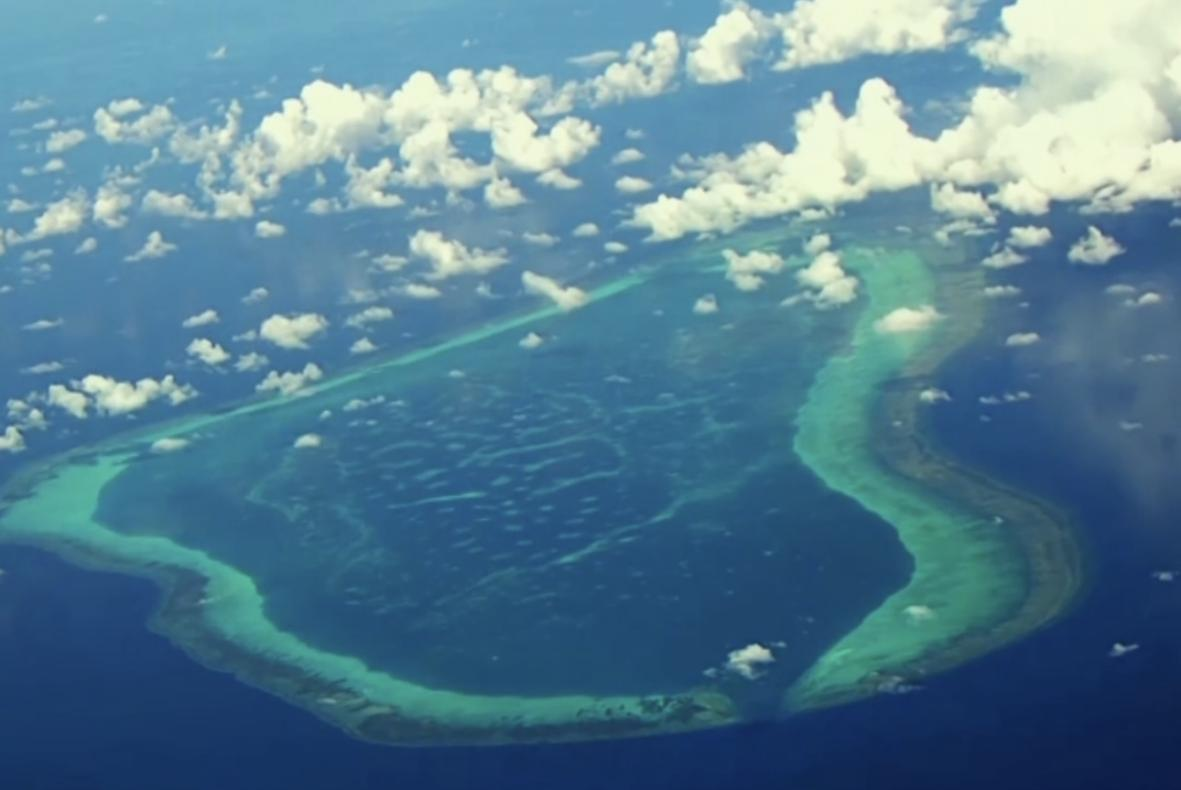
△ Huangyan Island
Supervised by丨Huang Xianwen Wu Zhehua
Reported by丨Cui Tianqi Cai Zihan
Video丨Li Rui
The People's Liberation Army conducted joint air and naval exercises near Huangyan Island, featuring the WZ-7 UAV and several naval vessels. The exercises focused on reconnaissance, rapid maneuvering, and joint search and rescue operations. This operation was part of a broader strategy to enhance surveillance capabilities in the South China Sea and respond to provocations from the Philippines.
- The PLA conducted joint air and naval exercises near Huangyan Island.
- The WZ-7 UAV was prominently featured for its reconnaissance capabilities.
- The exercises involved multiple naval vessels including frigates.
- The operation aimed to enhance surveillance and response capabilities in the South China Sea.
- The exercises were a response to perceived provocations from the Philippines.