
Yıldırımhan Turkish with a range of 6000 km puts the Gulf in front of the missile question in 2026
 Ahmed Al-Rashid
Turkish Yıldırımhan with a range of 6000 km poses a missile question for the Gulf in 2026
At the SAHA Expo 2026 in Istanbul, the Turkish message was not just another industrial display. The model that topped the Turkish Ministry of Defense's pavilion had a clear name: Yıldırımhan, a long-range ballistic missile described in the technical report published in EDR Magazine as a program under development with a declared range of 6000 km and a payload of nearly 3 tons, with a flight speed mentioned at Mach 9 and a peak speed reaching Mach 25. These figures do not belong to the ordinary tactical missile market, but to a different layer of regional deterrence.
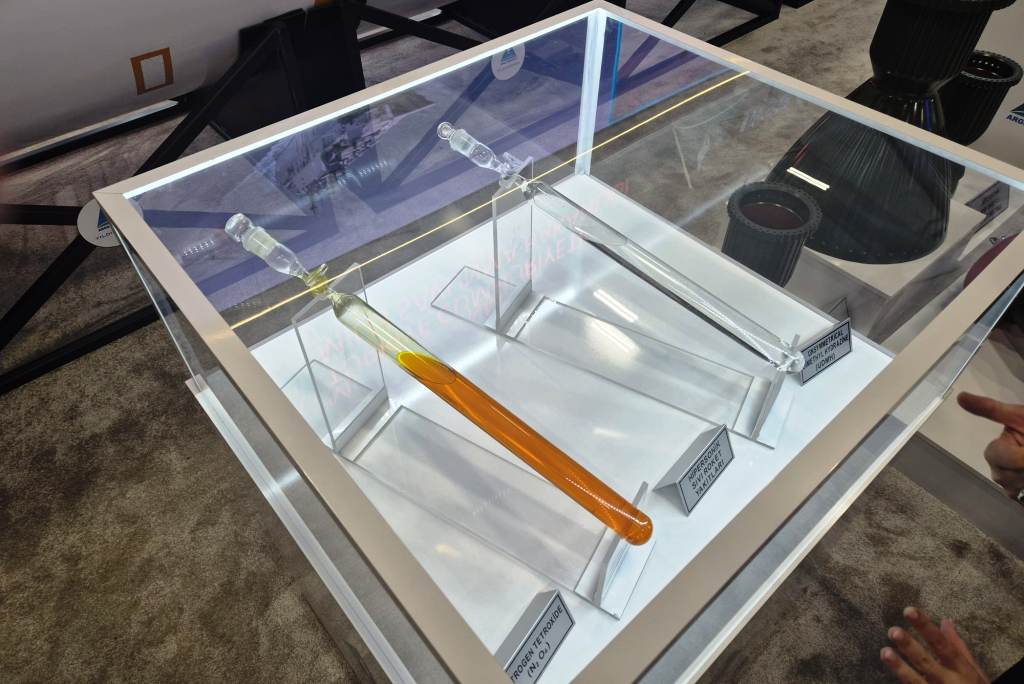
From a military perspective, the important thing is not that Turkey showcased a large model at an exhibition; exhibitions are filled with models. The important thing is that Ankara links this display to an industrial series that is beginning to take shape: liquid fuel of the UDMH type and oxidizer N2O4, engine bench tests, key components that have passed laboratory tests, and DeltaV showcasing a hypersonic test platform, HISTEP, capable of exceeding Mach 5 and reaching altitudes over 200 km. This is not an operational capability ready to go, but it is also not an empty political speech.
From KHAN to Yıldırımhan
To understand the magnitude of the leap, it is enough to look at KHAN, one of the known Turkish missiles in the tactical ballistic missile category. Roketsan's official page places KHAN in a range of 80 to 280 km, with a diameter of 610 mm, a weight of 2500 kg, a warhead of 470 kg, and guidance based on INS supported by GPS and GLONASS systems, with a declared accuracy of less than or equal to 10 meters CEP. This is a useful capability for striking command centers, radars, air defenses, and logistical facilities within a nearby operational theater.
As for Yıldırımhan, if the declared figures translate into a field system, it takes Turkey out of the logic of theater strikes into the logic of trans-regional reach. A range of 6000 km from Turkish territory means that the map is not only read from Damascus, Baghdad, and Tehran, but also from the Red Sea, the Horn of Africa, the Gulf, Northern Europe, and large parts of Asia. Therefore, the program should be treated as a political project dressed in technical clothing, not just a new missile in an industrial catalog.
What this means for the Gulf
The Gulf question here is not whether Riyadh, Abu Dhabi, or Doha will buy Yıldırımhan tomorrow. This is politically and technically unrealistic at the current stage, and there is no reliable information indicating a near export offer for this system. The real question is how Gulf capitals will deal with Turkey's entry into a missile layer that, until recently, was confined to Iran, Israel, the United States, and Russia and China behind the curtain.
Those who understand the thinking of Gulf armies realize that long-range missiles create a significant political allure. They give the commander an immediate image of power: platform, range, warhead, and target map. However, missile capability does not equal deterrence if there is no accurate intelligence, protected command and control, a clear political decision, and constant training on the targeting cycle. This is the lesson that the region continues to ignore whenever it buys a new platform and considers it a solution to a deeper problem.
Turkey differs from many Arab buyers because it is building an industrial chain rather than a stockpile of equipment. At SAHA Expo 2026, 1478 exhibitors from over 120 countries attended, and the Turkish platform spoke about artificial intelligence, unmanned aircraft, space, and rocket propulsion. This context is important. Yıldırımhan is not alone; it comes with DeltaV, Roketsan, Baykar, and a network of companies learning from Ukraine, Syria, Libya, and Nagorno-Karabakh. In the Gulf, many programs still start from contracts and end with foreign maintenance.
Iran and Israel in the Turkish calculation
EDR's report notes that Turkey's need for this capability should also be read in light of the incident in early March when NATO air defense assets shot down Iranian ballistic missiles aimed at Turkey, which Tehran denied. Even with reservations about the details, the military message is clear: Ankara does not want to remain in the position of a state that asks allies to intercept missiles over its territory and then settles for diplomatic protests.
For Iran, the emergence of a Turkish program with this range adds a new layer of pressure. Tehran has become accustomed to using missile and drone density as compensation for its weak modern aviation. If Turkey approaches possessing a long-range ballistic capability with a large payload and unknown maneuverability, Iran will find itself facing a non-Arab Muslim competitor, a NATO member, but one that does not always act as an American arm. This is a troubling equation for Tehran because it does not resemble Israeli deterrence or the American umbrella.
Israel will read Yıldırımhan differently. Israel already possesses a long-range deterrent system, and its air force has proven capable of operating beyond its immediate borders. However, Turkey's entry into the 6000 km level, even if it remains in the development phase for years, reminds Tel Aviv that the Eastern Mediterranean is no longer a one-way theater. The problem is not a Turkish strike tomorrow, but the transformation of the Turkish industry into a potential provider of technology that raises the ambition ceiling for countries that currently do not have such an industrial chain.
Capability does not emerge on the day of the display
What appeared in Istanbul should not be exaggerated. There is no published information about the flight test schedule, the type of warhead, the level of maneuverability, the final guidance system, or production readiness. Additionally, using liquid fuel like UDMH with N2O4 raises operational questions about storage, safety, preparation time, and logistical infrastructure. These are questions that any missile officer knows before applauding the big numbers.
But downplaying the program is also a mistake. Turkey does not need to announce immediate readiness to change the region's calculations. The mere existence of a long-term program of this size forces others to think about layered air defense, early warning, base protection, and depth of storage. Gulf countries have spent tens of billions on Patriot and THAAD systems and Western fighters, yet they still rely on the United States for sensitive parts of warning, integration, and maintenance. When Ankara says it wants a range of 6000 km, it is not buying independence; it is trying to manufacture it.
Military summary
Yıldırımhan is not a missile that will change the balance of power in 2026, but it is an indicator of a trend that should worry the Gulf more than the numbers themselves. Turkey is moving from the production of drones and tactical missiles to attempting to build long-range deterrence. In contrast, some Arab armies still measure power by the number of batteries and aircraft in the military parade. Between those who manufacture the capability chain and those who buy its final head, there is a gap that does not show in pictures, but becomes apparent at the first crisis. And as our military says: the weapon for which you do not have the decision, you only own half of it.
Main sources: EDR Magazine on Yıldırımhan and DeltaV at SAHA Expo 2026, Roketsan's official page for the KHAN missile, and EDR's general coverage of the SAHA Expo 2026 in Istanbul.
Turkey showcased the Yıldırımhan missile at SAHA Expo 2026 in Istanbul, highlighting its range of 6000 km and payload capacity of 3 tons. This development signifies a shift in Turkey's defense capabilities towards long-range deterrence, raising concerns among Gulf states regarding regional security dynamics. The missile's advanced specifications and the involvement of Turkish defense companies suggest a significant industrial capability in missile technology.
- Yıldırımhan missile has a range of 6000 km and a payload of approximately 3 tons.
- The missile is described as being in development with advanced specifications including speeds up to Mach 25.
- Turkey's missile program is seen as a political project with significant regional implications.
- The report highlights the shift in Turkey's defense capabilities from tactical to long-range systems.
- The presence of Turkish defense companies at the expo indicates a growing industrial base in missile technology.