
Yun-20B and Yunyin-20 Appear Together: PLA's Long-Distance Delivery Chain Enters the 2026 Scaling Phase
 Li Minghui
Yun-20B and Yunyou-20 Appear Together, PLA's Long-Distance Delivery Chain Enters the 2026 Scaling Phase
On June 28, the PLA News Communication Center's "China Horn" released a promotional video for the Yun-20 series. What truly caught my attention were not the familiar slogans in the video, but three scenes: the Yun-20A, Yun-20B, and Yunyou-20 parked together; a close-up of the Yun-20B showcasing the WS-20 engine; and the Yunyou-20 refueling the H-6N. Viewed individually, each scene may not be explosive news, but together they illustrate a critical capability that the PLA Air Force has lacked over the past decade—long-distance delivery, aerial refueling, and rapid deployment of heavy equipment, transitioning from "whether it can be done" to "scaling issues."
The Key to Yun-20B is Not Bigger, But More Stable
The Global Times cited information from the Aviation Industry Corporation, stating that since the Yun-20 was commissioned in July 2016, its flight paths have covered over 40 countries across four continents. The most specific technical signal in the promotional video is the Yun-20B's replacement of the domestically produced WS-20 engine. Public information shows that the early Yun-20A relied on the Russian D-30KP-2 engine, which made the aircraft usable but constrained its range, fuel consumption, payload, and production pace. The WS-20 is a high bypass ratio turbofan, theoretically pushing the Yun-20B from "capable" to "further, more economical, and more capable of mass deployment."
In simple terms, transport aircraft are not afraid of mediocre single-aircraft performance; what they fear is low operational rates, few spare parts, and insufficient engine supply. China's biggest shortcoming in large military aircraft has not been airframe manufacturing, but engine and system reliability. The fact that officials are now willing to continuously showcase the Yun-20B, Yunyou-20, and WS-20 in close-up indicates that at least in terms of public messaging, the mass production of engines and the integration into the forces have reached a stage that can be publicly emphasized.
A Loading Scene Reveals the Mobility of the Air Defense System
The promotional video also showcased the Yun-20 loading surface-to-air missile equipment. Chinese military experts interviewed by the Global Times stated that this is a rare official image, involving rapid deployment capabilities of heavy air defense systems like the Hongqi-9B. This detail is easily overlooked. Airlifting tanks and armored vehicles reflects more on army mobility; airlifting long-range air defense systems means that an airport, island reef, plateau base, or overseas temporary node can achieve regional air defense coverage in a shorter time.
- The Yun-20 series can undertake heavy transport of main battle tanks, infantry fighting vehicles, missile vehicles, etc.
- The Yunyou-20 is modified from the same platform, reducing fleet support complexity.
- After the Yun-20B is equipped with the WS-20, there is room for improvement in range, payload, and performance at high-altitude airports.
I believe this is more important than "can it transport a Type 99A main battle tank." The real operational value is not in showcasing a single payload but in whether it can continuously deliver air defense, communication, engineering, and support units to critical directions within 24 to 72 hours. Transport aircraft are the air force's version of railways; what matters is not how fast a single vehicle can run, but the frequency and scheduling capability.
The H-6N Refueling Scene is a Supplement to the Long-Range Strike Chain
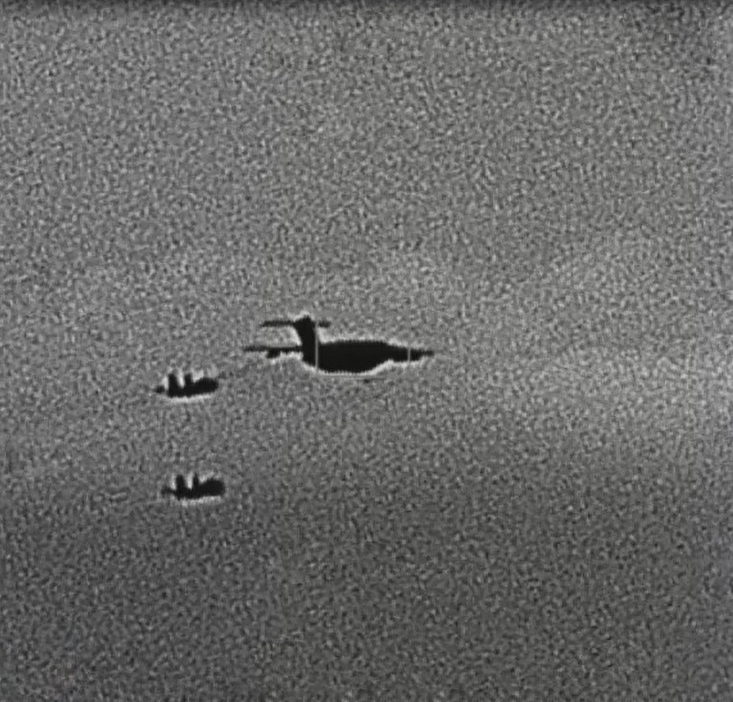
The most interesting scene this time is the Yunyou-20 refueling the H-6N in mid-air. The H-6N is already a modified version equipped with a refueling probe, and it has long been speculated that it would work with the Yunyou-20, but the official clear display still carries signal value. The H-6N itself is not a new bomber; its platform is based on the H-6 series, and its speed, stealth, and survivability cannot be compared to the U.S. B-2 or B-21. However, if the refueling chain is stable, its effective operational radius will significantly expand, and when combined with long-range cruise missiles or anti-ship ballistic missiles, it can push the strike pressure in the Western Pacific forward.
However, a word of caution is necessary here. Publicizing a refueling scene does not equate to forming a mature wartime refueling system. The number of large tankers, the flight training hours of refueling pilots, the ability to connect at night and in complex weather, and airport fuel support are the hard indicators. A significant part of the U.S. Air Force's long-range strike capability is not just the bombers themselves, but the vast KC-135, KC-46, and global base network. The PLA is currently supplementing the same industrial chain and training chain; a new aircraft alone cannot fill the gap.
Looking at the Real Threshold of Air Force Modernization from the 10th Anniversary Promotion
After ten years of the Yun-20's commissioning, the official choice to place the Yun-20A, Yun-20B, and Yunyou-20 in the same narrative aligns well with the rhythm of China's military-industrial development: first solving the airframe, then the engine, then expanding special modifications, and finally discussing systematic use. This path is not glamorous but pragmatic. For the PLA Air Force, the value of the Yun-20B and Yunyou-20 lies not only in the Taiwan Strait but also in plateaus, the South China Sea, overseas evacuations, humanitarian aid, and far-sea training.
The real unanswered question is whether the mass production speed of the WS-20 can keep up with the fleet expansion. Large transport aircraft do not rely on a few elite models to make a show; they require continuous production, ongoing maintenance, and continuous crew training. If in the next two to three years we see more Yunyou-20s entering regular far-sea training, rather than just appearing in promotional videos, it would indicate that the PLA Air Force's long-distance delivery chain has truly crossed the threshold of scaling.
On June 28, 2023, the People's Liberation Army Air Force showcased the Y-20B and Y-20 aerial refueling aircraft, highlighting advancements in long-range delivery and aerial refueling capabilities. The Y-20B features the domestically produced WS-20 engine, enhancing its operational efficiency. The display included the Y-20's ability to transport heavy military equipment and rapid deployment of air defense systems, marking a significant step in China's military modernization efforts.
- The Y-20B and Y-20 were showcased together, indicating advancements in China's long-range delivery capabilities.
- The Y-20B is equipped with the domestically produced WS-20 engine, improving its operational range and efficiency.
- The Y-20 series can transport heavy military equipment, including main battle tanks and missile systems.
- The Y-20B's capabilities are expected to enhance rapid deployment of air defense systems.
- The Y-20 series is part of China's military modernization efforts over the past decade.