
Yun-9 Anti-Submarine Aircraft Upgrade Debuts in the South China Sea, PLA Completes Underwater Shortcomings with Hundreds of Sonar Buoys
 Li Minghui
Y-9 Anti-Submarine Aircraft Upgrade Debuts in South China Sea, PLA Completes Underwater Shortcomings with Hundreds of Sonar Buoys
On the evening of July 16, a detail revealed by Global Times was more interesting than the headline itself: the Y-9 anti-submarine aircraft publicly displayed by the Southern Theater Command's naval aviation is not just the model that appeared in the 2025 military parade, but an upgraded version with obvious changes in appearance. For the outside world, this is not about a new aircraft suddenly appearing, but a more pressing question—how quickly the PLA is addressing its shortcomings in anti-submarine operations in the South China Sea.
Changes Primarily in Sensors
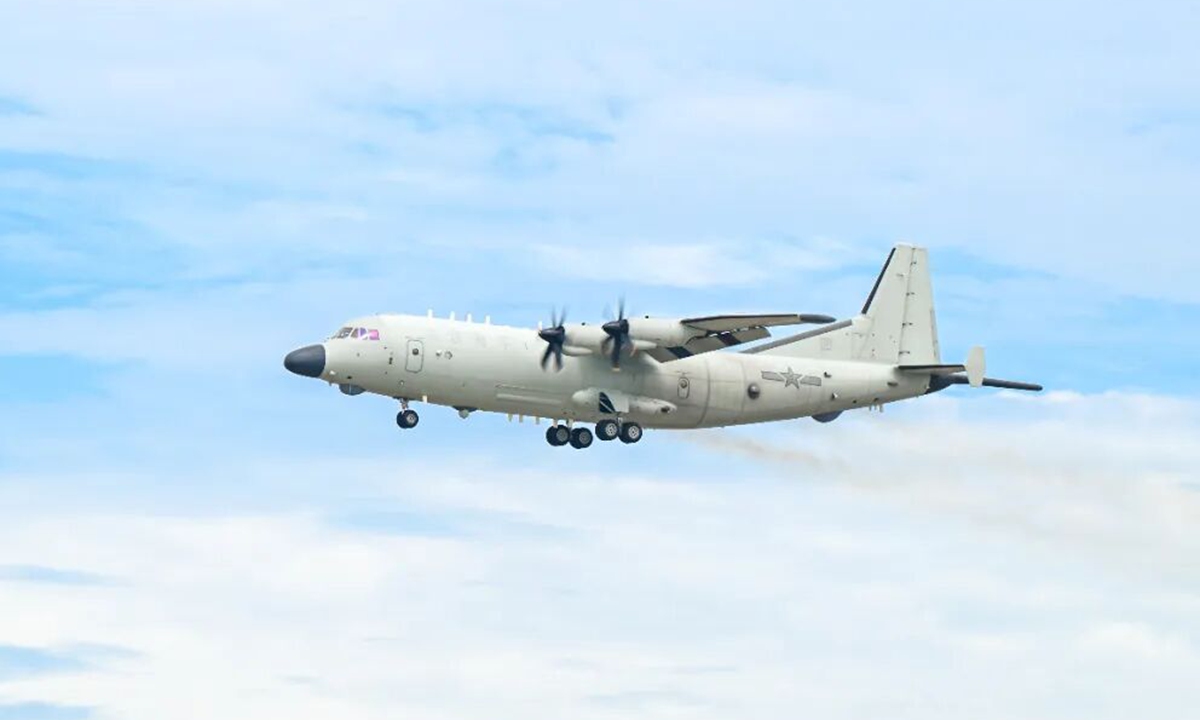
From the publicly available images, the most noticeable change in the upgraded version is below the nose of the aircraft. Chinese military expert Zhang Junsha speculates that a new active phased array radar has likely been installed there, with improved coverage angles, scanning range, and detection distance compared to the model showcased during the parade. The tail-mounted magnetic anomaly detector has also become smaller, theoretically reducing interference from the aircraft's own metal structure, which may also lower maintenance difficulty.
These changes may sound like upgrades in sensor parameters, but in the context of anti-submarine warfare, the implications are more direct. Anti-submarine aircraft do not rely on a single device to locate submarines; instead, they use radar, electro-optical sensors, magnetic detection, sonar buoys, and data links to gradually "compress" a maritime area. In simple terms, it means first narrowing down the possible areas and then using an acoustic grid to confirm targets. If the Y-9 can deploy nearly a hundred different types of sonar buoys at once, forming an underwater listening network spanning dozens of kilometers, then its value extends beyond "air patrol" to being a mobile anti-submarine node.
South China Sea is Much More Challenging than Yellow Sea
This training taking place in the South China Sea is not just a random backdrop. The deep water area of the South China Sea exceeds 1,000 meters, and the hydrological environment is much more complex than that of the Yellow Sea and East China Sea. The thermocline, seabed topography, and noise from civilian shipping all affect sonar effectiveness. Traditional shallow-water anti-submarine experiences cannot be directly applied here; air-based anti-submarine platforms must coordinate with surface vessels, submarines, shore-based sensors, and unmanned platforms to increase detection probabilities.
Public reports also mentioned that the training had no preset scripts or fixed tactics, incorporating real-time situations such as electromagnetic interference and equipment failures. I believe this statement is more important than "first appearance." The PLA has not lacked new equipment in recent years; what is often underestimated is whether personnel, data links, and maintenance support can keep up once new equipment enters service. This is especially true for anti-submarine operations, which are not about assessing appearances on a parade ground, but rather a long-term, low-probability, high-consumption systemic project.
Benefits and Limitations of the Y-9 Platform
- Mature platform: The Y-9 has derived various special aircraft for anti-submarine, electronic reconnaissance, radar jamming, etc., indicating that the airframe, power supply, and mission cabin modification space are relatively stable.
- Increased range: Compared to the Y-8 platform, the Y-9's takeoff weight, endurance, and mission payload are more suitable for offshore patrols.
- Controllable costs: The four-engine turboprop platform is not as fast as large jet anti-submarine aircraft, but it is suitable for long-duration low-speed patrols, with operating costs more aligned with high-frequency training needs.
However, it must be noted that the upgraded Y-9 anti-submarine aircraft is still fundamentally a medium-sized turboprop platform. Compared to large jet anti-submarine aircraft like the U.S. P-8A, it does not belong to the same category in terms of speed, range redundancy, mission system openness, and global maintenance systems. It is more like a "sufficient backbone" for the PLA to build a continuous anti-submarine network from the near seas to within and outside the first island chain, rather than a one-stop solution for deep-sea anti-submarine operations.
The Real Signal is Mass Production and Coordination
This training in the South China Sea reveals at least three layers of signals. First, the equipment showcased after the military parade has entered training with combat units, no longer just prototypes on display. Second, the rapid iteration of anti-submarine models indicates that the mission systems are still being adjusted based on frontline feedback. Third, the Southern Theater Command has incorporated it into adversarial training, meaning that joint air-sea anti-submarine operations are transitioning from subject training to tactical process training.
Global Times cited information from the South China Sea Fleet stating that relevant units recently organized multiple anti-submarine patrol aircraft to conduct targeted search and attack training, focusing on situational awareness, coordinated countermeasures, and day-and-night search and attack capabilities.
When viewed in a larger context, this news is not the same kind of excitement as that surrounding the Fujian aircraft carrier or the Type 076 amphibious assault ship. Aircraft carriers and amphibious ships address air superiority and logistics at sea, while anti-submarine aircraft address underwater security boundaries. One easily overlooked issue is that as the PLA's surface fleet ventures further out, what it may need to supplement is not more missiles, but a more stable, denser, and sustainable underwater detection network. The upgraded Y-9 is just one part of this, and what is more worth watching is how many similar platforms can be equipped and whether they can truly connect with drones, unmanned boats, and fixed underwater acoustic arrays to form a cohesive network.
The upgraded Y-9 anti-submarine aircraft was showcased by the Southern Theater Command Navy during training exercises in the South China Sea on July 16. The exercises included the deployment of nearly 100 sonar buoys to enhance underwater detection capabilities. This indicates a significant advancement in the PLA's anti-submarine warfare capabilities and operational readiness.
- The Y-9 anti-submarine aircraft has been upgraded with new sensors and capabilities.
- The Southern Theater Command Navy conducted anti-submarine training in the South China Sea.
- The training involved deploying nearly 100 sonar buoys to create an underwater listening network.