
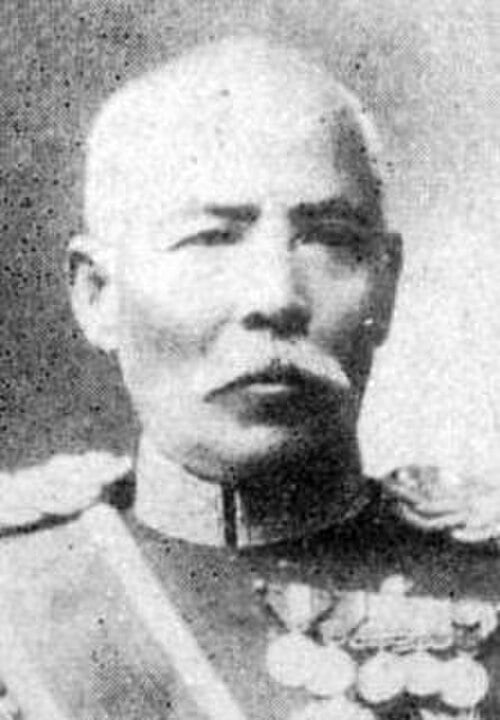
Kuroki Tamemoto
Kuroki Tamemoto belonged to the generation that transformed Japan from a former feudal polity into a modern military power capable of defeating a European empire. He was a senior commander of the Imperial Japanese Army during the Russo-Japanese War and played a role in the larger process of Meiji military modernization that made those campaigns possible. His career demonstrated how new states translate institutional reform into battlefield credibility. Kuroki's role was connected to the political-military transition from samurai warfare to national army command, Japan's victories in Manchuria, and the strategic shock created by Russia's defeat. He belonged to the category of commanders who become historically significant by embodying the rise of an entire war-making system.
- Nationality
- JPN
- Born:
- May 3, 1844
- Died:
- February 3, 1923
- Conflicts
- Russo-Japanese War
- Tags
- Needs Review
His importance begins with the way his career tracked the military transformation of Meiji Japan.
Kuroki Tamemoto matters because he belonged to the generation that carried Japan from domain-based military culture into centralized national war-making. That transition mattered because organizational modernization, not just bravery, made Japan's later victories possible.
Rising powers are often revealed first in the quality of the military institutions they build.
Kuroki's significance lies in command during the campaigns that demonstrated Japan's operational effectiveness.
Kuroki mattered because commanders in the field had to translate reforms into coordinated operational success against a major imperial adversary.
Military modernization only proves itself when institutions perform under the stress of real war.
Kuroki mattered because the war he helped fight altered global perceptions of power and empire.
Kuroki's importance stems from the fact that the defeat of Russia by Japan was more than a battlefield outcome; it altered how states across Asia and Europe viewed imperial hierarchy, military modernity, and the possibility of non-Western strategic ascent.
This situates Kuroki within a profound world-historical shift.
Kuroki's significance lies in representing the credibility of the Meiji military system.
A thin profile would list battles and decorations. A stronger one shows why Kuroki matters in conflict history: he became one of the faces of a military model that fused political centralization, professionalization, and offensive confidence.
That matters because military prestige is often carried by symbolic figures who stand for a wider institutional achievement.
Kuroki Tamemoto was a Meiji-era commander whose importance lies in modernization, operational success, and the global impact of Japan's rise.
Kuroki Tamemoto was a Japanese general in the Russo-Japanese War. His significance in conflict history lies in his representation of the conversion of Meiji reform into battlefield performance and his role in illustrating Japan's emergence as a major military power.
Ceremonial remembrance often obscures the structural significance of his career. The modernization and strategic-shock dimensions of his impact are essential to understanding his role.
No analysis & reports about Kuroki Tamemoto
No discussions about Kuroki Tamemoto yet
Start the first discussion