
Russo-Japanese War
The Russo-Japanese War was the 1904-1905 conflict between the Russian Empire and the Empire of Japan over rival imperial interests in Korea, Manchuria, Port Arthur, and northeast Asian power. Japan opened the war with a surprise attack on the Russian fleet at Port Arthur and went on to win victories that shocked the world.
Key engagements include the Siege of Port Arthur, the Battle of Mukden, the largest land battle before the First World War with some 600,000 troops involved, and the Battle of Tsushima, where the Japanese navy annihilated Russia's Baltic Fleet. Approximately 130,000 to 170,000 died, and the Treaty of Portsmouth ended the war.
Japan's victory over a European empire reshaped perceptions of modern warfare, imperial competition, and Asian state power, emboldening nationalist movements across Asia, while Russia's defeat contributed to the 1905 Revolution. The war mattered to later military planners who studied its artillery, logistics, and the limits of empire, and it carried wider consequences for Korea, China, and the international balance of power.
ATTACKER
 Emperor Meiji
 Oyama Iwao
 Togo Heihachiro
 Yamagata Aritomo
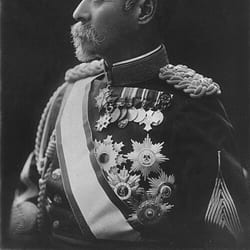 Kodama Gentarō
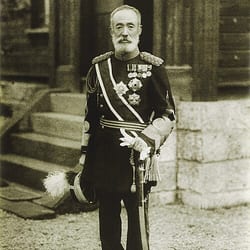 Nogi Maresuke
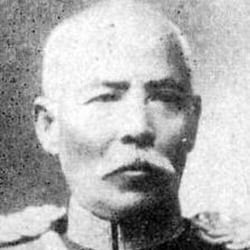 Kuroki Tamemoto
 Nicholas II of Russia
 Aleksey Kuropatkin
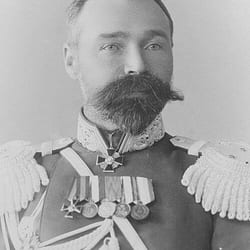 Roman Kondratenko
 Anatoly Stessel
 Ali-Agha Shikhlinski
The war grew from competing Russian and Japanese claims over Korea, Manchuria, railways, ports, and regional influence.
Russia and Japan competed for influence in Korea and Manchuria after Japan's earlier victory over Qing China. Russia's position at Port Arthur and its railway interests in Manchuria clashed with Japan's security concerns and ambitions on the Korean peninsula.
Diplomacy failed because both empires saw the region as central to their future strategic position. Japan chose war rather than accept a Russian-dominated northeast Asia.
The rivalry connected imperial expansion, rail infrastructure, treaty ports, Korean sovereignty, and the shifting balance between European and Asian powers.
The land campaign included siege warfare, heavy casualties, and large battles that foreshadowed later industrial warfare.
Japanese forces attacked Russian positions in Korea, Manchuria, and around Port Arthur. The siege of Port Arthur and battles such as Liaoyang and Mukden involved trenches, artillery, machine guns, logistics strain, and heavy casualties.
The war exposed the difficulty of sustaining modern armies over long distances. Russia had to rely on the long Trans-Siberian route, while Japan faced manpower and financial limits despite tactical success.
A high-value page should present the conflict as a modern war of logistics and attrition, not only as a simple story of Japanese dynamism and Russian weakness.
Japan's naval victories, especially at Tsushima, destroyed Russia's ability to reverse the war at sea.
The naval campaign was decisive because control of sea lines shaped Japan's ability to move forces and Russia's ability to reinforce. The Russian Baltic Fleet's long voyage ended in disaster at Tsushima, where Japan achieved one of the most consequential naval victories of the early twentieth century.
Tsushima mattered beyond the immediate war. It validated Japanese naval modernization, shocked European observers, and influenced naval planning in the years before World War I.
The war should therefore be connected to battleship-era doctrine, maritime communications, and imperial fleet strategy.
The Treaty of Portsmouth ended the war through U.S.-mediated diplomacy and recognized major Japanese gains without satisfying every Japanese demand.
The war ended with the Treaty of Portsmouth, mediated by U.S. President Theodore Roosevelt. The settlement recognized Japan's dominant position in Korea and transferred key rights in southern Manchuria and Port Arthur, while Russia avoided a total collapse in Asia.
Japan won the war but did not receive all it wanted, especially regarding indemnity. This produced domestic dissatisfaction in Japan even as international observers recognized the scale of Japan's achievement.
The peace settlement illustrates how battlefield success, financial exhaustion, and great-power mediation shaped the final outcome.
Russo-Japanese War analysis should connect military modernization with imperial consequences for Korea, Manchuria, Russia, and Japan.
Reference and diplomatic sources explain the war's strategic frame and peace settlement, while archival catalogs point to deeper contemporary records. They are less complete on Korean perspectives, Chinese sovereignty concerns, soldier experience, and Japanese domestic unrest after the treaty.
Japan's victory was not solely a modernization success; it also accelerated Japanese imperial control over Korea, weakened Russia's prestige, and fed revolutionary and nationalist politics across the region.
The war became a reference point for modern operational study because it foreshadowed industrial attrition and joint naval-land warfare.
The Russo-Japanese War did more than decide a regional contest. It became a laboratory for military observers interested in artillery concentration, trenches, mobilization systems, fleet operations, and the relationship between industrial capacity and battlefield endurance.
Its strategic legacy reached far beyond northeast Asia because it changed how states thought about great-power war. The conflict showed that a non-European power could defeat a European empire, but also that victory depended on logistics, finance, and institutional preparation.
The war became a bridge between empire, modern warfare, and the early twentieth-century balance of power.
The war mattered because it changed the prestige balance between empires and made modern industrial warfare visible to the world.
The Russo-Japanese War matters because it shattered assumptions about European military superiority and showed that imperial competition in Asia could be decided by industrial power, logistics, and naval effectiveness. It also altered the prestige balance in Northeast Asia and influenced later strategic thinking across the world.
The war stands as one of the clearest early examples of modern great-power war being decided by systems, not just battlefield bravery.
The war shifted the balance among Russia, Japan, Korea, China, and the imperial order in northeast Asia.
The war's regional effect was immediate. Japan's victory altered the strategic balance in Korea and Manchuria, weakened Russian prestige in the region, and made outside observers reevaluate the military and diplomatic future of northeast Asia.
The war was not just a bilateral clash; it affected Chinese sovereignty, Korean autonomy, imperial railway politics, and the broader question of which powers could dominate East Asian space.
In this way, the war served as a hinge event for the modern history of Asia.
No analysis & reports about Russo-Japanese War
No discussions about Russo-Japanese War yet
Start the first discussion