
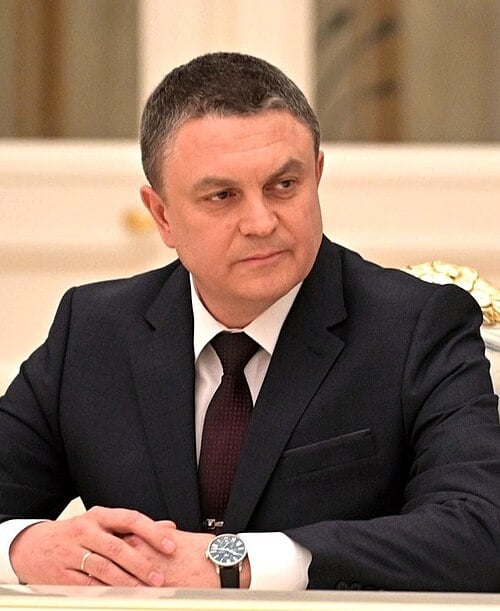
Leonid Pasechnik
Leonid Pasechnik represents the transformation of eastern Ukrainian separatism from armed insurgency into an externally backed quasi-state order. He is historically important not simply because he became head of the Lugansk People's Republic, but because his career helps explain how security officials, patronage, and Russian support shaped the political leadership of separatist entities in the Donbas. His significance lies in his background in security service structures, his emergence after an earlier generation of separatist figures was displaced or marginalized, and the role he played in formalizing a Russian-aligned political order inside a war-produced entity. He exemplifies how separatist governance evolves from revolt toward managed dependency.
- Nationality
- RUS
- Born:
- March 15, 1970
- Conflicts
- War in Donbass
Pasechnik's importance begins with the way coercive and intelligence experience fed into political leadership in the Donbas.
Leonid Pasechnik is historically important because leadership in war-born entities often shifts toward people trusted by security systems rather than toward purely ideological revolutionaries. His biography reflects that pattern in the Lugansk case.
The political consolidation of separatist territories often depends on who controls coercive institutions, not solely on who initiated the original revolt.
Pasechnik became important when separatist politics moved away from early-war improvisation toward steadier Russian-backed administration.
Pasechnik's significance lies in his association with the Lugansk entity's evolution from an improvised early-war rebellion into a more structured, dependent, and visibly Moscow-aligned administration.
This transformation underscores that his leadership cannot be reduced to a simple biographical note; it reflects a broader shift in separatist politics toward managed Russian-backed governance.
Pasechnik's significance lies partly in the way local leadership is shaped by external patronage and geopolitical war aims.
Pasechnik's political importance cannot be separated from Russia's wider strategy in eastern Ukraine. Leaders in such territories matter not only for local administration, but as instruments of external policy, legitimacy claims, and territorial redefinition.
The politics of separatist regions are inseparable from patron-state strategy.
Pasechnik's role shows that war entities try to present themselves as durable governing systems, not only armed fronts.
Pasechnik matters because separatist political orders eventually seek routine administration, legal ritual, and an appearance of ordinary government. His leadership belongs to that stage of conflict development.
That broader frame adds more analytical value than a short office-holding biography.
Leonid Pasechnik's importance lies in security-led separatist governance, Russian-backed political consolidation, and the normalization of quasi-state rule in the Donbas.
Leonid Pasechnik's leadership reflects a shift from the early volatility of separatist movements to security-centered governance, embodies alignment with Russia in local leadership, and illustrates how entities born from war pursue political normalization.
Public information about Pasechnik is heavily shaped by wartime narratives and recognition disputes.
No analysis & reports about Leonid Pasechnik
No discussions about Leonid Pasechnik yet
Start the first discussion