
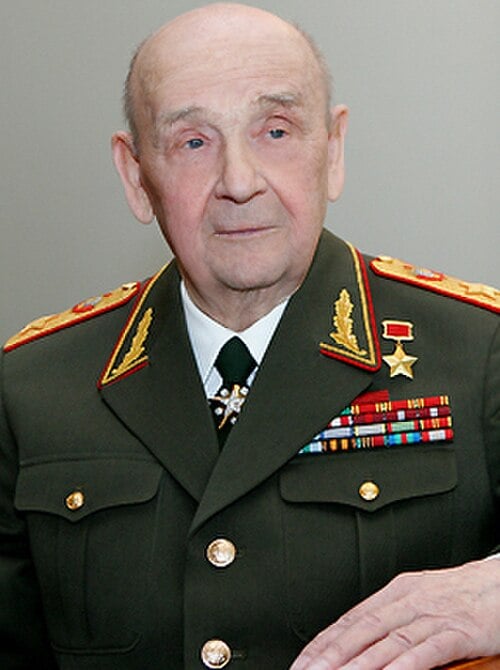
Sergey Sokolov
Sergey Sokolov represented the late Soviet military establishment at a moment when the Red Army remained globally formidable but the political system above it was beginning to harden into crisis. He is historically important not simply because he became marshal of the Soviet Union and minister of defense, but because his career spans the Second World War, the consolidation of Soviet military bureaucracy, and the late Cold War struggle to preserve imperial military power under changing political conditions. His significance also lies in his role as embodiment of professional continuity inside the Soviet officer corps, his leadership of the defense ministry during a key transition period, and the fact that his removal after the Matthias Rust affair exposed anxiety about the credibility of Soviet military command, illustrating how very large military institutions confront political embarrassment and structural decline without immediately losing their coercive scale.
- Nationality
- RUS
- Born:
- July 1, 1911
- Died:
- August 31, 2012
- Conflicts
- Soviet-Afghan War
- Tags
- Needs Review
Sokolov's importance begins with the longevity of his service from world war to late Cold War command.
Sergey Sokolov is historically important because he belonged to the generation of Soviet commanders whose legitimacy began in total war and continued through the bureaucratic maturity of the superpower era. That continuity gave figures like him unusual institutional weight.
Long-service commanders often act as living carriers of doctrine, prestige, and organizational memory.
Sokolov mattered because he oversaw the armed forces during a politically sensitive stage of the late Cold War.
Sokolov was important not just because he reached the top, but because he did so when the Soviet Union was still militarily massive yet politically less stable than before. To lead such an establishment required both bureaucratic control and the ability to preserve confidence in the system.
His tenure as defense minister was significant for reasons beyond a simple progression of ranks.
The 1987 air-defense embarrassment turned Sokolov into a symbol of institutional vulnerability.
Sokolov matters because the Rust affair exposed how even a powerful military system could be politically humiliated. His dismissal in the aftermath showed that visible failure in a prestige-sensitive system could quickly be converted into elite accountability, whether or not the deeper weaknesses were personal alone.
Military institutions are judged not only by warfighting potential but by their ability to avoid symbolic collapse.
Sokolov's career is useful for understanding the mismatch between coercive capacity and political fragility.
Sokolov is analytically useful because late Soviet military power remained immense on paper and in deployment even as the political foundations of the state were weakening. His career helps illuminate that contradiction.
That broader frame adds substantially more value than a short note calling him only a Soviet marshal.
Sergey Sokolov's importance lies in institutional continuity, late Cold War defense leadership, and the political meaning of military embarrassment in the USSR.
Sergey Sokolov embodied the continuity of the Soviet officer corps, led the military during a sensitive late Cold War period, and became historically legible through the Rust incident. His career illustrates how a large military establishment can encounter political decline before losing raw coercive weight.
Concise reference material rarely opens the internal politics of the Soviet high command in depth.
No analysis & reports about Sergey Sokolov
No discussions about Sergey Sokolov yet
Start the first discussion