
Soviet-Afghan War
The Soviet-Afghan War of 1979-1989 began when the Soviet Union intervened in Afghanistan to prop up the unpopular communist People's Democratic Party of Afghanistan amid widespread rebellion, and developed into a prolonged war of occupation, insurgent resistance, external sponsorship, and strategic exhaustion. Mujahideen groups, armed and funded by the United States, Pakistan, Saudi Arabia, and others through Operation Cyclone, fought a guerrilla campaign across Afghanistan's mountainous terrain, with major operations in the Panjshir Valley, Herat, and Kandahar. The conflict, often called the Soviet Union's Vietnam, featured extensive use of helicopters, mines, and indiscriminate bombing. Approximately 1 to 2 million Afghans died and 5 to 6 million became refugees.
Soviet withdrawal in 1989 contributed to the USSR's collapse and left Afghanistan in civil war. The fighting links Cold War proxy warfare, mountain insurgency, foreign military intervention, state fragility, and the long afterlife of jihadist mobilization and great-power overreach, demonstrating how a local insurgency can become a global strategic symbol once outside powers make it a proxy battlefield.
ATTACKER
 Leonid Ilyich Brezhnev
 Mikhail Sergeyevich Gorbachev
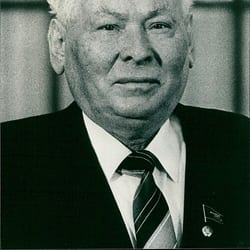 Konstantin Chernenko
 Dmitry Ustinov
 Andrei Gromyko
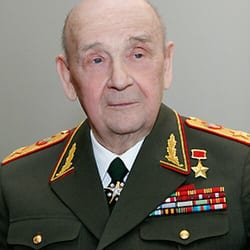 Sergey Sokolov
 Dmitry Yazov
 Babrak Karmal
The Soviet intervention was driven by fears of losing a client regime and by broader Cold War strategic calculations.
The Soviet Union intervened in Afghanistan to stabilize a faltering allied regime and prevent political collapse on its southern flank. What Moscow likely expected to be a manageable operation became a major war with growing strategic and ideological costs.
The war began as an intervention to preserve state control, not as an abstract invasion detached from Afghan politics.
The war turned into a sustained insurgency supported by foreign money, weapons, and regional sanctuary.
Afghan resistance movements exploited geography, local legitimacy, and external backing to make Soviet control expensive and incomplete. Pakistan, the United States, Saudi Arabia, and others all played roles in sustaining the anti-Soviet war effort.
This external sponsorship did not create the resistance from nothing, but it transformed the conflict's scale and durability. Afghanistan became one of the clearest Cold War proxy battlegrounds.
The war demonstrated how difficult it is for a major power to impose lasting control in hostile terrain with weak political legitimacy.
The Soviet military could win major engagements and hold key cities, but it struggled to translate firepower into durable countryside control. Mountain terrain, porous borders, and decentralized insurgent networks imposed continual attritional cost.
That pattern is central to the conflict's military meaning. The war showed that tactical superiority does not guarantee strategic success when occupation lacks political legitimacy and the resistance cannot be decisively fixed in place.
The Soviet withdrawal did not end Afghanistan's war system; it left a state and region transformed by militarization and proxy conflict.
The Soviet exit became an emblem of strategic overreach, but the war's legacy went far beyond Moscow's defeat. Afghanistan remained deeply militarized, the communist state lingered before later collapse, and transnational jihadist networks gained prestige from the anti-Soviet struggle.
The war belongs not only to Soviet history, but also to the prehistory of later Afghan and global security crises.
The war affected Pakistan and the wider region through refugee flows, sanctuary politics, and cross-border militancy.
The conflict was never confined to Afghanistan. Refugee flows, sanctuary politics in Pakistan, and the movement of fighters and weapons across the border turned the war into a regional system.
This spillover matters because it created lasting security pressure well beyond the Soviet withdrawal.
The war became a touchstone for debates about intervention, occupation, and insurgent resilience.
The Soviet-Afghan War is remembered as a warning against underestimating local resistance, overrelying on military pressure, and confusing operational success with strategic control. It later influenced how other states thought about intervention in Afghanistan and similar terrain.
That memory gives the conflict analytical weight far beyond its original time period.
The Soviet departure ended the occupation but not the violence, leaving a militarized and fractured Afghan political order behind.
The Soviet withdrawal did not produce peace. It left behind a weakened Afghan state, armed factions, and a political environment in which the war's aftershocks continued to matter for years.
The aftermath demonstrates the difference between leaving a country and resolving the conflict that intervention helped intensify. The withdrawal was a transition, not the end of the war's consequences.
Understanding the war requires connecting its Cold War setting, local insurgent realities, and later ideological aftershocks.
The conflict is sometimes remembered only as Moscow's Vietnam or only as an Afghan resistance epic. Both framings are partial.
A comprehensive understanding integrates intervention logic, insurgent adaptation, foreign sponsorship, and the war's long strategic afterlife, providing a more complete picture than a narrow Cold War analogy.
No analysis & reports about Soviet-Afghan War
No discussions about Soviet-Afghan War yet
Start the first discussion