
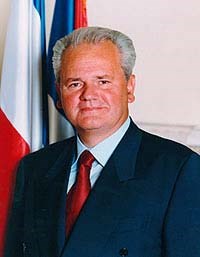
Slobodan Milosevic
Slobodan Milošević was the Serbian and later Yugoslav leader whose nationalist politics helped drive the violent breakup of Yugoslavia in the 1990s. His career connected coercive centralization, ethnonational mobilization, proxy and state violence across multiple theaters, and the eventual effort to impose individual legal accountability for wartime political leadership. His military significance lay in how political authority can weaponize identity, institutions, and selective intervention without always appearing in direct battlefield command.
- Nationality
- SRB
- Born:
- January 1, 1941
- Died:
- January 1, 2006
- Conflicts
- Yugoslav WarsKosovo WarCroatian War of Independence
- Tags
- Needs Review
Milošević rose by taking control of party and state institutions and then turning them toward Serbian nationalist mobilization.
Milošević's rise mattered because it joined political centralization with the language of ethnic grievance. By consolidating control over institutions in Serbia and projecting authority across the Yugoslav crisis, he transformed domestic leadership into regional strategic disruption.
He thus exemplifies how state breakdown can be accelerated by leaders who use nationalist politics to capture coercive leverage.
Milošević's importance lies in how his politics fed wars across multiple republics rather than in a single theater alone.
The wars of Yugoslav dissolution were not isolated conflicts. Milošević mattered because his strategy intersected with Croatia, Bosnia, and the shrinking Yugoslav federation in ways that made political compromise increasingly difficult.
His role was system-level: he influenced the structure and persistence of conflict across the region, not just the rhetoric of Serbian politics.
The Kosovo conflict revealed the extent to which Milošević's politics could turn internal repression into a crisis with NATO-level consequences.
Kosovo pushed Milošević's rule into a final phase of international confrontation. Efforts to suppress Albanian resistance intensified violence, triggered wider alarm, and culminated in NATO intervention.
The conflict demonstrates how domestic coercion can escalate into broader war when the target region holds symbolic and geopolitical weight.
Milošević's policies produced short-term political control but steadily narrowed Serbia's strategic room for maneuver.
Even where Milošević preserved influence for a time, the larger pattern was one of strategic contraction. Sanctions, economic breakdown, protest, and diplomatic isolation steadily eroded the benefits of hardline rule.
Milošević's case illustrates that coercive politics can intensify war while undermining the long-term resilience of the state.
Milošević should be understood as a political architect of regional war whose downfall also marked a major moment in post-Cold War war-crimes accountability.
Slobodan Milošević matters because he demonstrates how political leaders can shape war indirectly but decisively through institution control, nationalist framing, and selective use of force. His eventual arrest and transfer to The Hague made his career important not only for the wars themselves but for the international effort to prosecute senior wartime leadership.
Milošević was a figure of political war-making, a ruler whose power lay in turning state and identity into engines of prolonged regional conflict.
No analysis & reports about Slobodan Milosevic
No discussions about Slobodan Milosevic yet
Start the first discussion