
“推销”护卫舰 鼓吹“新角色” 日本欲通过防务合作架空和平宪法
According to local news from Japan on June 2, Japan, the United Kingdom, and Italy are discussing the establishment of an observer mechanism for their sixth-generation fighter jet joint project, the "Global Combat Air Program." The defense ministers of the three countries are scheduled to meet in July, at which time Canada may be confirmed as one of the first observers. The so-called observer mechanism is essentially a way to share the project's research and development progress and data with potential buyers of the aircraft, effectively "marketing" the fighter jets to the observer countries.
According to previous reports, the "Global Combat Air Program," jointly promoted by Japan, the UK, and Italy, aims to launch a sixth-generation fighter jet with high-performance sensors, stealth capabilities, and networked operations by 2035. The project is jointly led by Japan's Mitsubishi Heavy Industries, the UK's BAE Systems, and Italy's Leonardo. In May of last year, the program unveiled a model of the fighter jet, but detailed information has not been disclosed.
The observer mechanism being discussed by Japan, the UK, and Italy is aimed at countries that are not involved in the research and development but have procurement intentions. Based on confidentiality rules, it will not only share the aircraft's performance parameters and project development progress but also plans to collaborate in areas such as component manufacturing in the future. The defense ministers' talks are scheduled to take place in late July during the Farnborough International Airshow in the UK, and Japan is also coordinating the participation of Canadian Defense Minister Anita Anand to facilitate a meeting among the four defense ministers. Kyodo News also reported that countries such as Germany, Sweden, and Poland have expressed interest in related cooperation.
The Japanese Defense Minister Advocates for Japan's "Re-Militarization"
Since relaxing weapon export restrictions, the Japanese government has been accelerating its "re-militarization" agenda. At the end of last month, during his attendance at the 23rd Shangri-La Dialogue in Singapore, Japanese Defense Minister Nobuo Kishi not only vigorously "marketed" Japanese destroyers but also promoted the so-called new version of the "Free and Open Indo-Pacific" concept, advocating for Japan to further strengthen its defense capabilities, which has raised public concerns.
According to Japanese sources, on May 30, Kishi held talks with U.S. Secretary of Defense Lloyd Austin, and both sides agreed to accelerate the joint research and production of advanced medium-range air-to-air missiles and the improved "Standard-3 Block 2A" interceptors.
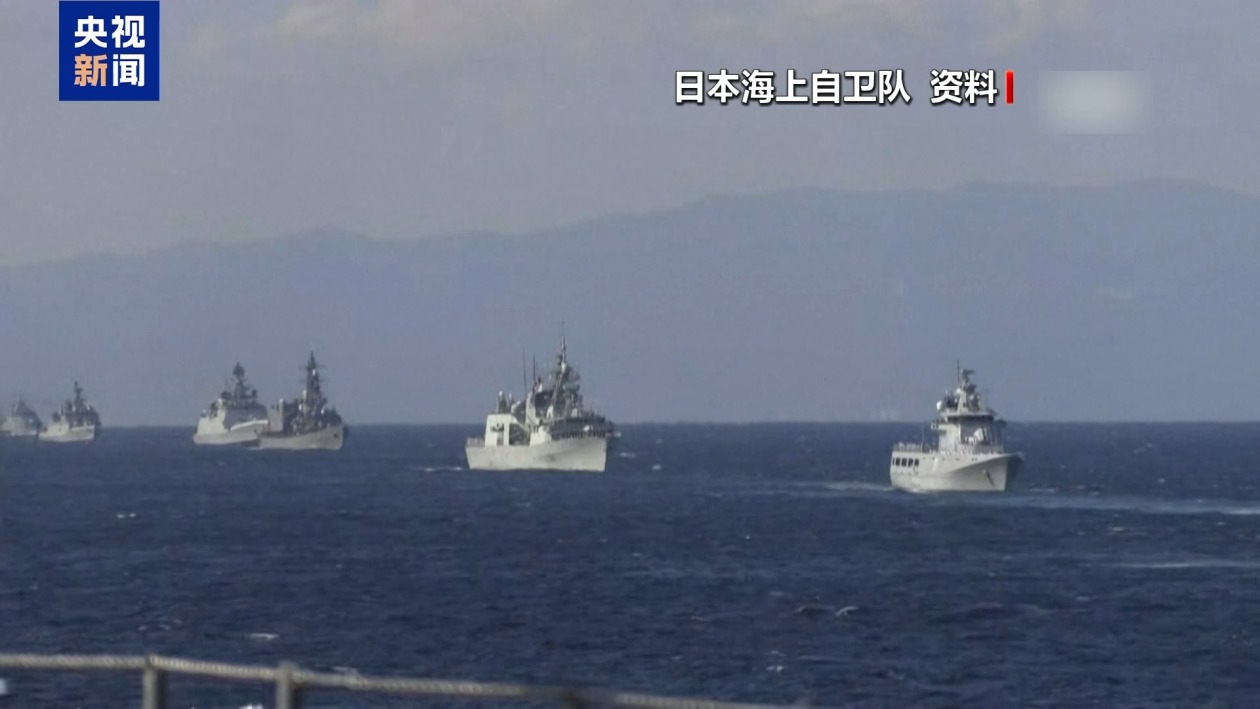
During his time in Singapore, Kishi also "marketed" Japanese destroyers to multiple defense ministers, promoting the export of Japanese destroyers. On May 30, Kishi held trilateral talks with Australian Deputy Prime Minister and Defense Minister Richard Marles and New Zealand Defense Minister Peeni Henare to discuss the export of the latest type of destroyer from the Japan Maritime Self-Defense Force. The next day, Kishi met with Philippine Defense Minister Carlito Galvez, and both sides claimed they would expedite the export of second-hand destroyers from the Japan Maritime Self-Defense Force to the Philippines. They also generally agreed to advance discussions to export one TC-90 trainer aircraft from the Japan Maritime Self-Defense Force by the fiscal year 2027 and emphasized that Japan and the Philippines would strengthen cooperation in the defense sector.
Moreover, on May 31, Kishi, during the plenary session of the Shangri-La Dialogue, advocated for the so-called new version of the "Free and Open Indo-Pacific" concept, asserting that Japan would further strengthen its defense capabilities and enhance cooperation with regional security mechanisms, declaring Japan's determination to assume a so-called "new role" in regional defense equipment and technology cooperation.
Experts: Japan is Accelerating on the Path of "Re-Militarization"
From exporting destroyers to jointly developing fighter jets and missiles with multiple Western countries, is Japan's series of actions merely a simple "equipment technology cooperation"? The so-called "new role" in regional defense equipment and technology cooperation, in the context of Japan accelerating its security policy adjustments, relaxing weapon exports, and continuously seeking to amend its pacifist constitution, what political ambitions does this rhetoric reveal?
Japan Aims to Undermine the Pacifist Constitution through Defense Cooperation
Meng Mingming, Assistant Researcher at the Political Research Office of the Institute of Japanese Studies, Chinese Academy of Social Sciences: The series of intensive and breakthrough military-industrial actions by Japan deserves our vigilance regarding their true intentions. The first point is that Japan is gradually undermining the pacifist constitution through a "salami-slicing" approach to realize its so-called "military power" dream. For a long time, the principles of "defensive defense" and weapon export restrictions have been the legal foundation limiting Japan's post-war military expansion. During Shinzo Abe's administration, collective self-defense rights were lifted, and through new security laws, the "militarization" process was officially loosened. After Sanae Takaichi took office, this "re-militarization" process has significantly accelerated. Now, the Japanese government is using military cooperation and the lifting of weapon export restrictions to create concrete military orders and cooperation projects, forcing domestic security policy breakthroughs. This approach effectively undermines the constraints of the pacifist constitution at the operational level before any legal text is thoroughly amended, pushing the role of the Japan Self-Defense Forces and the military-industrial sector from a defensive "shield" to an offensive and deterrent "spear," ultimately transforming itself from a peaceful nation into a so-called "normal country" with a powerful military.
Japan's So-Called "New Role" is Essentially Exporting Military Confrontation Risks
Meng Mingming, Assistant Researcher at the Political Research Office of the Institute of Japanese Studies, Chinese Academy of Social Sciences: The second point is leveraging multilateralism to reshape Japan's global "military power" status. For a long time, Japan primarily relied on the U.S.-Japan bilateral alliance, but now it is actively reaching out to other Western countries, especially NATO member states, in defense cooperation, indicating that Japan's military vision is expanding beyond the Asia-Pacific region. Its defense cooperation with Western countries is deepening, and by weaving this vast multilateral military-industrial network, Japan aims to expand its diplomatic security space, build a broader network of allies, and draw more external powers into the East Asian region, stirring the waters while also striving to re-establish itself at the table of great power competition. Overall, Japan's so-called "new role" in regional defense is essentially exporting military confrontation risks, using the banner of "peace and cooperation" to loosen its own military development, which not only does not contribute to easing regional tensions but may make the East Asian region even more dangerous. The international community should maintain sufficient rationality and vigilance regarding this profound impact on the regional balance of power.
日本、英国和意大利于2023年6月2日讨论建立第六代战斗机项目“全球作战空中计划”的观察机制。日本防卫大臣正在向潜在买家推销日本驱逐舰,并倡导增强军事能力。这些讨论涉及向加拿大、澳大利亚和菲律宾等国的潜在军事出口,反映出日本加速再军事化的努力和放宽武器出口限制。
- 日本、英国和意大利正在建立第六代战斗机项目的观察机制。
- 日本在国际防务讨论中向潜在买家推销其驱逐舰。
- 日本防卫大臣倡导增强军事能力并与西方国家合作。
- 讨论包括向加拿大、澳大利亚和菲律宾等国的潜在军事出口。
- 日本政府正在加速其再军事化努力并放宽武器出口限制。