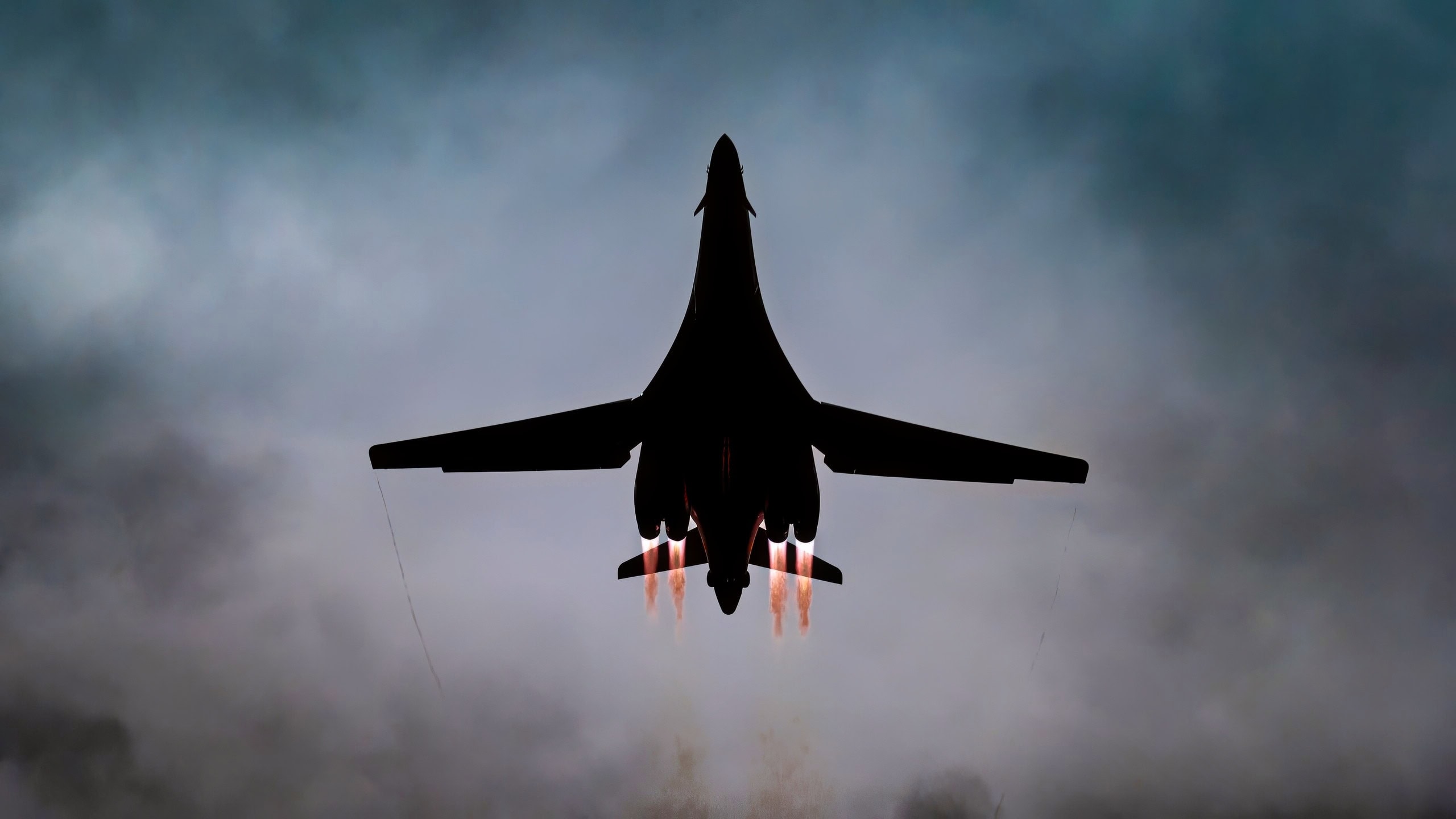
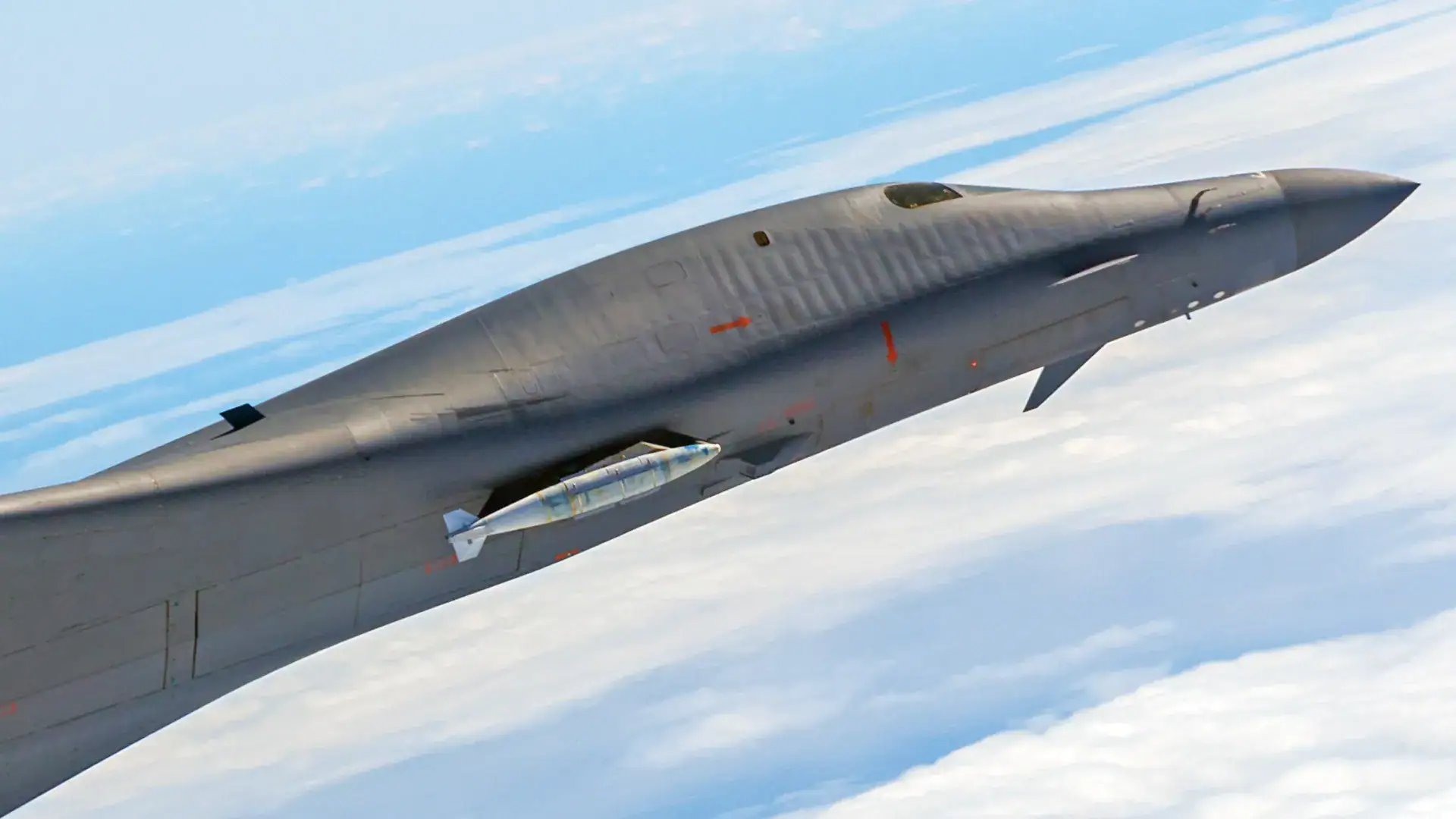
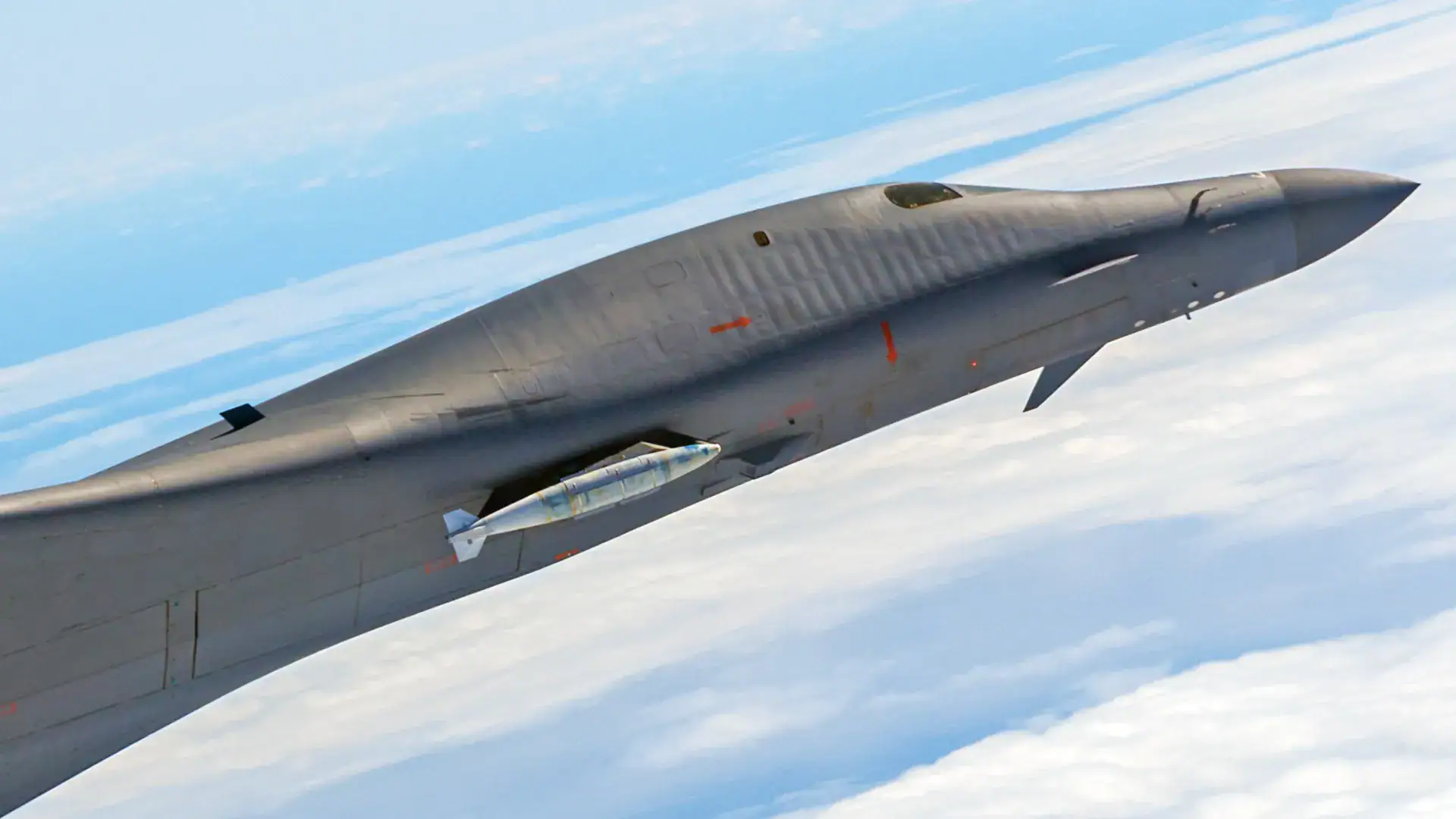
B-52H Stratofortress

🇺🇸United States
Boeing
1961 – Present
Spotlight

The last B-52 variant flying: TF33 turbofans, ALCM racks, and a road to the 2050s

Flying The World's Most Feared Nuclear Bomber | THE B-52 (Sam Eckholm)

Watch on YouTube
Overview
B-52H Stratofortress is a long-range U.S. strategic bomber adapted for conventional strike and nuclear stand-off missions, including air-launched cruise missiles.
Specifications
Crew5 (pilot, copilot, radar navigator, navigator, electronic warfare officer)
HardenedNo
Height M12.4
Length M48.5
Range Km14,000
Sim Kindstrategic-bomber
Yield Kt150
Speed Kmh1,000
Payload Kg~31,750 (70,000 lb) mixed ordnance
Powerplant8 x Pratt & Whitney TF33-P-3/103 turbofan, 17,000 lbf (76 kN) each
Wingspan M56.4
Service Ceiling M15,240 (50,000 ft)
Warheads Per Vehicle20
Max Takeoff Weight Kg221,350 (488,000 lb)
Latest Developments
Sep 10, 2026strong signal
The Government Accountability Office Reviewed All 13 Programs in the US Air Force’s $21,000,000,000 B-52 Modernization and Found 10 of Them in Trouble. The Engine Replacement Went From $3,000,000,000 to $15,400,000,000.

The B-52 test aircraft involved in the crash at Edwards Air Force Base in June was a B-52H equipped with the new AN/APQ‑188 radar.

Sep 5, 2026weak signal
Trump Calls the Iran War ‘Small Potatoes.’ The Polling Says He Is Right

A B-52 Stratofortress assigned to the 2nd Bomber Wing at Barksdale Air Force Base, Louisiana, flies next to a KC-135 during a bomber task force mission over the Pacific Ocean, Dec. 17, 2022.

Sep 1, 2026strong signal
B-52: Over 70 Years Ago, America Built a Bomber to End the World in a Russia War. It Never Did, and It Will Still Be Flying in 2050

On April 15, 1952, the B-52 Stratofortress took its first flight.

Aug 31, 2026strong signal
US Air Force chief of staff discusses ‘regional situation’ with Israeli military officials

Entity 'B-52 Stratofortress' mentioned in report

Aug 26, 2026strong signal
U.S. Air Force awards Raytheon $603 million for B-52 radar

The Air Force plans to install the new radar across all 76 B-52H bombers currently in service.

Featured Coverage
Research Notes

Long-range bomber that remains relevant through payload and basing flexibility

high

B-52H is valuable because it combines range, large payload capacity, and decades of weapons integration rather than stealth or speed.

The B-52H Stratofortress is one of the clearest examples of a platform whose military value comes from adaptability. It is old by airframe lineage, but its range, payload, crewed mission management, and ability to carry different conventional and nuclear weapons keep it operationally important.

Unlike modern low-observable bombers, the B-52H is not designed to penetrate the densest air defenses by stealth. Its strongest roles are standoff strike, maritime and theater presence, long-range conventional firepower, and strategic signaling.

For HiWars, the page should present the B-52H as an arsenal aircraft and strategic bomber ecosystem. The aircraft itself matters, but so do weapons integration, mission planning, command links, tanker support, and basing access.

Standoff strike lets the aircraft influence defended theaters without entering the hardest airspace

high

The B-52H is often most useful when paired with long-range weapons, escorts, tankers, and intelligence support.

A B-52H sortie should not be judged only by whether the aircraft can fly directly over a target. In modern operations, its effect often comes from carrying standoff weapons, massing fires, loitering in safer airspace, and coordinating with joint force sensors.

That makes the bomber a flexible tool for commanders. It can support deterrence patrols, conventional strike packages, maritime pressure, and exercises with allies. The tradeoff is that survivability depends heavily on threat environment, routing, electronic support, and the range of the weapons it carries.

A richer equipment page should explain why a non-stealth bomber can still be important. The B-52H extends the reach and volume of U.S. strike options when the supporting network is available.

Longevity depends on modernization rather than the original 1950s design alone

high

The B-52H remains relevant because avionics, engines, communications, and weapons can be refreshed over time.

The B-52H story is not simply that an old bomber survived. It survived because the force repeatedly updated subsystems, mission equipment, defensive aids, weapons interfaces, and support concepts around the airframe.

This is important for readers comparing military equipment. A platform with upgrade room, established logistics, trained crews, and a large weapons catalog can remain useful even when its original design generation looks dated.

For HiWars, the B-52H should be treated as a living capability rather than a static Cold War artifact. Its future value depends on modernization schedules, airframe fatigue management, weapon inventory, and how it fits alongside B-2, B-21, and allied strike forces.

Key parameters at a glance

high

Figures describe the B-52H specifically, the only B-52 variant still in service. Dimensions and weights follow published USAF and standard reference data.

Role
Long-range heavy bomber; nuclear stand-off and conventional strike
Variant status
Sole surviving B-52 model; B-52G retired 1994
Built
102 aircraft, 1961-1962 (of 744 B-52s total)
In USAF inventory
76 airframes(2024 reporting)
Crew
5
Powerplant
8 x TF33-P-3/103 turbofan17,000 lbf (76 kN) each
Length / wingspan
48.5 / 56.4m
Max takeoff weight
221,350kg (488,000 lb)
Weapons load
~31,750kg (70,000 lb), mixed
Nuclear armament
AGM-86B ALCM only; AGM-181 LRSO to follow

Program milestones

high

Milestones specific to the H model, from turbofan introduction to the current re-engining effort.

1961-05First B-52H delivered

Deliveries began on 9 May 1961. The defining H-model change was eight Pratt & Whitney TF33-P-3 turbofans replacing the J57 turbojets, cutting fuel burn and extending unrefuelled reach. Early reliability problems were resolved by 1964 under the Hot Fan programme.

1962-01Unrefuelled distance record

A B-52H flew 20,168 km (12,532 mi) from Kadena, Okinawa to Spain without aerial refuelling, demonstrating the turbofan's range gain over earlier variants.

1962-10Production ends

The last of 102 B-52Hs was delivered, closing the entire B-52 line after 744 production aircraft. Every B-52 flying since the mid-1990s is one of these 1961-62 airframes.

1982Cruise missile carrier role

The AGM-86B ALCM entered Strategic Air Command service. In total 194 B-52G/H aircraft were modified to carry 12 missiles on underwing pylons, with 82 B-52Hs additionally fitted with an internal rotary launcher for eight more.

1991Tail gun removed

The remotely operated 20 mm M61 tail turret unique to the H model was deleted from operational aircraft. With the B-52G retired in 1994, the H became the only variant in service.

2013-07CONECT fleet upgrade begins

Combat Network Communications Technology introduced digital crew workstations, servers, data links and ARC-210 beyond-line-of-sight radios, enabling in-flight retargeting. Programme cost was put at roughly US$1.1 billion.

20161760 Internal Weapons Bay Upgrade

A MIL-STD-1760 digital rotary launcher let the B-52H carry JDAM, JASSM-ER and MALD-J internally rather than only on wing pylons, reported as roughly a 66 percent increase in guided-weapon capacity.

2026-05B-52J re-engining passes critical design review

The Rolls-Royce F130 replacement for the TF33 cleared critical design review, with the first two aircraft due at Boeing's San Antonio site. GAO reported CERP costs up about US$3 billion since 2023 and capability delayed more than 15 months.

Strategic significance

medium

The B-52H's value today rests on a narrow but important niche: it is the air leg's cruise missile truck. Nuclear gravity bombs were withdrawn from its approved weapons configuration around 2017-2020 on the reasoning that the aircraft is no longer survivable against modern integrated air defences, leaving the AGM-86B ALCM as its only nuclear load and, in due course, the AGM-181 LRSO. That division of labour is deliberate: penetrating strikes are the B-2's and later the B-21's task, while the B-52H contributes magazine depth from outside defended airspace, plus a large conventional payload for permissive theatres and maritime mining.

The constraint is the airframe population itself. All 102 H models were delivered in 1961-62 and roughly 76 remain, with mission-capable rates reported in the low-to-mid 50 percent range. That leaves relatively few aircraft available at any moment, and the fleet must simultaneously support operational deployments, LRSO flight testing and a queue of depot modifications. The War Zone has noted that thin aircraft availability has itself become a schedule risk for the LRSO test programme, with initial operational capability now targeted around late 2030.

The modernisation path compounds that tension rather than relieving it in the near term. Re-engining with the Rolls-Royce F130, the AN/APQ-188 AESA radar, new displays and the deletion of one crew station will convert the H fleet to B-52J standard, but GAO reported in 2026 that ten of thirteen B-52 modernisation efforts face cost, schedule or performance problems and that the engine programme is roughly US$3 billion over its 2023 baseline. Every aircraft in the modification line is one fewer available for operations, so the B-52H's practical contribution is likely to be tightest during the very years the J-model transition is underway.

Videos

Technology Maturation: Air Force Arms B-52 With LRSO Cruise Missile (Defense News)

Watch on YouTube

The $21 Billion B-52 Upgrade Isn't Going Great (Task & Purpose)

Watch on YouTube

B-52 in detail: the original carpet bomber, 70 years in USAF service (Chris's Military Base)

Watch on Bilibili
Sources & References
Global Inventory
CountryQuantityDescription
🇺🇸United States
76
Related Discussions

No discussions about B-52H Stratofortress yet

Start the first discussion