

Summary and Key Points: The GAO found that the Air Force’s $21 billion B-52J upgrade, with new Rolls-Royce F130 engines and an AESA radar, is more than 30 percent over cost and more than three years late.
The B-52J Is Expensive and Way Over Budget
The U.S. Air Force’s $21 billion upgrade of the B-52H Stratofortress to the B-52J continues advancing through major acquisition and engineering milestones.
The Air Force aims to modernize the aging fleet and keep the platform viable into the 2050s.
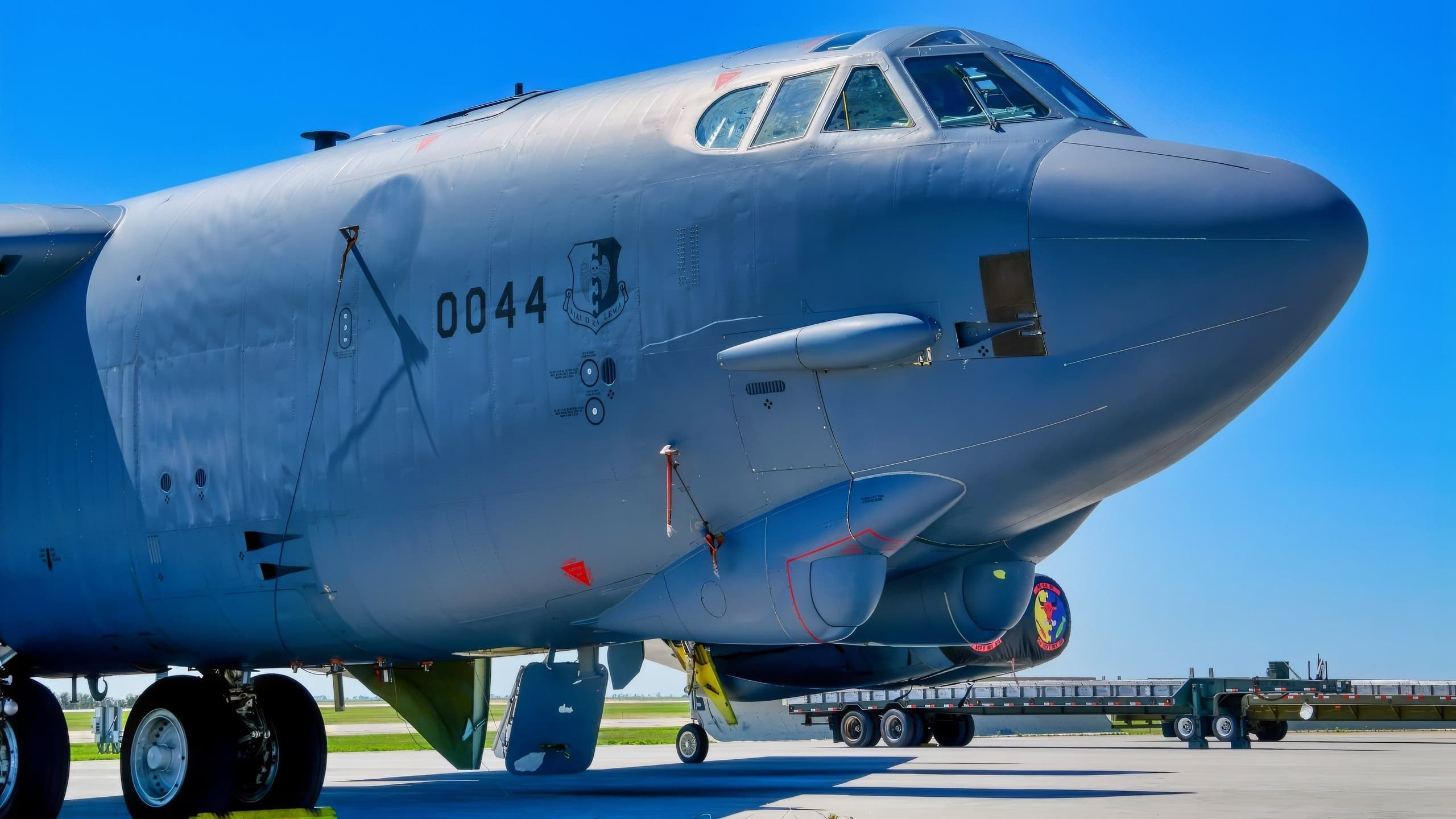
A B-52H Stratofortress sit parked on the flight line at Minot Air Force Base, North Dakota, Aug. 8, 2022. The B-52 is capable of dropping or launching gravity bombs, cluster bombs, precision-guided missiles and joint direct attack munitions. (U.S. Air Force photo by Airman Alysa Knott)
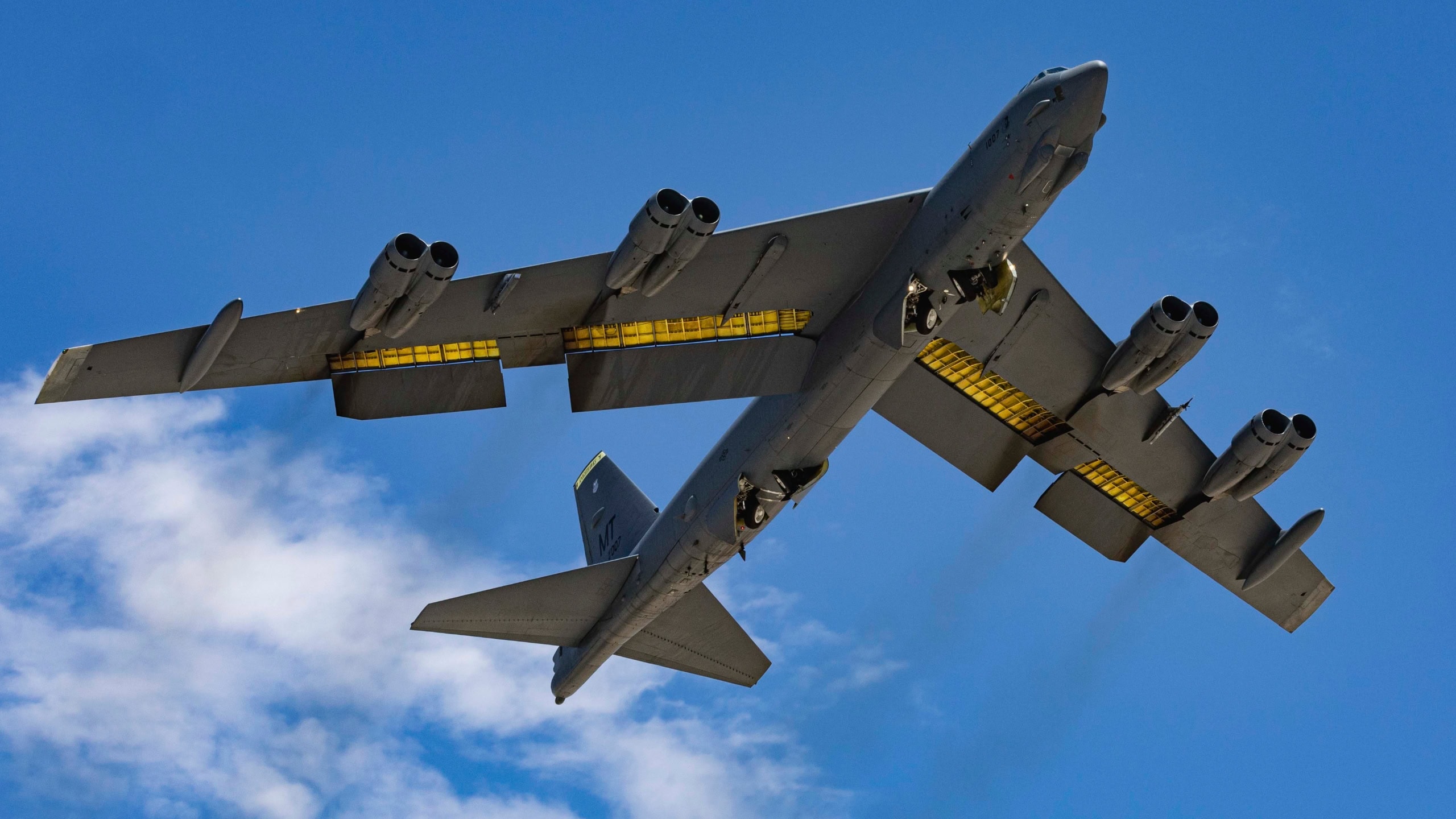
A B-52 Stratofortress assigned to the 69th Bomb Squadron, Minot Air Force Base, North Dakota, flies during Red Flag-Nellis 22-3 at Nellis Air Force Base, Nevada, July 18, 2022. RF-N 22-3 provides realistic combat training that saves lives while increasing combat effectiveness. (U.S. Air Force photo by Airman 1st Class Makenna Gott)
However, a June plane crash, enormous cost overruns, and schedule delays have put the program to replace the B-52 Stratofortress’ engines a whopping $3 billion over budget.
“The Air Force’s Commercial Engine Replacement Program will likely continue to face significant challenges as the Air Force plans to begin production with little to no developmental flight testing,” the Government Accountability Office (GAO) said.
The GAO issued a new report on the overhaul’s progress on July 31.
The watchdog found that two of the biggest parts of the modernization effort, new engine and radar programs, have “experienced cost increases of more than 30 percent and schedule delays of more than 3 years since the programs began early development.
“Both programs are at risk for additional cost, schedule, and performance challenges as they plan to begin production of modernization efforts about the same time developmental testing begins.”
June Plane Crash Also Sets Back The Program
A B-52 radar test aircraft crashed on June 15, 2026, at Edwards Air Force Base. Testing was paused during the investigation, and a second test bomber is being fitted with the AN/APQ-188 radar suite to resume testing.
While the Air Force is still trying to determine the cause of the crash that killed all eight crewmembers on board, it is moving ahead with another test aircraft.
“We lost the first aircraft with the crash in June, but the original acquisition plan and execution strategy was always to have two test aircraft,” Colonel Spencer Turner, B-52 program manager, said.
“That modification effort on that second aircraft is ongoing, and we expect to complete the full modification and put the full radar suite onto the aircraft this year and proceed with testing.”
Key Upgrades For The B-52J Bomber
There are 13 modernization programs including: a new radar; six new communication systems; integrating a new long-range, survivable, nuclear-capable missile which is still in development; a new “black box; two new training devices; new advanced target pod displays; and a plan to reduce the crew size from five to four.
Key upgrades include the Commercial Engine Replacement Program (CERP) with new Rolls-Royce-GE F130 engines for better fuel efficiency/reliability, a new radar system, and enhanced weapons capacity to carry advanced hypersonic and standoff missiles.
Back in May, the Air Force announced that the CERP program had passed a critical design review, finalizing the design after years of work.
LTC Tim Cleaver, the CERP program manager, said in a press release that completing the review marks a pivotal moment in upgrading the old B-52s with new Rolls-Royce F130 engines.
“This CERP critical design review is the culmination of an enormous amount of engineering and integration work from Boeing, Rolls-Royce, and the Air Force that will enable the B-52J to remain in the fight for future generations,” Cleaver said.
However, the CERP program is currently 38 percent over budget.
The GAO said integrating the new active electronically scanned array radar—which replaces the current APQ-166 system—is proving difficult to manage.
The plan is for the B-52J to serve as a cost-effective, reliable “bomb truck” that supports the nuclear triad while bridging the bomber-number gap as the new B-21 Raider is fully fielded.
The B-52 Has Flown Since The Eisenhower Administration
The Air Force has had one constant for 70+ years: the B-52 bomber.
The Air Force has flown the B-52 since the Eisenhower administration.
The last B-52 was delivered in 1962 when Kennedy was president.
Think about that one for a moment.
The B-52J is a proposed upgrade to the B-52 Stratofortress, aiming to extend its service life well into the 2050s with new engines, advanced radar, and updated avionics.
That would put the iconic bomber’s age at the century mark.
The B-52J remains the subject of ongoing debate, with some advocating continued service and modernization, while others question its long-term value and strategic relevance.
It is costly; the planned modernization already costs $21 million, and with the modern B-21 Raider set to enter service, many analysts argue the funds would be better spent on the Raider.
Some military leaders have advocated increasing the number of B-21s to speed up production, arguing that the B-21 will be the backbone of the future bomber fleet, even with the modernized B-52.
Why The Air Force Wants The B-52J Model
The Air Force wants to combine the new B-21 Raider and the B-52J into a package that delivers massive firepower, range, and the ability to penetrate enemy defenses to deliver precision weapons.
The B-52J won’t penetrate an enemy’s anti-access/area-denial (A2/AD) umbrella; it would be highly vulnerable to modern air defenses.
That is what the B-21 Raider is for.
Weapons integration has also been improved; the J-variant was designed to carry the JASSM-ER, LRASM, hypersonic weapons, and the LRSO nuclear cruise missile.
The B-52J becomes a stand-off missile arsenal, launching long-range cruise missiles, such as the Long Range Stand-Off (LRSO) weapon and hypersonic missiles, without entering contested, heavily defended airspace.
The B-52 Modernization Program Is Over Budget And Late
As with so many US military programs, the B-52J is over budget and three years late.
Boeing is the prime contractor for integrating the B-52, including a comprehensive list of other modifications to these aircraft, in addition to the engines.
Once these bombers have been retrofitted with this extensive set of onboard systems upgrades, they can remain in service into the 2050s.
The B-52J is expected to be a versatile platform capable of carrying a wide range of weapons, from gravity bombs to cruise and hypersonic missiles.
In total, the B-52J will carry 35 tons of bombs, missiles, etc.
Many critics state that Boeing has too much on its plate.
Beyond the B-52J program, the company has also been awarded contracts for the F-47 NGAD and the Navy’s F/A-XX programs.
Boeing has suffered well-documented delays and overruns on other defense and commercial programs, such as the KC-46 Pegasus tanker, T-7A Red Hawk trainer, and the 777X, raising doubts about Boeing’s current engineering and manufacturing capacity.
The Bomber Force Will Consist Of Both Old And New
Once the B-21 Raider and B-52J are in full production, the US bomber fleet will number about 200, with more than 100 B-21s and the rest B-52Js, expanding the force.
According to Gen. Thomas Bussiere, commander of the Air Force Global Strike Command (AFGSC), the bomber force currently stands at approximately 141.
However, one intriguing possibility is deploying the B-52J with the Air Force’s newest aircraft, the Collaborative Combat Aircraft (CCA).
“It is the ability of the B-52 to carry such a large payload that can put these unmanned systems into the middle of the fight that makes a difference and will provide more justification for the cost of the upgrade,” said a US air power specialist who was quoted by Reuben Johnson.
“It will make the ‘long arm’ of the B-52 even longer.”
Will Delays Make The B-52J Obsolete Before It Arrives?
Because of the aircraft’s technological issues and ongoing delays, it is questionable whether it will be obsolete by the time it becomes operational in 2033 (not a sure thing).
The billions invested in B-52J upgrades divert resources from developing and procuring next-generation platforms like the B-21 Raider.
As adversaries advance their air defense capabilities, the need for stealthier and more survivable bombers becomes increasingly critical.
The B-52 would not survive against a near-peer adversary’s dedicated air defenses.
Many argue that the focus should be on accelerating the deployment of these next-generation systems rather than sinking money into a nearly 80-year-old platform.
Wouldn’t the money be better spent on more B-21s?
The lack of spare parts for the venerable B-52’s mission-capable rates “has not improved” since a November 2022 assessment found the aircraft was failing to meet required benchmarks.
About the Author: Steve Balestrieri
Steve Balestrieri is a National Security Columnist. He served as a US Army Special Forces NCO and Warrant Officer. In addition to writing on defense, he covers the NFL for PatsFans.com and is a member of the Pro Football Writers of America (PFWA). His work was regularly featured in many military publications.