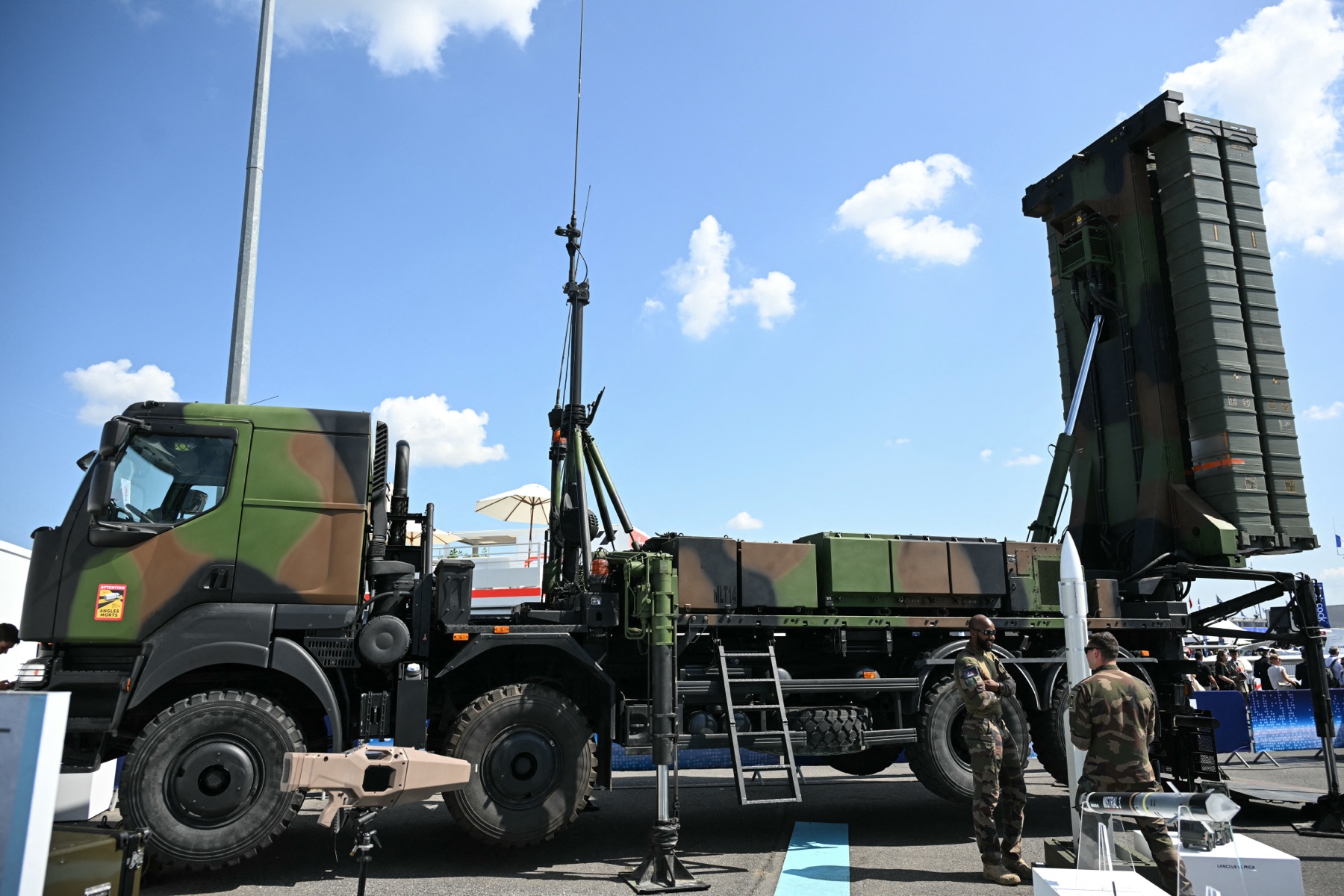
SAMP/T matters less for any single performance figure than for what it represents: the only ground-based air defence system designed and built in Europe that has demonstrated an intercept against a ballistic target. Every other credible European upper-tier capability is American. That gives France and Italy a sovereign export product and gives NATO members an alternative supply chain, which is why Denmark's 2025 decision to buy SAMP/T NG rather than Patriot was read as a political as much as a technical choice - Copenhagen cited delivery timelines, and Patriot's order book has been saturated by Ukraine-driven demand since 2022.
Combat experience in Ukraine has been the system's first real test, and the evidence is partial and contested. The French chief of the defence staff has publicly claimed that SAMP/T is intercepting Russian quasi-ballistic missiles that Patriot is struggling with (reported), a striking assertion given that Patriot has by far the larger intercept record in that war. The claim is plausible on paper - Aster 30's PIF-PAF lateral thrust control was designed for terminal-phase manoeuvring targets - but it rests on a very small deployed sample of two donated batteries and has not been independently verified. Early Ukrainian operations were also reported to have run into software and integration difficulties. What is not in dispute is the binding constraint: interceptor stocks. A battery with no Aster 30s left is inert regardless of how good its kinematics are, which is the real motivation behind the 2026 licence for Ukrainian production.
SAMP/T NG is the more consequential development. Swapping the mechanically rotating Arabel for a GaN AESA sensor with detection beyond 350 km and over a thousand tracks, and pairing it with the Aster 30 B1NT against 1,500 km-class threats, moves the system from a point-and-area defence asset toward genuine theatre missile defence. It also changes the economics: 48 ready rounds per battery and a two-operator, sub-15-minute emplacement address the two things the Ukraine war has punished hardest - magazine depth and time spent stationary. The open questions are schedule and volume. Deliveries slip toward 2027 for France, orders from France, Italy, Denmark and Ukraine now total dozens of fire units, and European interceptor production remains the bottleneck that no radar upgrade can fix.