Kh-101

🇷🇺Russian Federation
Tactical Missile Armament Corporation (KTRV)
2012 – Present
Spotlight

Stealth-shaped bomber-launched cruise missile at the core of Russia's deep strikes

How Many Kalibr and Kh-101 Cruise Missiles Would Russia Need to Win in Ukraine? (Covert Cabal)

Watch on YouTube
Overview
Kh-101
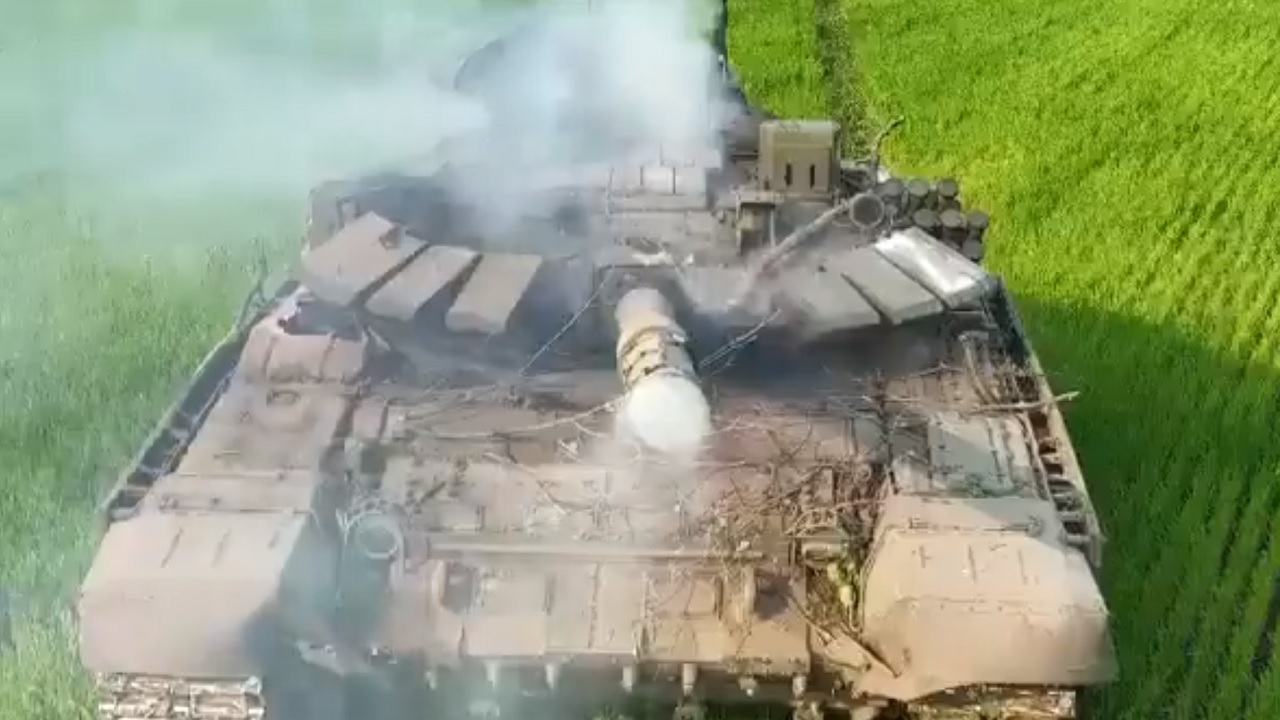
The Kh-101 is a Russian-made advanced stealthy long-range subsonic cruise missile designed to strike strategic targets with high accuracy. It is primarily launched from strategic bombers and features a low-observable design.
Specifications

General

Length M7.45 m
Range Km5,000 km
Launch Platformair
Stealth FeaturesLow-observable/stealth design
Cep M10 m
StealthYes
GuidanceINS, satellite navigation, terrain mapping
Speed Mach0.76 Mach
Warhead Kg400 kg
Nuclear CapableYes
Launch Weight Kg2,400 kg

Other

Diameter M0.51
PropulsionTRDD-50A turbofan (reported)
Unit Cost Usd~13 million (reported)
CountermeasuresIR decoy flare dispensers; izdeliye 504AP with expanded ECM (reported)
Endurance Hours~10 (est.)
Nuclear VariantKh-102, 250-450 kt (reported)
Carrier AircraftTu-95MS16 Bear-H, Tu-160/Tu-160M Blackjack
Cruise Altitude M30-6,000 depending on profile (est.)
Latest Developments
Sep 1, 2026strong signal
Russia's Six-Day Strike Run Is Exposing Kyiv's Air Defence Math

the Kh-101 is still the most strategically useful Russian air-launched cruise missile in this war because Tu-95MS bombers can carry eight and Tu-160s can carry twelve

Aug 9, 2026strong signal
Would Putin Attack NATO? The Incursion Everyone Fears Is the One Move That Costs Moscow Most

A Russian Kh-101 cruise missile came down in a field outside Tarnawa-Kolonia, in eastern Poland.

Aug 8, 2026strong signal
Zelenskyy asked Poland and Germany for more missile interceptors

A suspected Kh-101 cruise missile briefly entered Polish airspace, prompting Poland to scramble F-16 fighter jets and search for the missile for roughly six minutes before it came down in a field near the village of Tarnava Colony, about 90 kilometers (56 miles) inside Polish territory.

Aug 8, 2026strong signal
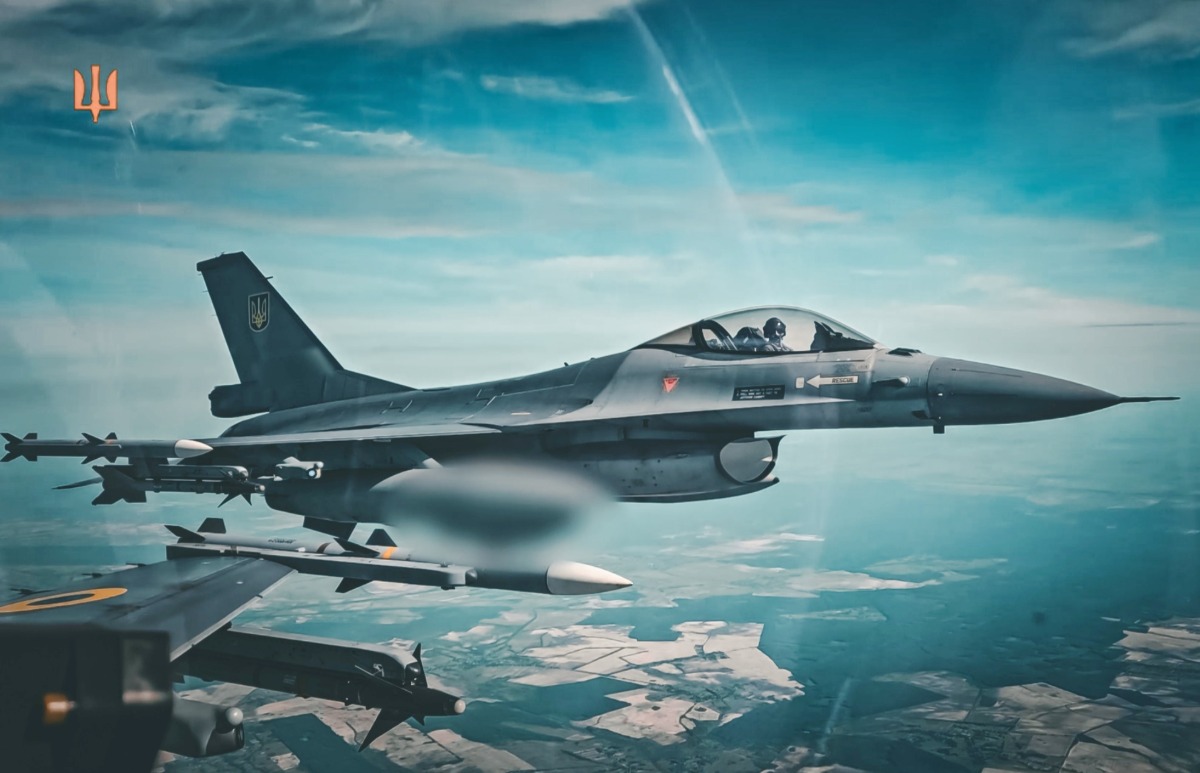
Ukraine’s F-16 fleet proves its worth against cruise missiles

Ukraine’s Air Force reported in February 2026 that Ukraine had intercepted more than 2,000 Kh-101 cruise missiles and roughly 44,700 Iranian-designed Shahed-type strike drones shot down across the full duration of the war by every branch of Ukraine’s air defense network combined.

Aug 2, 2026strong signal
Ukraine's F-16s Are Burning Hours Killing 2,500 Russian Drones

Entity 'Kh-101' mentioned in report

Jul 31, 2026strong signal
The Missile That Landed in Poland Will Not Start a War with Russia. The One a Polish Pilot Shoots Down Might.

an object believed to be a Kh-101 cruise missile crossed into Polish airspace and came down 90 to 100 kilometers from the border.

Jul 31, 2026strong signal
Russian Kh-101 in Poland Exposes NATO's Air Defence Gap

the Kh-101 is an air-launched cruise missile used by Russian long-range aviation, typically from Tu-95MS and Tu-160 bombers.

Featured Coverage
Research Notes

Russian long-range air-launched cruise missile

medium-high

Kh-101 is a conventional cruise missile paired with strategic bomber launch platforms such as Tu-95MS and Tu-160.

Kh-101 is a Russian long-range air-launched cruise missile, with Kh-102 as the nuclear-related counterpart. CSIS Missile Threat profiles it as part of Russia’s strategic standoff arsenal. Its development supports bomber operations by allowing launch from far outside many defended target areas.

Long-range conventional standoff attack

medium-high

The missile is intended for deep strikes against fixed targets from bomber launch positions well away from the front line.

Kh-101 capability rests on range, low-altitude flight and integration with Russian bomber forces. Its value is not tactical maneuver on the battlefield but the ability to reach infrastructure, command and logistics targets from long distances. Accuracy, route planning and air-defense penetration determine practical effect.

Prominent in Ukraine-war strike campaigns

medium-high

The missile’s repeated use makes it important for understanding Russian long-range precision-strike capacity and stockpile pressure.

Kh-101 is highly relevant because it has appeared repeatedly in Russian strikes against Ukraine. That operational use makes production capacity, interception rates and target selection part of the equipment story. The page should therefore explain the missile as a system within a broader bomber and strategic-strike campaign.

Key parameters at a glance

medium

Headline figures are open-source estimates unless stated. Russian-origin performance numbers are marked as claimed; wartime employment data is marked as reported.

Role
Air-launched, low-observable long-range strategic cruise missile
Carrier aircraft
Tu-95MS16 (8 missiles), Tu-160/Tu-160M (12 missiles)
Range
2,500-2,800km (reported); up to 5,500 km (claimed)
Speed
Mach 0.58 cruise / Mach 0.78 max(reported)
Warhead
~450kg HE/penetrating; cluster and twin-warhead versions reported
Guidance
INS with GLONASS, terrain/scene matching, optical terminal correction
Accuracy
CEP 6-20m (reported)
Self-protection
IR decoy flare dispensers observed from January 2023; ECM-equipped izdeliye 504AP reported
Nuclear variant
Kh-102250-450 kt (reported)
Unit cost
~13million USD (reported)

Program milestones

medium

Publicly reported milestones from initial fielding through wartime modification.

2003-08Initial operating capability reported

Western reference sources place an initial operating capability for the Kh-101 in August 2003, well ahead of formal acceptance. Russian officials did not confirm the date.

2012Entry into service

The missile is recorded as entering service with Russian Long-Range Aviation, arming the Tu-95MS16 and Tu-160 fleets alongside the older Kh-55/Kh-555 family.

2015-11Combat debut over Syria

Tu-95MS and Tu-160 bombers launched Kh-101s against targets in Syria, the first publicly acknowledged operational use and the missile's first long-range strike sortie.

2022-10Sustained strikes on Ukrainian infrastructure

Kh-101 salvoes became a standing element of mass strike packages against the Ukrainian power grid and other infrastructure, typically combined with Kalibr, Iskander and one-way attack drones.

2023-01Decoy flare dispensers observed

Imagery and video from intercepts showed Kh-101s ejecting infrared decoy flares in flight, a self-protection measure aimed at IR-guided short-range air defence.

2024-05Twin-warhead variant identified

Debris analysis indicated a second fragmentation charge fitted alongside the primary warhead. British defence assessments cited by TWZ judged the modification cut range by roughly half.

2024-07Okhmatdyt hospital strike and component findings

A Kh-101 was assessed to have struck the Okhmatdyt children's hospital in Kyiv. Recovered wreckage from this period continued to yield foreign-manufactured microelectronics despite export controls.

2025-07Submunition warhead documented

Footage from a strike on Chernivtsi provided the clearest visual evidence to date of a Kh-101 dispensing submunitions over a built-up area.

Strategic significance

medium

The Kh-101 is the weapon that gives Russian Long-Range Aviation relevance in a conventional campaign. A Tu-95MS16 carries eight rounds and a Tu-160 twelve, allowing a handful of bombers orbiting over the Caspian or northern Russia to place dozens of precision warheads on targets 2,000 km or more away without entering contested airspace. Reduced radar signature, a low subsonic cruise and terrain-following flight profiles make the missile harder to detect and engage than the Kh-55 family it supplements, and the strike pattern of the war has consistently paired Kh-101 salvoes with cheaper Shahed-type drones to saturate defended corridors.

Wartime employment has driven visible iteration rather than replacement. Infrared decoy dispensers appeared in early 2023, a twin-warhead configuration was identified in 2024 at an assessed cost of roughly half the missile's range, and a submunition warhead was documented in 2025. These are pragmatic adaptations to two problems: Ukrainian interceptors that were becoming more effective, and target sets that shifted from hardened point targets toward area effects. Ukrainian air force reporting has claimed high interception percentages against Kh-101 raids, though those figures are self-reported, vary sharply between raids, and say little about the leakers that cause the damage.

The missile's principal vulnerability is industrial rather than tactical. Component-level examination of recovered wreckage, of which the RUSI work on Western electronics in Russian systems is the most systematic public example, has repeatedly identified foreign-manufactured microelectronics in the guidance and flight-control sections, indicating that production volume depends on grey-market procurement channels that sanctions have degraded but not closed. Assessed unit costs in the region of 13 million US dollars also make sustained mass salvoes expensive, which is why the Kh-101 is increasingly one element of a mixed strike package rather than the package itself.

Videos

Russian Kh-101 Missiles Release Thermal Decoys to Evade Ukrainian Air Defense Systems (UNITED24)

Watch on YouTube

Children's hospital hit as Russian airstrikes kill dozens in Ukraine (BBC News)

Watch on YouTube

Teardown of Kh-101 flight-control electronics and propulsion system (Tang Laoshi Jiang Diansai)

Watch on Bilibili
Sources & References
Related Discussions

No discussions about Kh-101 yet

Start the first discussion