
Ukraine’s F-16 fleet proves its worth against cruise missiles
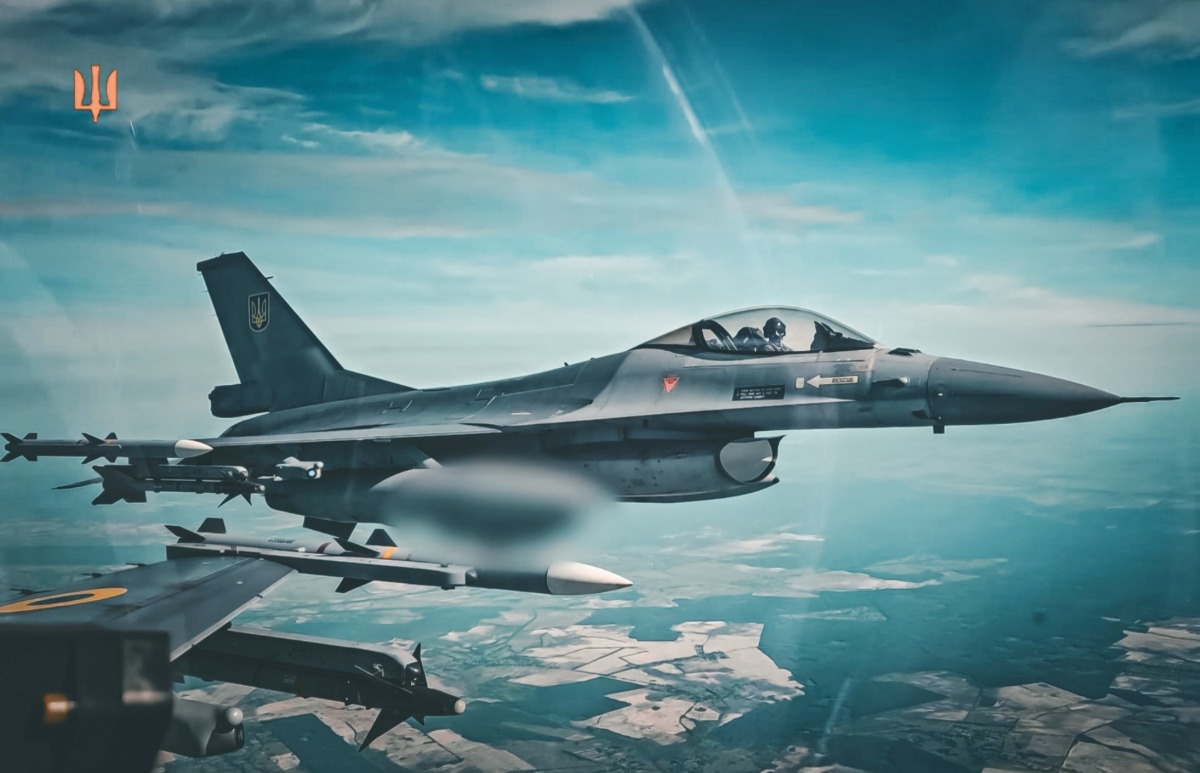
Out of 61 Russian cruise missiles fired at Ukraine in a single wave, Ukrainian air defenses shot down 54, and F-16 fighter jets alone accounted for 38 of those kills, Militarnyi reported, citing a statement from Yevhenii Karzhau, deputy commander of Ukraine’s Air Force.
The figures place the American-made jets at the center of one of the most intense single-night missile defenses of the war, and an analysis of reports from Ukraine’s Air Force Command suggests the attack in question took place on July 30, 2026, when Russia launched 61 Kh-101 and Kalibr cruise missiles at Ukraine from positions in Russia’s Vologda region.
That 38-of-54 kill ratio means F-16 pilots were personally responsible for more than 70% of every successful intercept during the attack, a striking share for a single aircraft type given how many different systems typically make up Ukraine’s layered air defense network, including Patriot batteries, shorter-range surface-to-air missiles, and mobile anti-aircraft gun teams. Kh-101 and Kalibr missiles both represent cruise missiles Russia fires from long range, the Kh-101 typically launched from strategic bombers flying deep inside Russian airspace and the Kalibr fired from ships or submarines, weapons designed to fly low and evade radar detection long enough to strike targets far from the front line.
Ukraine’s F-16 fleet has taken on an outsized role in the country’s air war since the jets first began arriving from European NATO allies in 2024, a shift Air & Space Forces Magazine documented roughly a year ago when it reported that F-16s transferred to Ukraine under international military aid now fly approximately 80% of all combat sorties conducted by Ukraine’s Air Force. That figure reflects how thoroughly the American-designed fourth-generation fighter has displaced Ukraine’s older Soviet-era jets, the MiG-29s and Su-27s that formed the backbone of Ukrainian airpower for the war’s first two years, as pilots trained on the NATO-standard aircraft take over the bulk of both air defense missions and strike operations against ground targets.
The scale of Russia’s ongoing missile and drone campaign explains why F-16 performance against cruise missiles specifically carries such weight for Ukraine’s defense. Ukraine’s Ministry of Defense reported that Russia launched 265 cruise missiles and 8,653 strike drones of various types at Ukrainian territory during July 2026 alone, a volume of aerial attacks that has forced Ukraine’s air defense network to intercept threats arriving from multiple directions and altitudes on a near-nightly basis. Against that backdrop, a fighter jet capable of reliably shooting down more than a third of the missiles in a single 61-missile wave represents a meaningfully different threat to Russian planners than a jet that struggles against fast, low-flying targets.
Ukrainian F-16 pilots have already set records that illustrate just how far the aircraft’s role in cruise missile defense has advanced. In December 2024, a Ukrainian F-16 pilot shot down six Russian cruise missiles in a single sortie, using only four air-to-air missiles and the jet’s onboard cannon for the final two kills, a feat Ukraine’s Air Force described at the time as the first instance anywhere in the world of a fighter destroying that many cruise missiles in one engagement. Ukrainian officials have also credited the aircraft with a broader defensive record extending well beyond cruise missiles alone, with the Air Force reporting in February 2026 that Ukraine had intercepted more than 140,000 aerial targets since Russia’s full-scale invasion began in 2022, a total that includes more than 2,000 Kh-101 cruise missiles and roughly 44,700 Iranian-designed Shahed-type strike drones shot down across the full duration of the war by every branch of Ukraine’s air defense network combined.
Beyond intercepting incoming missiles, Ukraine’s F-16 fleet has increasingly taken on offensive missions as well, a shift that expanded further after Ukraine received a new long-range weapon called the AGM-158, sometimes referred to as the Rusty Dagger, giving the jets a standoff strike capability that lets pilots hit targets more than 930 kilometers (578 miles) away without flying anywhere near the range of Russian air defenses along the front line. That combination of long-range strike capability and demonstrated cruise missile intercept performance has turned the F-16 into what one Ukrainian military expert previously described to Militarnyi as functioning less like a conventional fighter jet and more like what he called a super-fast, super-mobile air defense missile system.
The single-mission numbers Karzhau cited leave several details unaddressed, including which specific Ukrainian fighter wing or wings carried out the intercepts during the July 30 attack, how many individual F-16 sorties were flown that night to achieve the 38 confirmed kills, and whether any of the aircraft involved carried the newer standoff weapons now entering Ukraine’s inventory alongside their established air-to-air missile loadouts. Those specifics typically remain classified for operational security reasons even when Ukrainian officials publicize overall intercept totals, a pattern consistent with how the Air Force has handled previous record-setting engagements throughout the war.
Content preview only. Full article available at source. View Full Article
Ukrainian air defenses intercepted 54 of 61 Russian cruise missiles launched from Vologda on July 30, 2026, with F-16 fighter jets responsible for 38 kills. This operation highlights the F-16's critical role in Ukraine's air defense, as it has become the primary aircraft for intercepting cruise missiles since its introduction in 2024. The ongoing missile threat from Russia necessitates effective air defense capabilities.
- Ukrainian air defenses shot down 54 out of 61 Russian cruise missiles
- F-16 jets accounted for 38 of the 54 kills
- The attack occurred on July 30, 2026, from Russia's Vologda region
- F-16s have taken on a significant role in Ukraine's air defense since 2024
- Ukraine's air defense intercepted over 140,000 aerial targets since 2022