
China-Russia Naval Vessels Conduct Joint Circumnavigation for 17 Days, 055 Destroyer Group Crosses the La Perouse Strait for the First Time
 Li Minghui
China-Russia Naval Vessels Jointly Circumnavigate Japan for 17 Days; 055 Destroyer Group Crosses the Tsushima Strait for the First Time
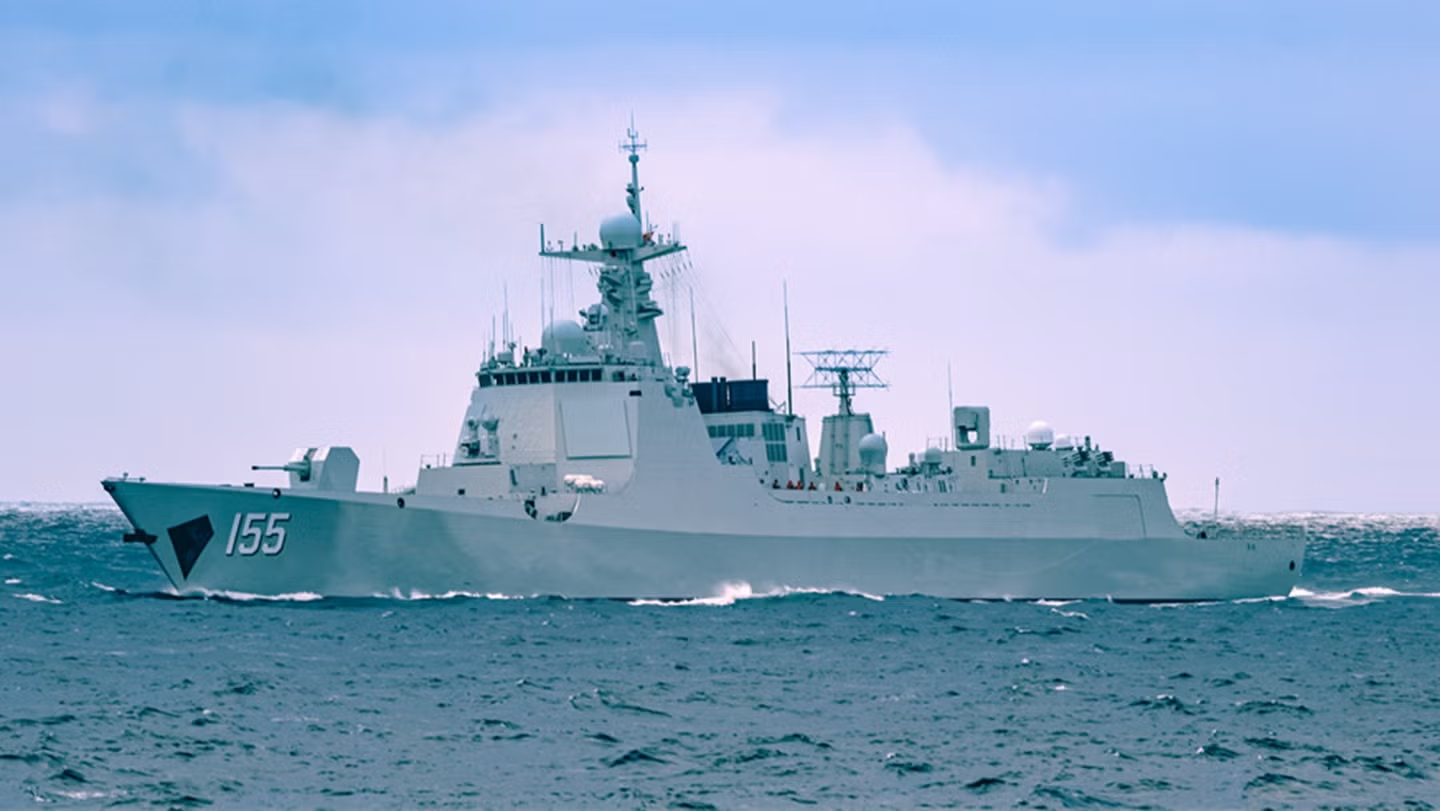
On August 6, the Japanese Ministry of Defense reported a detail that could easily be overlooked: three Chinese vessels—a Type 055 destroyer, a Type 052D destroyer, and a Type 903 comprehensive supply ship—were sailing southwest through the Tsushima Strait. These three ships were not operating independently; they departed from Qingdao on July 13 alongside a Russian Navy frigate, completing a large-scale joint patrol around the Japanese archipelago in 17 days, traversing the western Pacific, the Sea of Okhotsk, and the Japan Sea. According to the Global Times, this marks the first time Chinese and Russian vessels have jointly crossed the Tsushima Strait (Fries Strait) in the Kuril Islands.
Formation and Route of the Task Force
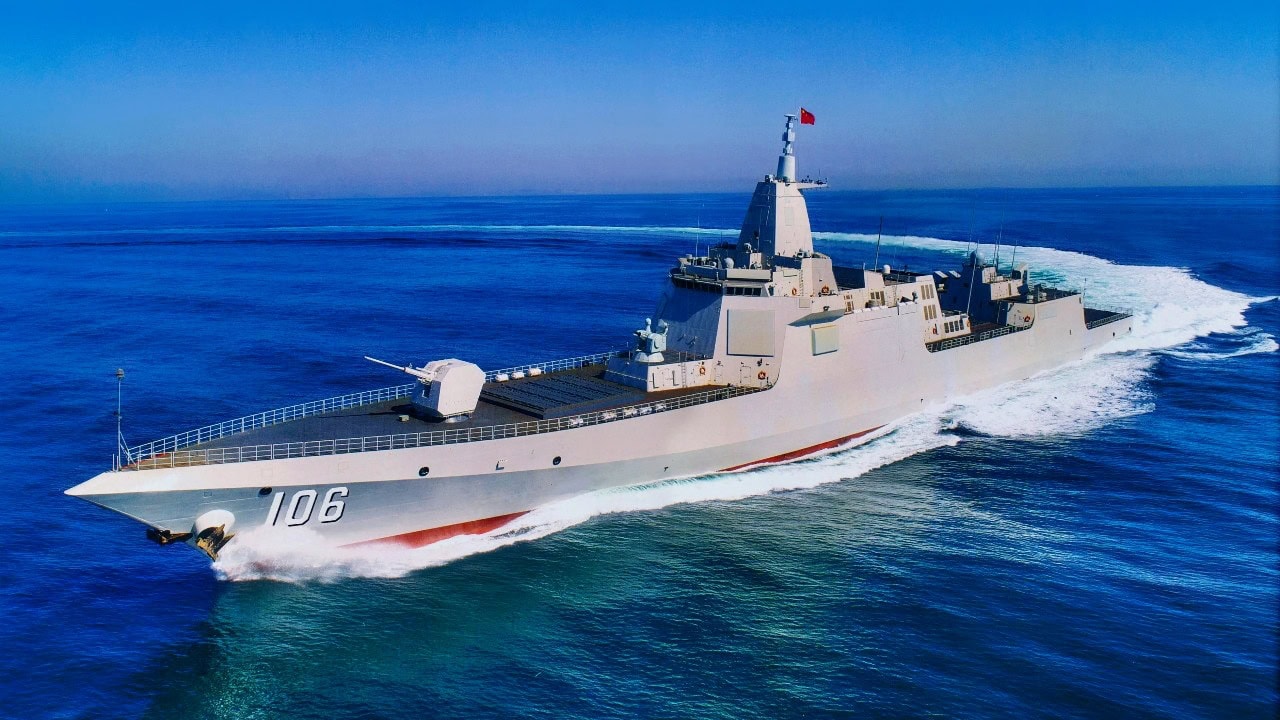
The information released by the Japanese Ministry of Defense is quite substantial. When they set sail on July 13, it was a mixed formation of "three Chinese vessels + one Russian frigate," while from August 2, the vessels returning through the Tsushima Strait were a pure Chinese formation of the 055, 052D, and 903 supply ship—the Russian ship had detached midway. This indicates that the organization of the China-Russia joint patrol was "segmented coordination": a joint formation in the open sea, returning to their respective fleets as they approached sensitive maritime areas.
Notably, the choice of route is significant. The task force did not take the shortest route through the Soya Strait but instead detoured through the Sea of Okhotsk, crossing the Tsushima Strait—an area of disputed waters in the Southern Kuril Islands, which the Japanese Ministry of Defense is particularly sensitive about. As Li Minghui put it, this route itself is a message to Tokyo: the Chinese and Russian militaries are prepared for navigation through all channels around the Japanese archipelago, including disputed waters.
Response from the Japanese Ministry of Defense
The Japanese Ministry of Defense stated: "This series of activities, including such joint navigation, is clearly intended to demonstrate military power to Japan and is a serious concern regarding Japan's national security." The Japan Maritime Self-Defense Force deployed frigates and patrol aircraft to monitor the entire process.
It is rare for Japanese officials to use direct phrases like "demonstrate military power," making this an unusually strong statement. In the same week, Japan had just completed the first public test launch of the upgraded Type 12 anti-ship missile, and the Ministry of Defense's white paper also included "asymmetric warfare" for the first time in the chapter on deterrence against China—this coinciding of the China-Russia circumnavigation patrol and Japan's long-range missile development is hard to dismiss as mere coincidence.
Long-Distance Capability of the 055
From an equipment perspective, the most valuable information from this patrol is the sustained deployment capability of the Type 055 destroyer. The Type 055 has a full-load displacement of about 13,000 tons and is equipped with 112 vertical launch system cells, making it the largest destroyer by tonnage currently in the western Pacific. However, more noteworthy than its firepower is its logistics: the Type 903 supply ship accompanied the task force for 17 days, proving that the People's Liberation Army Navy has developed a mature model for providing sustained long-distance support for large destroyers.
- Type 055 Destroyer: Full load of about 13,000 tons, 112 vertical launch cells, entering service gradually since 2020
- Type 052D Destroyer: About 7,500 tons, 64 vertical launch cells, the mainstay of the Navy's long-distance formation
- Type 903 Comprehensive Supply Ship: About 23,000 tons, capable of simultaneously supplying multiple ships with fuel, water, and ammunition
Interestingly, the Russian side only dispatched one frigate this time. The Russo-Ukrainian war has been ongoing for over two years, and the Russian Navy's Black Sea Fleet has suffered heavy losses, but the Pacific Fleet is still able to maintain a presence in the Far East, which itself is a signal: Moscow's investment in the eastern front has not diminished due to the situation on the Ukrainian battlefield.
Normalization of Joint Patrols
China-Russia maritime joint patrols began with the first circumnavigation of Japan in 2021 and have occurred almost annually since, but this year's scale and organization have changed. Previously, there were mostly small-scale activities in the Sea of Japan or East China Sea; this time, they directly formed a group to circumnavigate the entire Japanese archipelago and entered the disputed waters of the Southern Kuril Islands for the first time. From the perspective of supply chains and production capacity, the number of days the People's Liberation Army Navy conducts long-distance training and the number of vessels deployed each year are both increasing, transforming this "once a year" into "multiple times a year."
My judgment is that the military coordination depth of the China-Russia joint patrol is actually limited—communication protocols and intelligence-sharing mechanisms between the two militaries are still in the adjustment phase, and it is more of a political declaration. However, political declarations are also a part of combat capability: they force the Japan Maritime Self-Defense Force to allocate forces each year to respond to such patrols, consuming Tokyo's most scarce resources in terms of vessel lifespan and training time.
Next Steps to Watch
The real question lies in the coming month. In late August, the US-South Korea "Ulchi Freedom Shield" exercise is set to begin, with troop movements intensifying in the Korean Peninsula direction. Will China and Russia make further responsive actions in the Sea of Japan? If this circumnavigation patrol is merely a prelude, then the next segment of the 055 task force's route may be even more noteworthy than this 17-day circumnavigation itself.
Three Chinese vessels, including a 055 destroyer, and one Russian frigate conducted a joint naval patrol around Japan, crossing the Tsugaru Strait from July 13 to August 6, 2023. This marked the first time Chinese and Russian ships navigated this sensitive area, raising security concerns for Japan. The operation demonstrated China's capability for sustained naval operations with logistical support.
- Three Chinese vessels and one Russian frigate conducted a joint patrol around Japan.
- The patrol lasted 17 days, starting from July 13, 2023.
- The vessels crossed the Tsugaru Strait, a sensitive area disputed by Japan and Russia.
- Japan's Ministry of Defense expressed serious concerns over the joint patrol, viewing it as a show of force.
- The Chinese Navy demonstrated its capability for sustained operations with logistical support from the supply ship.