F-15C/D

🇺🇸United States
McDonnell Douglas
1978 – Present
Spotlight

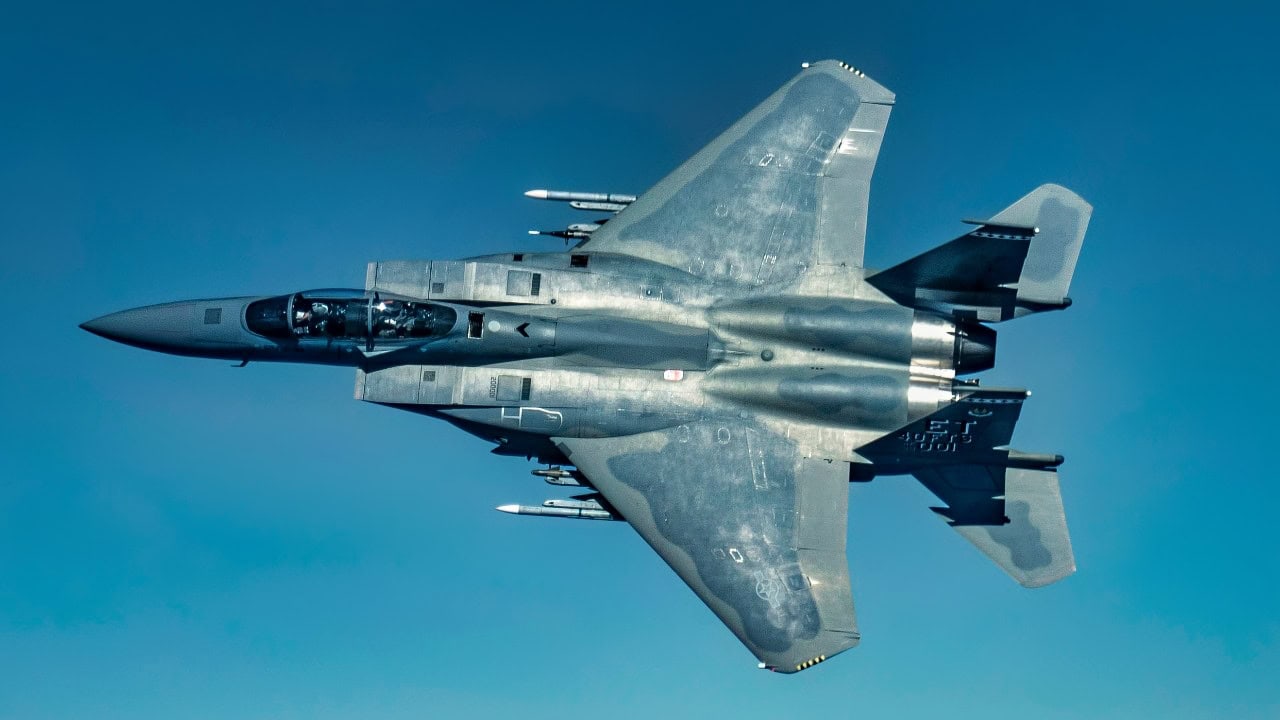
The USAF's dedicated air-superiority Eagle: undefeated in the air, undone by fatigue

F-15 Eagles Start Withdrawal From Kadena Air Base (AIRBOYD)

Watch on YouTube
Overview
F-15C/D
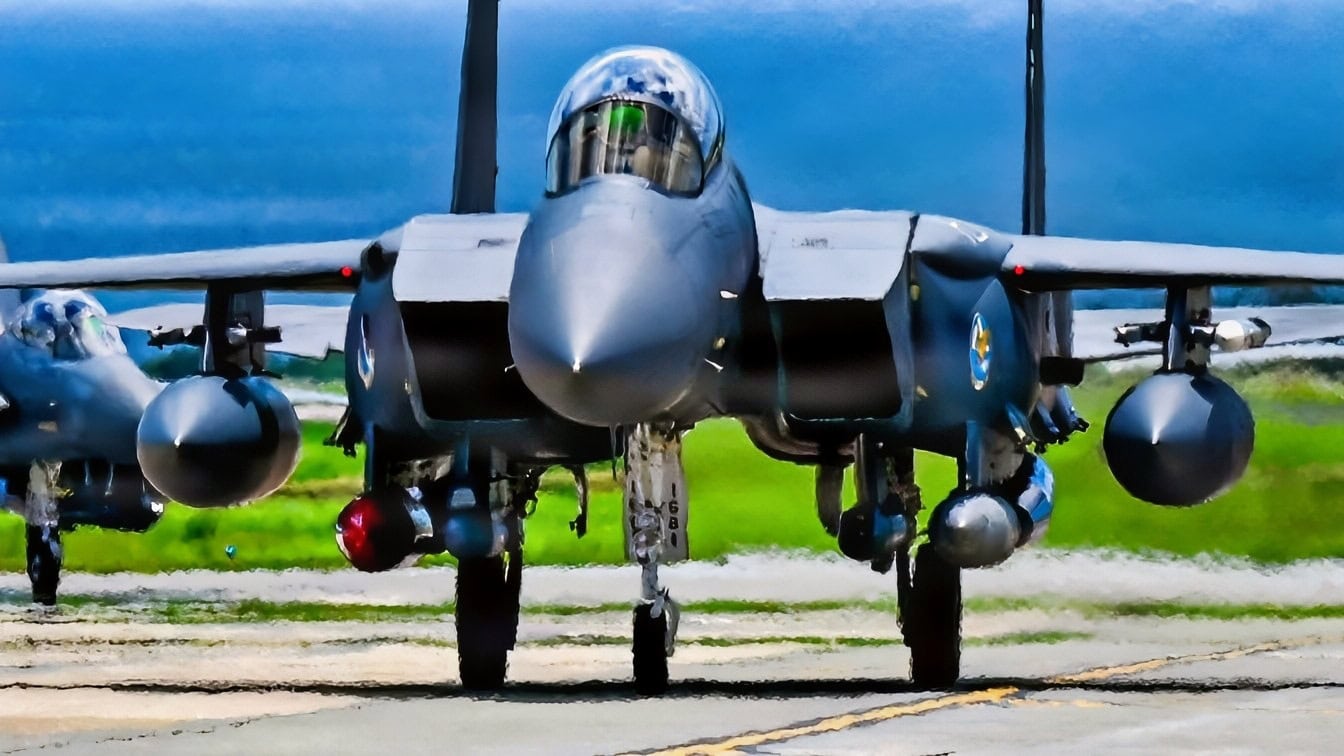
The F-15C/D is an improved version of the F-15A/B, designed for air superiority missions. It features upgraded avionics, more powerful engines, and enhanced combat capabilities. The F-15C is a single-seat variant, while the F-15D is a two-seat version used for training and operational missions. Both models have been equipped with advanced radar systems, improved electronic warfare capabilities, and can carry a variety of air-to-air missiles such as the AIM-7 Sparrow, AIM-120 AMRAAM, and AIM-9 Sidewinder. The F-15C/D entered production in 1978 and has been widely used by the USAF and allied nations.
Specifications

General

Crew1
RadarAPG-63(V)1 / APG-63(V)3 AESA
Engines2
StealthNo
Thrust Kn105.73 kN
Generation4th
Hardpoints9
Internal Gun20mm M61A1 Vulcan
Max Speed Kmh2,655 km/h
Max Payload Kg10,705 kg
Max Speed Mach2.5 Mach
Combat Radius Km~1,970 (est., with external tanks)
Service Ceiling M18,290 m

Other

Height M5.63
Length M19.43
Powerplant2 × Pratt & Whitney F100-PW-220/-229 afterburning turbofans
Wingspan M13.05
Radar UpgradeAN/APG-63(V)1; AN/APG-63(V)3 AESA on modernized airframes
Internal Fuel Kg6,103 (13,455 lb)
Max Takeoff Weight Kg30,845 (68,000 lb)
Latest Developments
Sep 14, 2026strong signal
After 18 years flying Eagles, Barnes pilots get the F-35A

The F-35A replaces the wing’s F-15C/D Eagles, which the 104th flew for 18 years after the aircraft arrived at Barnes in 2007.

Aug 23, 2026weak signal
Kadena's 36 F-15EXs Won't Close Taiwan's Air Gap by 2028

Kadena used to host 48 F-15C/Ds.

Jul 18, 2026strong signal
How Many Missiles Can the F-15EX Actually Carry? The Demonstrated Answer Is 12. Others Say 22. The Real Story Is Why the Number Keeps Moving

the F-15C topped out at eight air-to-air missiles, four conformal and four underwing

Jul 13, 2026strong signal
The U.S. Air Force Wants Its F-15s to Hunt Stealth Fighters With the Radar Off

an F-15C has already fired an IRST-cued AIM-120 and scored the intercept

Jul 2, 2026strong signal
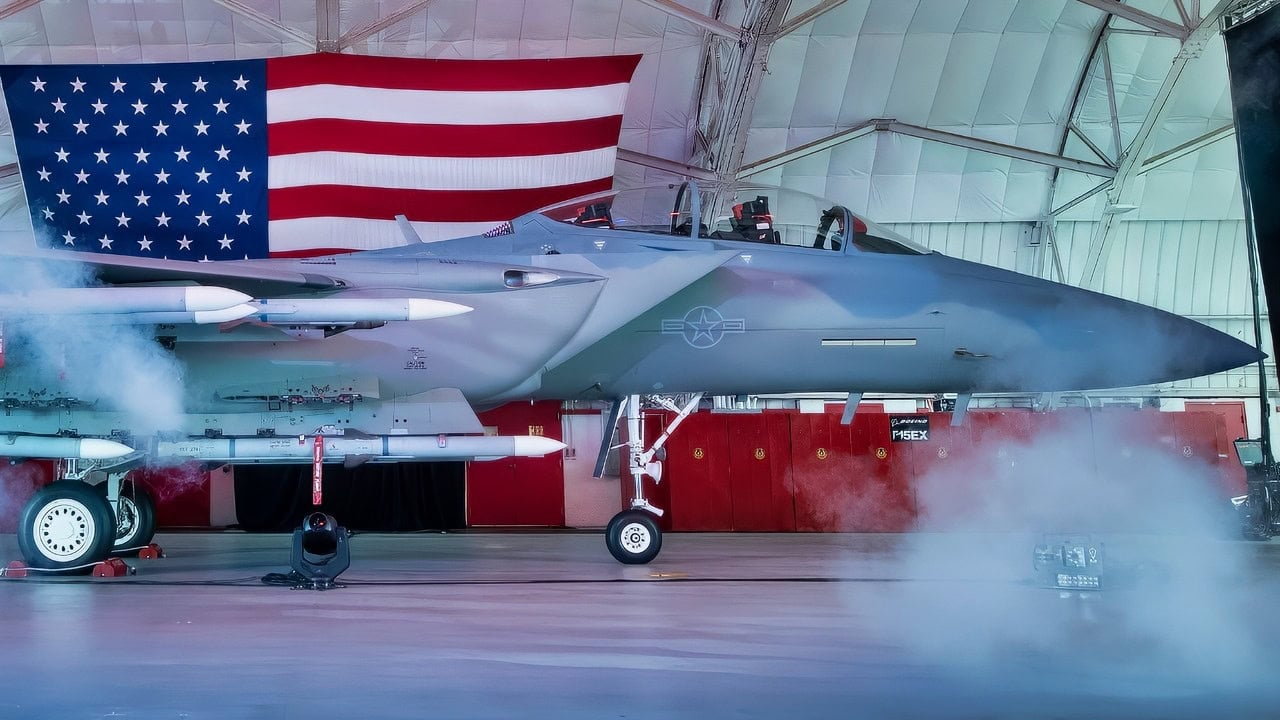
A Brand New Boeing F-15EX Eagle II Fighter Just Touched Down in China’s Backyard

The 48 jets averaged nearly 40 years of service and were flying beyond their planned lives; at least one flew its final flight at Kadena and was dismantled there rather than flown home.

Jul 1, 2026strong signal
One F-15EX at Kadena Will Not Fix America’s Okinawa Airpower Gap

Entity 'F-15C/D' mentioned in report

Featured Coverage
Research Notes

Air-superiority Eagle variants built to win and hold control of the sky

high

F-15C/D aircraft are the classic single-seat and two-seat Eagle variants optimized around air superiority rather than strike missions.

The F-15C/D family represents the air-superiority branch of the Eagle program. The U.S. Air Force describes the F-15 Eagle as an all-weather, highly maneuverable tactical fighter designed to let the Air Force gain and maintain air supremacy over the battlefield.

That mission focus distinguishes F-15C/D from the later F-15E Strike Eagle and newer F-15EX. C/D aircraft are primarily understood through counter-air work: intercepting enemy aircraft, protecting friendly forces, and contributing to control of airspace.

For HiWars, this page should explain the aircraft's role clearly instead of mixing every F-15 variant together. The C/D variants are important because they show the long-lived value of a dedicated air-superiority fighter.

Speed, radar, missiles, and pilot training form the real system

high

F-15C/D effectiveness comes from the interaction of performance, sensors, weapons, tactics, and pilot proficiency.

The F-15's reputation is built on more than thrust and speed. Air-superiority performance depends on radar, beyond-visual-range missiles, electronic warfare, situational awareness, ground and airborne control, maintenance, and pilot training.

The aircraft's design gave the United States a powerful counter-air platform for decades, but no fighter is effective in isolation. It needs weapons, data, aircrew proficiency, and a support network.

A richer page should therefore present F-15C/D as an air-combat system. Readers should see how aircraft performance, sensors, missiles, and training combine to create battlefield effect.

Aging fleet relevance depends on readiness and replacement timing

high

Older F-15C/D aircraft remain analytically important because sustainment, mission-capable rates, and F-15EX replacement plans shape actual availability.

F-15C/D relevance has increasingly become a sustainment and force-transition question. Aging airframes can remain useful, but mission-capable rates, structural fatigue, spare parts, maintenance labor, and modernization decisions determine whether they are available when needed.

GAO reporting on aircraft mission-capable performance shows why readiness is a core part of equipment quality. A fighter with strong design performance may still provide limited practical value if too many aircraft are unavailable.

For HiWars, F-15C/D should be connected to Air National Guard roles, F-15EX replacement, fleet age, and air-defense requirements. That makes the page more useful than a short historical description.

Key parameters at a glance

high

Figures describe the F-15C/D specifically rather than the wider F-15 family; fleet and programme numbers follow the cited reporting.

Role
Dedicated air-superiority fighter — F-15C single-seat, F-15D two-seat and combat-capable; no dedicated air-to-ground fit, unlike the F-15E
Change from F-15A/B
About 2,000 lb more internal fuel, maximum take-off weight raised to 68,000 lb, provision for FAST pack conformal tanks, and an APG-63 with a programmable signal processor
MSIP II standard
Late-production and retrofitted aircraft received a new central computer, the ALQ-135 internal countermeasures set, expanded electronic warfare fit and AIM-120 AMRAAM integration
AESA retrofit
AN/APG-63(V)3 active electronically scanned array fitted to the most modernized airframes; Air Combat Command treats only the AESA-equipped jets as fully capable
Late-life sensors
Lockheed Martin Legion Pod IRST first seen on 67th Fighter Squadron aircraft at Kadena in December 2021, alongside Sniper targeting pods for visual identification
Air-to-air record
F-15s across all operators are credited with more than 100 aerial victories and no losses in air-to-air combat
Gulf War kills
Cesar 'Rico' Rodriguez downed a MiG-29 on 19 January 1991 and a MiG-23 on 26 January 1991 — the latter in aircraft 85-0114, now at the Smithsonian Udvar-Hazy Center
Kadena service
F-15C/D flew from Kadena Air Base, Okinawa, for more than 45 years; the last Active-Duty F-15C sortie was on 24 January 2025
Replacement at Kadena
36 F-15EX are to replace the 48 F-15C/D previously based there, with the first aircraft expected between March and June 2026
Residual fleet
42 F-15C/D planned through 2028, then 21 'Platinum' airframes to 2030 at Fresno with the 144th Fighter Wing; full divestment now set for FY2031

Program milestones

high

Milestones specific to the F-15C/D production block and its service life, not the wider F-15 family.

1979-02F-15C first flight

The improved single-seat block flew on 26 February 1979 and replaced the F-15A on the production line. The changes were incremental rather than structural: more internal fuel, a higher maximum take-off weight, plumbing for FAST pack conformal tanks, and an APG-63 radar with a programmable signal processor that allowed later capability growth in software.

1985MSIP II enters production

The Multi-Stage Improvement Program II standard added a new central computer, the ALQ-135 internal countermeasures set, an expanded electronic warfare suite and the armament control changes needed for the AIM-120 AMRAAM. MSIP II is the dividing line between early C/D airframes and the jets that remained front-line assets into the 2020s.

1991-01Desert Storm

F-15C crews flew the coalition's counter-air campaign and accounted for the bulk of its air-to-air victories. Cesar Rodriguez downed a MiG-29 on 19 January and a MiG-23 on 26 January; the second engagement was flown in 85-0114, an airframe now preserved by the National Air and Space Museum.

1999-03Operation Allied Force

F-15Cs again drew the air-superiority task over Yugoslavia, adding further MiG-29 kills — including Rodriguez's third, on 24 March 1999 — and reinforcing a family record that stands at more than 100 victories with no air-to-air losses.

2007-11Longeron failure grounds the fleet

An in-flight structural breakup during a training sortie led to a fleet-wide stand-down and inspections that found longeron defects. Airframe fatigue became the F-15C/D's defining constraint; more than 75 percent of the surviving fleet now flies with speed and G-load restrictions.

2021-12AESA and IRST at the forward edge

Kadena-based 67th Fighter Squadron F-15Cs were photographed carrying the Legion Pod infrared search and track sensor. Combined with the AN/APG-63(V)3 AESA radar and Sniper pods, this gave the oldest air-superiority airframes in theatre a passive detection option against low-observable targets and heavy jamming.

2025-01Last Active-Duty F-15C flight

The final Active-Duty F-15C sortie was flown at Kadena on 24 January 2025, closing more than 45 years of Eagle operations from Okinawa. Kadena simultaneously activated the 67th Fighter Generation Squadron as part of the transition to a new fighter force structure.

2026F-15EX arrives, ANG fleet trimmed

The first of 36 F-15EX were expected at Kadena between March and June 2026, replacing 48 departed F-15C/D. In parallel the Air Force reversed its plan to divest the type in FY2026, keeping 42 aircraft to 2028 and 21 'Platinum' airframes at Fresno to 2030 for homeland air defence, with full divestment in FY2031.

Strategic significance

medium

The F-15C/D matters less as a set of performance figures than as the aircraft that made uncontested American air superiority a planning assumption for three decades. It was procured for one job — beyond-visual-range and close-in air combat — and it was never asked to trade that specialisation for strike work, which is why the family's record of more than 100 aerial victories with no air-to-air losses accumulated on C-model wings in 1991 and 1999. That record is best read as the product of a specialised airframe combined with AWACS control, tanker reach and a permissive electronic environment, rather than as a property of the airframe alone.

The variant's decline was structural rather than tactical. Long-life avionics upgrades — MSIP II, the AN/APG-63(V)3 AESA, Sniper pods and finally the Legion Pod IRST at Kadena — kept the sensor picture competitive well into the 2020s, but they could not address longeron fatigue. Air Combat Command's own accounting, that more than three-quarters of the fleet flies with speed and G restrictions and that only AESA-equipped jets remain fully capable, describes a force whose combat value had become concentrated in a small number of airframes.

The replacement pattern reveals how the Air Force now values the mission rather than the aircraft. Kadena's 48 F-15C/D are being succeeded by 36 F-15EX — fewer aircraft with far greater magazine depth and sensor capability — while RAF Lakenheath's air-superiority role passed to the F-35A and Kingsley Field's training pipeline moves to the F-35A as well. The November 2025 decision to hold 21 'Platinum' Eagles at Fresno to 2030, after a stated plan to divest by FY2026, is the clearest signal that homeland air-defence alert capacity remains scarcer than the retirement schedules assumed.

Videos

Final F-15 Eagles complete last taxi at Kingsley Field (KOBI-TV NBC5)

Watch on YouTube

The Intense Dogfight Between a U.S. Pilot and an Iraqi MiG (Smithsonian Channel)

Watch on YouTube

First F-15EX fighters arrive at Kadena Air Base, Japan (Chenmo de Changweisha)

Watch on Bilibili
Sources & References
Related Discussions

No discussions about F-15C/D yet

Start the first discussion