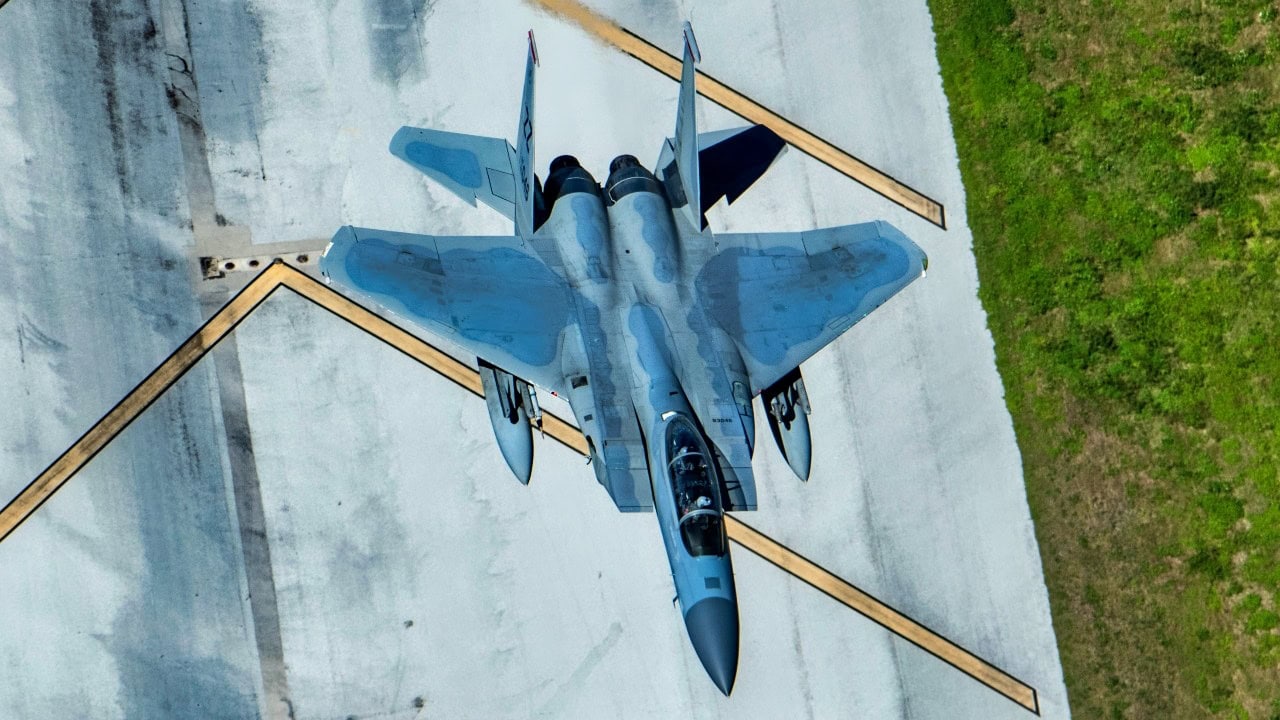
The F-15A/B was the United States' answer to the perceived threat of the Soviet MiG-25, and it deliberately reversed the multirole drift of the 1960s: the program's informal motto, "not a pound for air-to-ground," produced an aircraft optimized purely for air superiority. Its combination of a high thrust-to-weight ratio, low wing loading, the AN/APG-63 look-down/shoot-down radar and an eight-missile-plus-gun loadout defined the template for fourth-generation Western air-combat design.
The variant's early record established the type's reputation. The Streak Eagle's eight time-to-climb records in early 1975 — several taken directly from the MiG-25 — signaled raw kinematic performance, while the Israeli combat debut of June 1979 validated the design in action; the F-15 family has since accumulated a widely cited air-to-air record of more than 100 kills without a confirmed air-to-air loss, although most of those victories were scored by later C/D airframes and Israeli jets against less capable opposition.
As an airframe the F-15A/B is long retired from US service (2009), but its strategic footprint persists. It pushed the Soviet Union toward the Su-27 program as a direct counter, and its basic airframe proved adaptable enough to underpin the C/D, the E-model strike derivative and today's F-15EX — a longevity few contemporaries can match.